 |
||

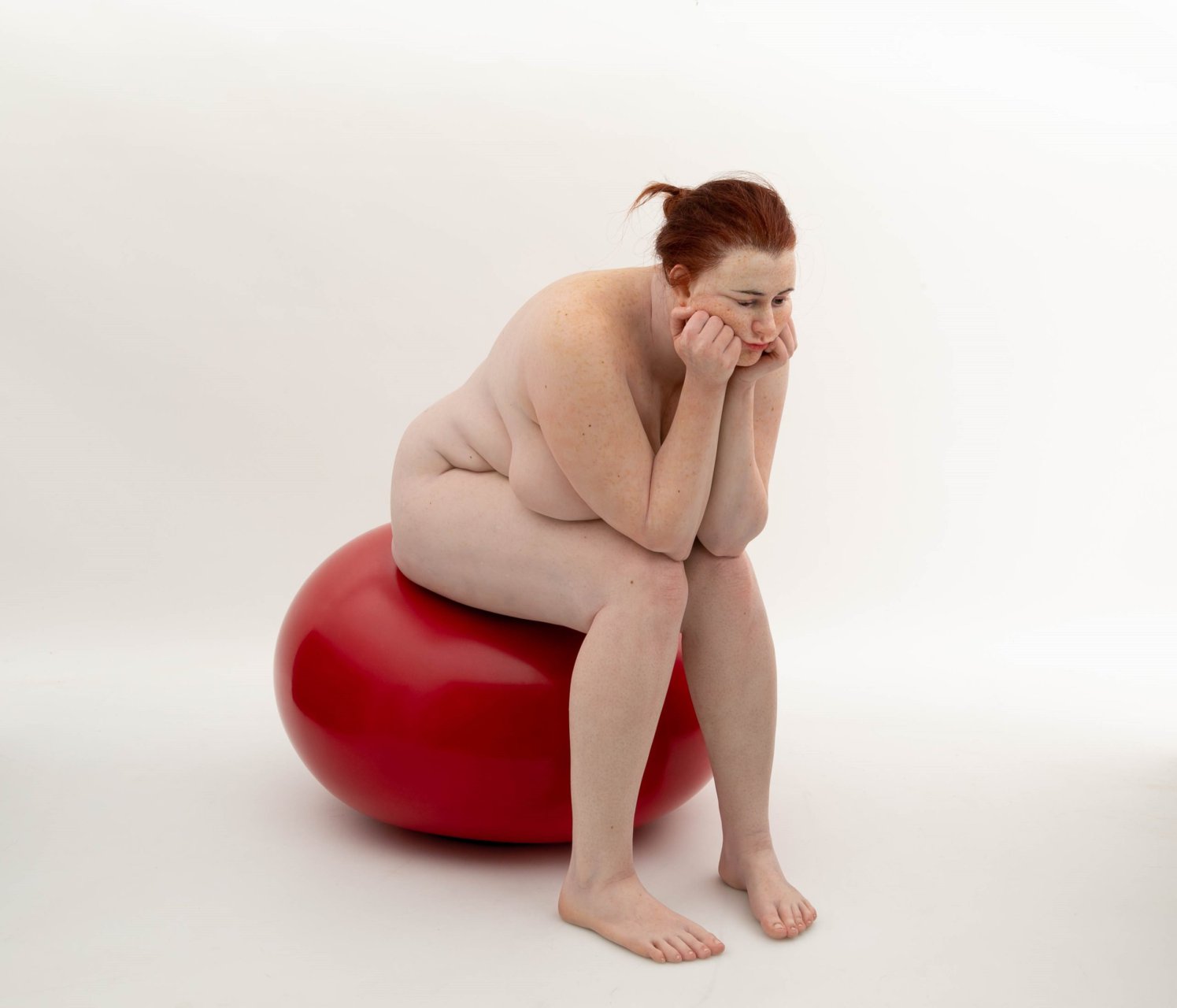
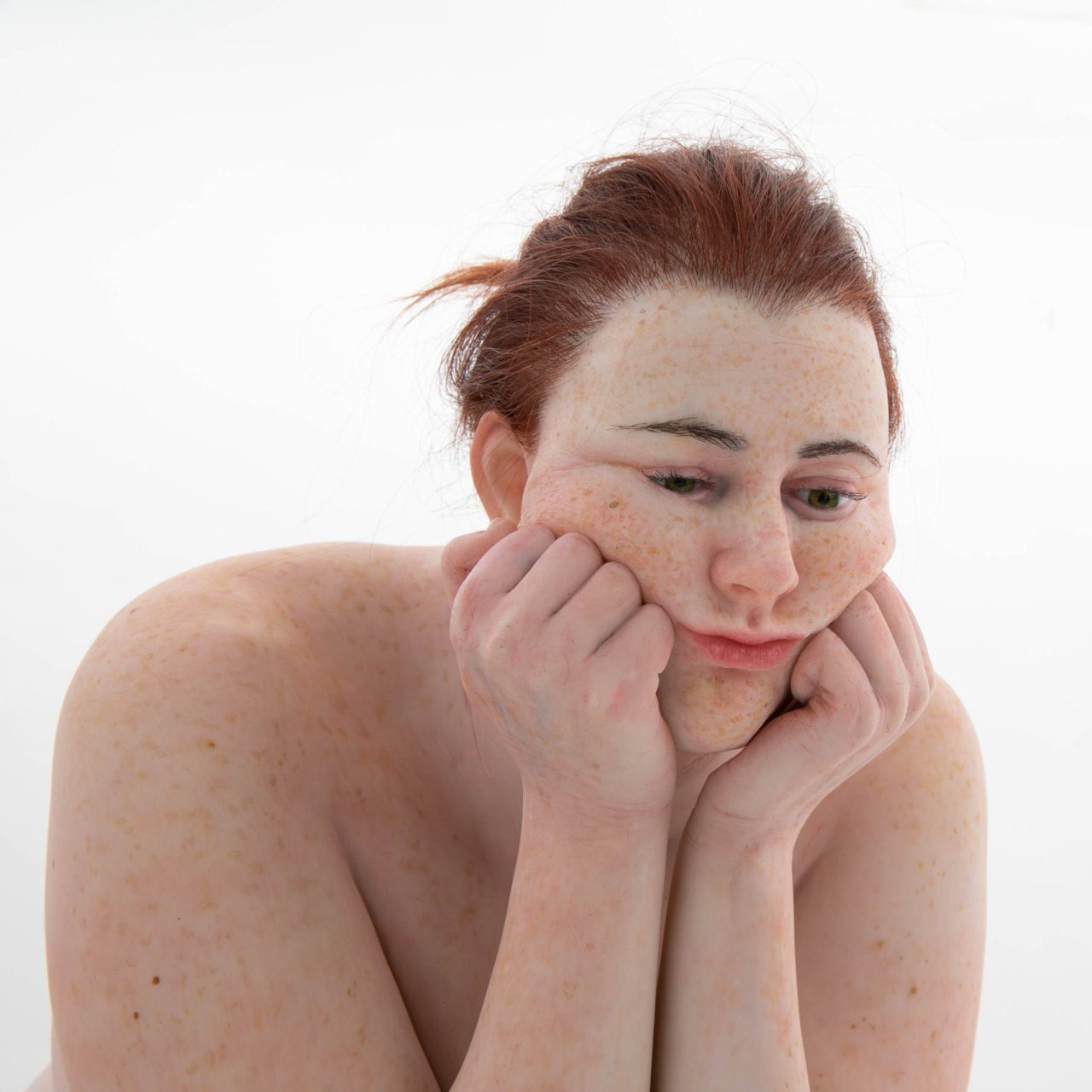
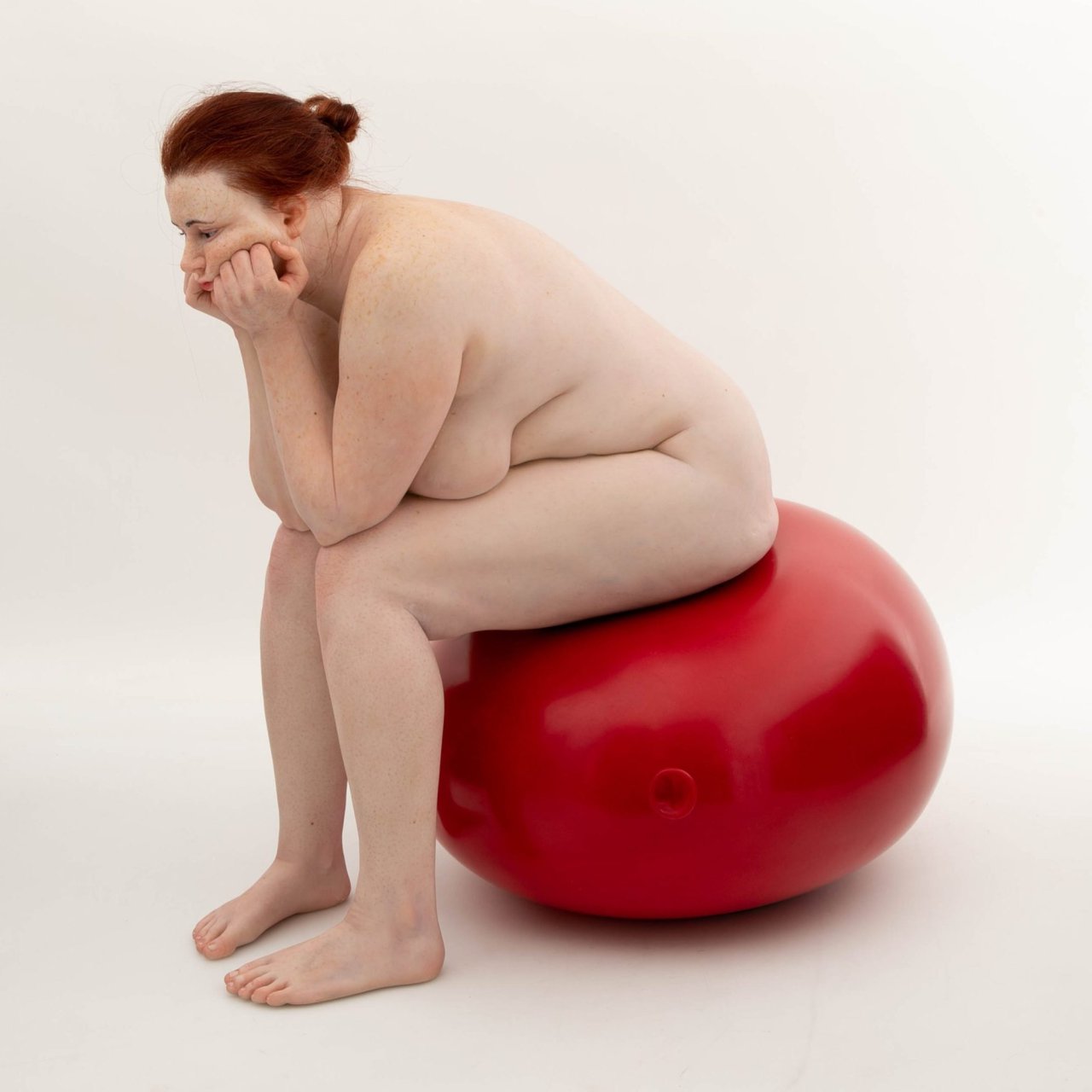
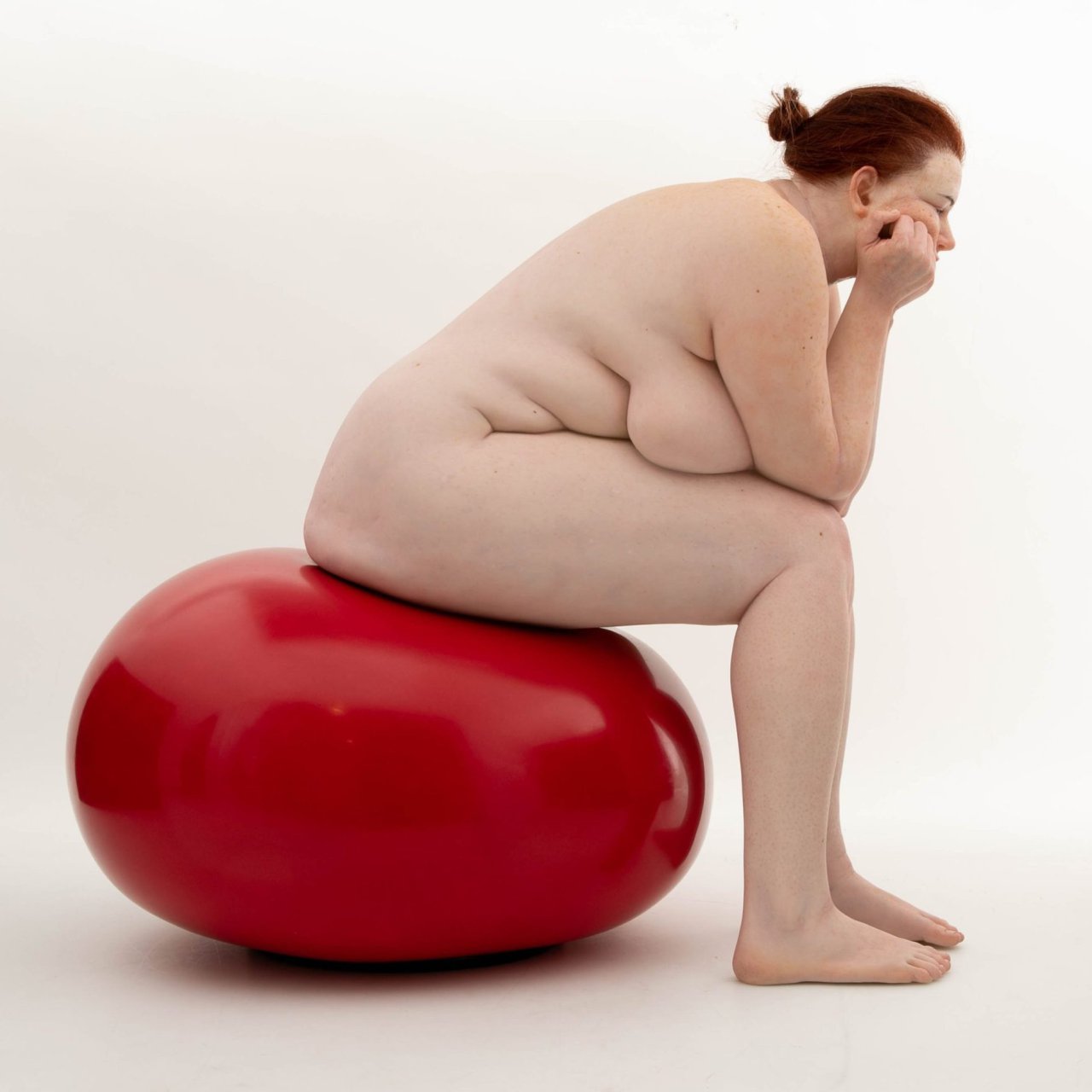
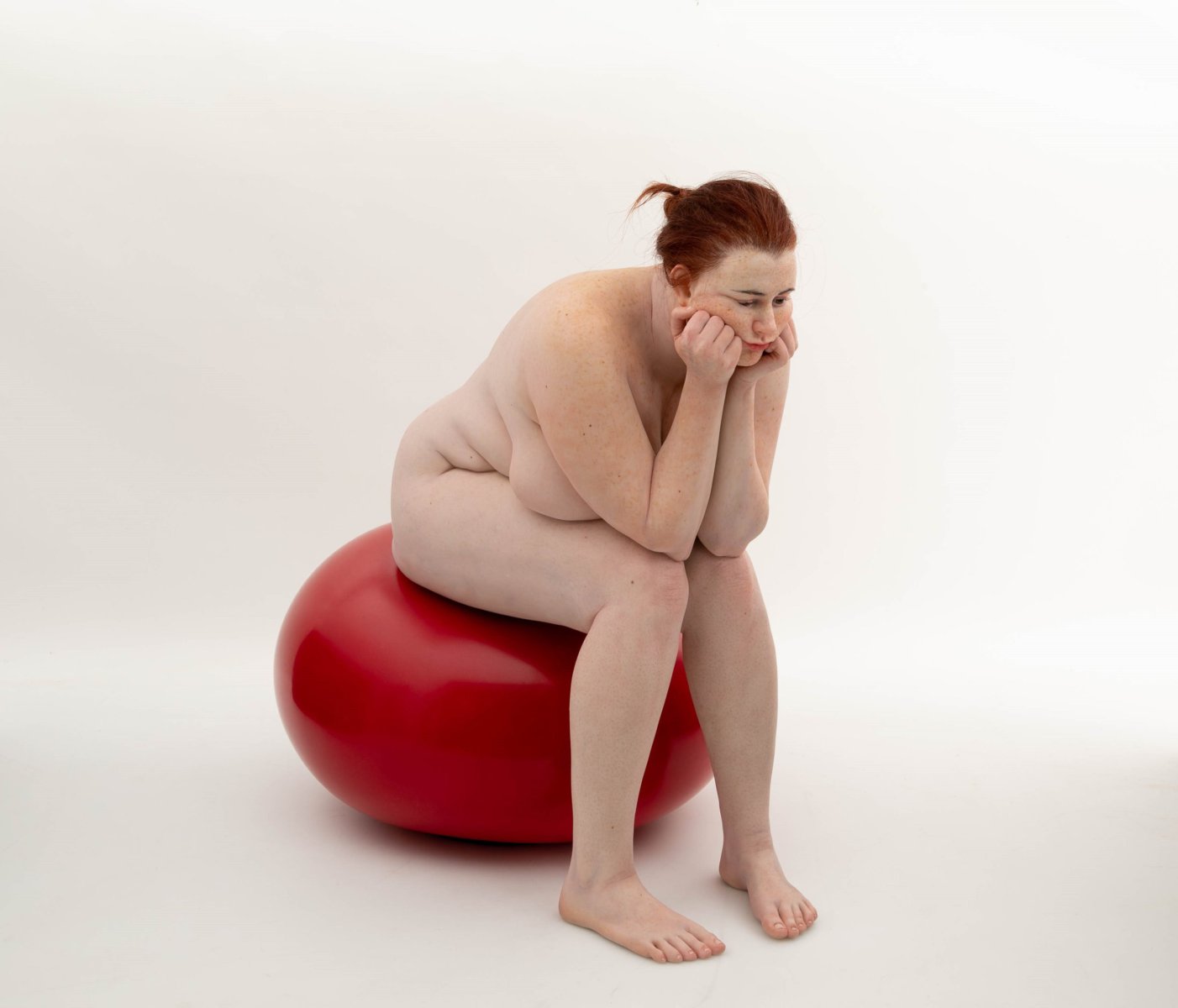
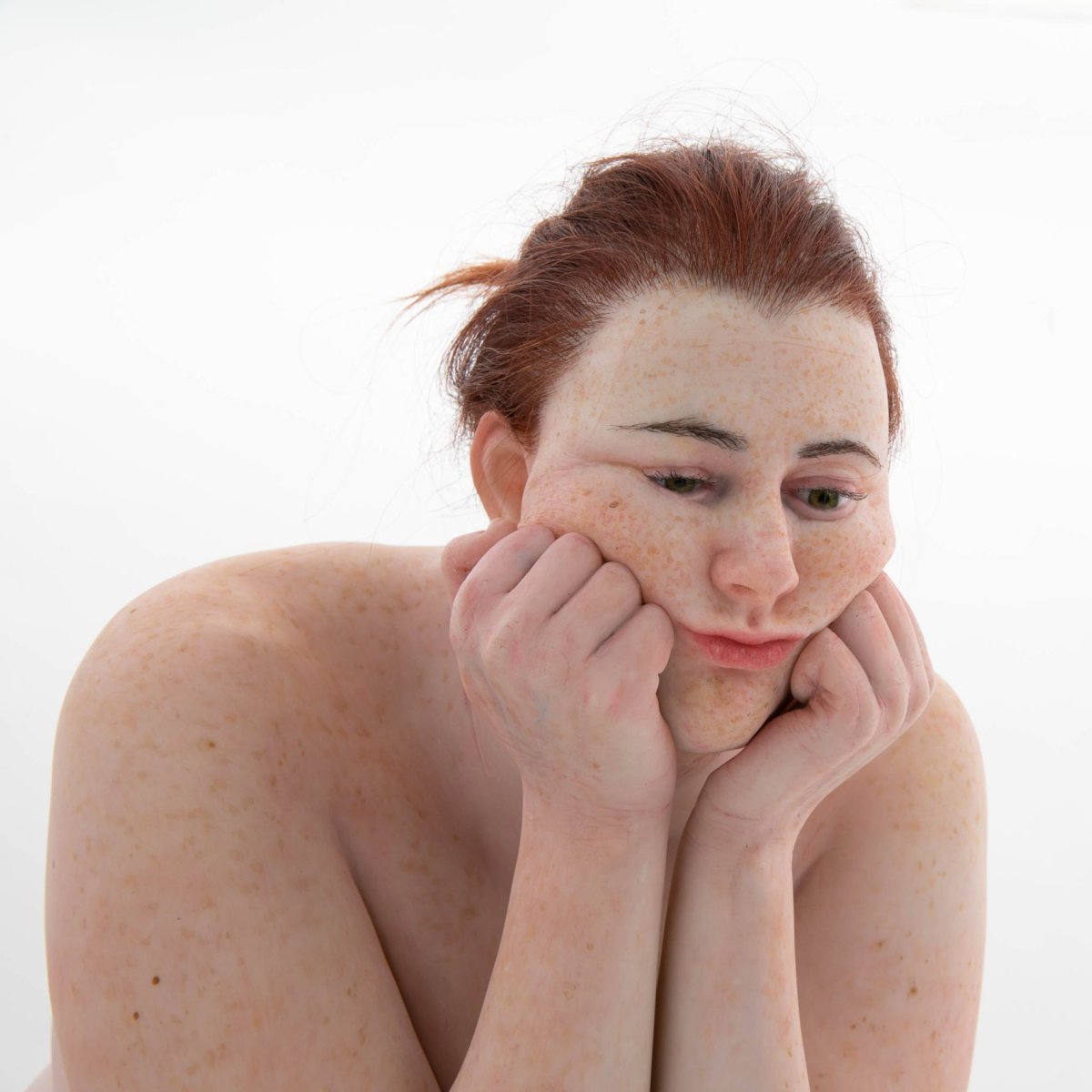
Woman on a balloon - Paul Trefry
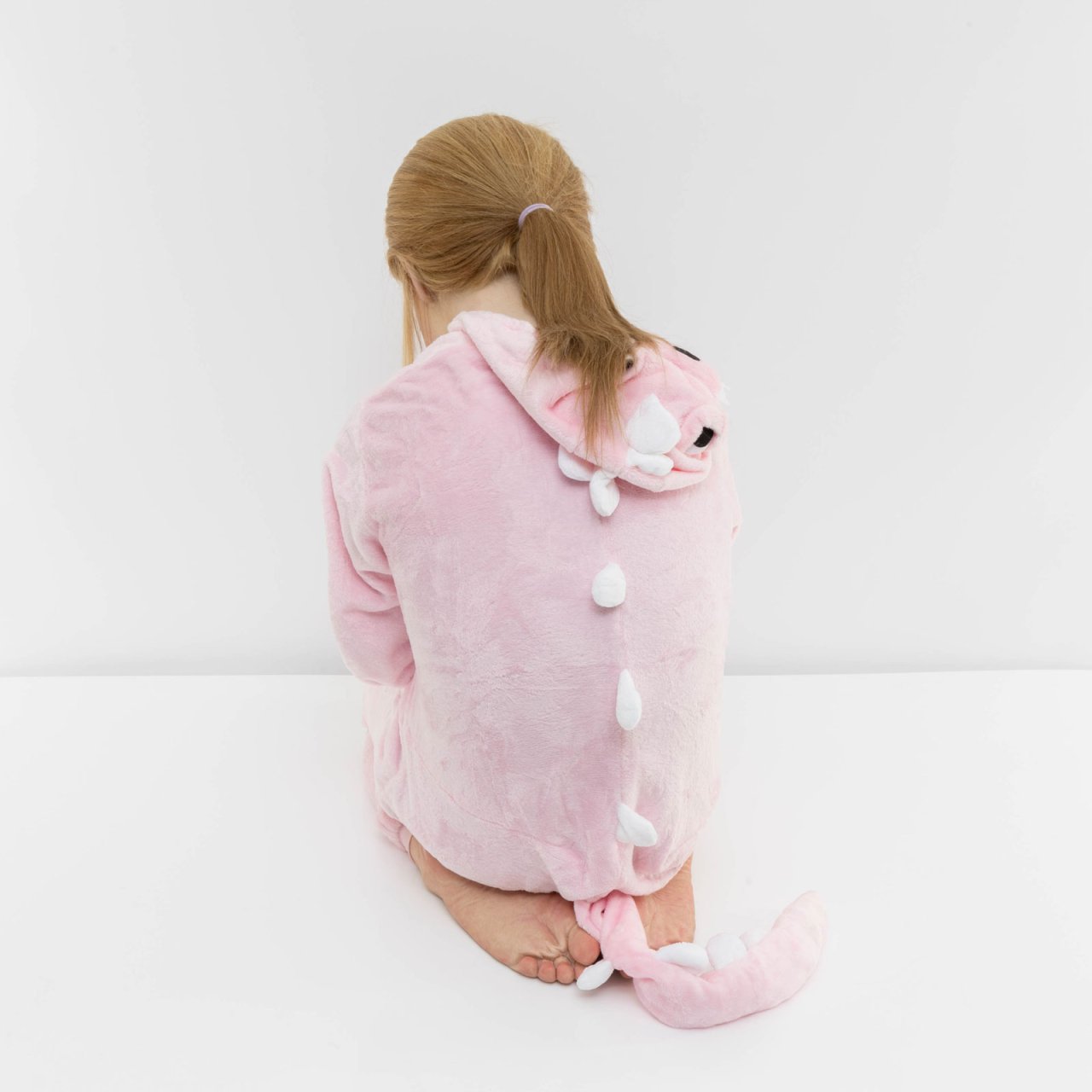
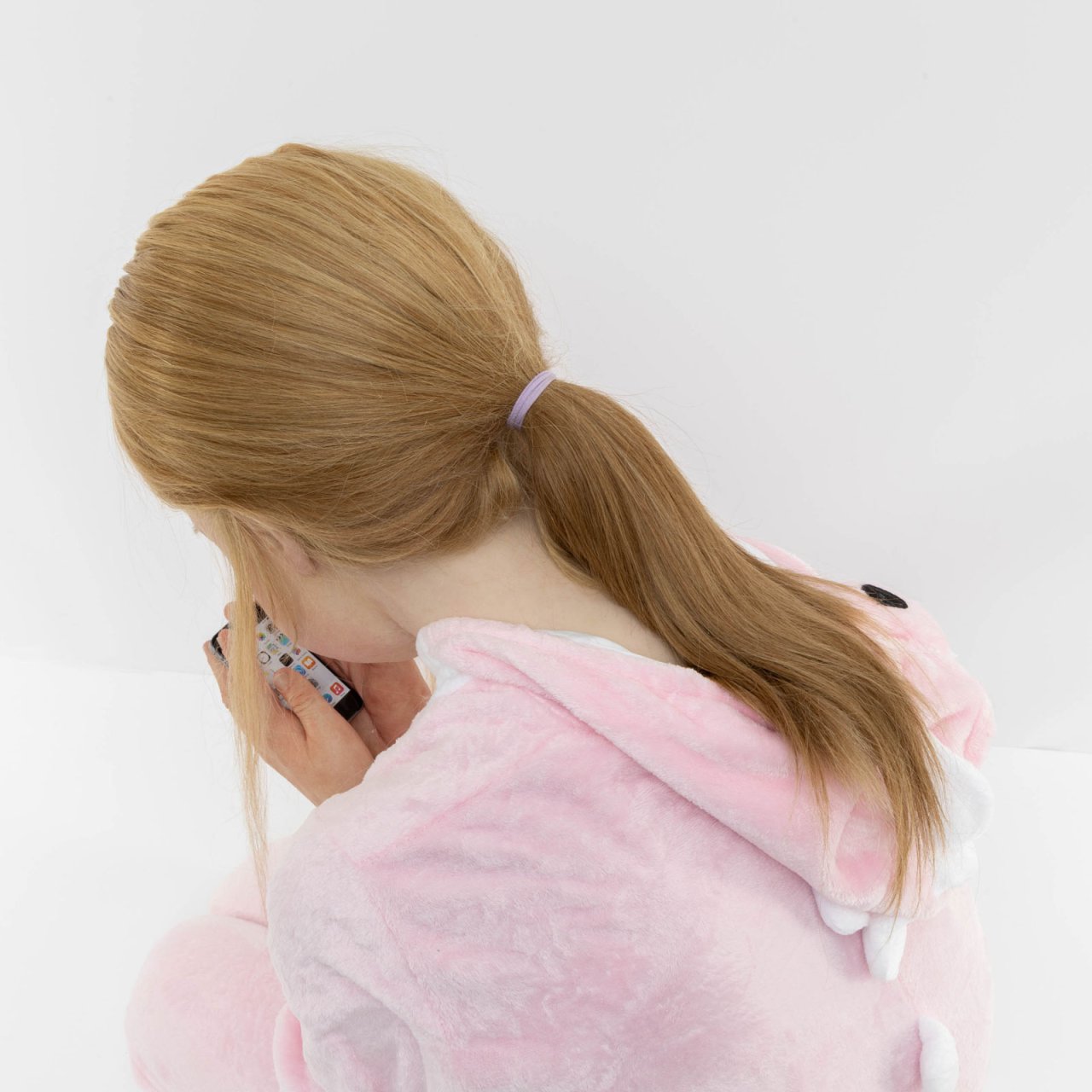
Women have always been bombarded with images of the ideal body shape through the media.
This has escalated in today’s era of social media with the pressure to achieve the unachievable via exposure to unrealistic images, often enhanced by photoshop or filters.
We expect celebrities and models to be beautiful; but what social media has done is provide a platform for influencers to flaunt their flawless skin, perfect curves and cosmetic surgery, which is now more accessible than ever before. As a result, body shaming has become as addictive as our daily feeds.
Beauty (and women) comes in all shapes and sizes; and like art, is subjective. This is what ‘Woman on a Balloon’ represents. All women have the right to feel confident in their own skin and embrace their beauty, otherwise… just like a balloon under constant pressure there will become a point where she will simply burst.
 |
||
Woman on a balloon - Paul Trefry
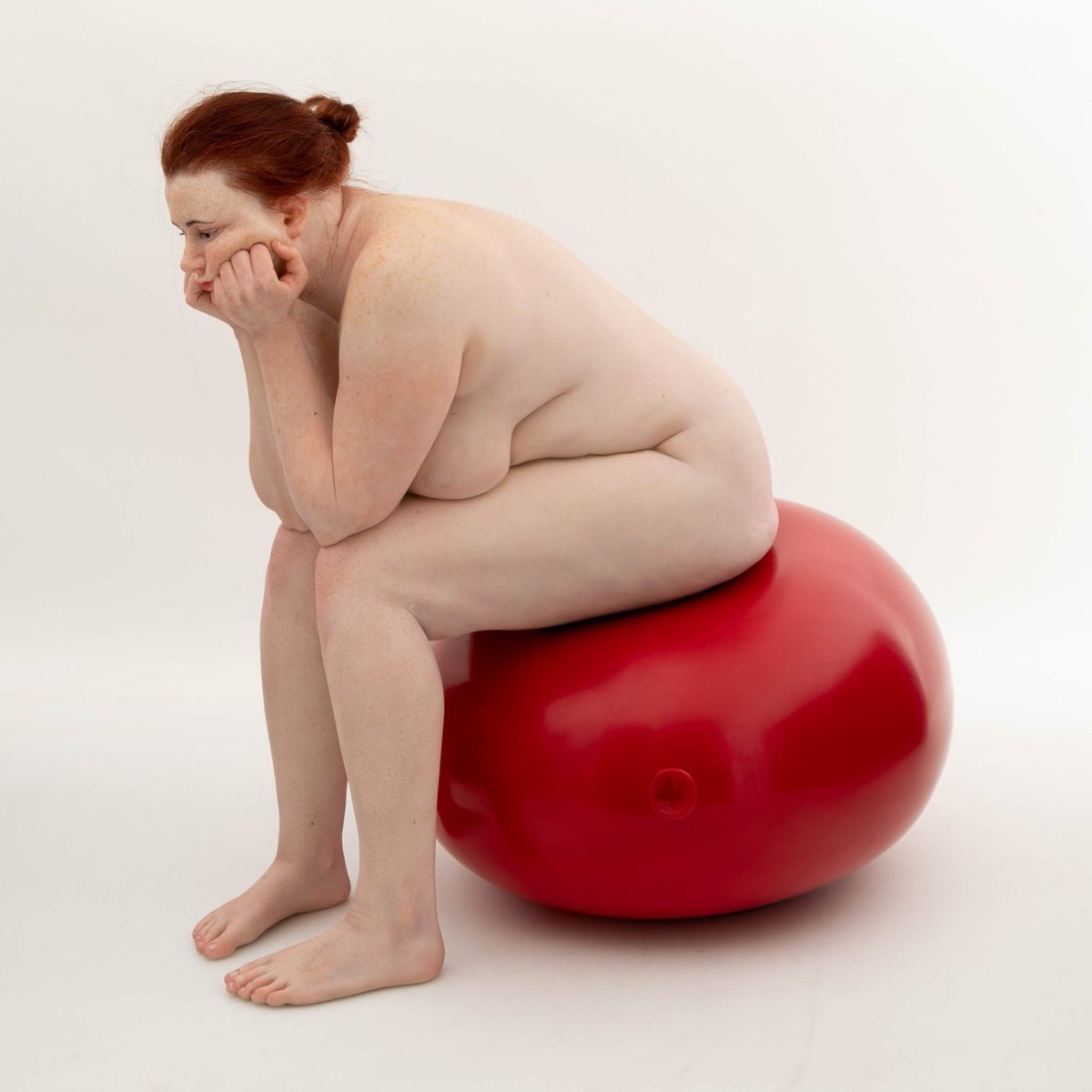
Women have always been bombarded with images of the ideal body shape through the media.
This has escalated in today’s era of social media with the pressure to achieve the unachievable via exposure to unrealistic images, often enhanced by photoshop or filters.
We expect celebrities and models to be beautiful; but what social media has done is provide a platform for influencers to flaunt their flawless skin, perfect curves and cosmetic surgery, which is now more accessible than ever before. As a result, body shaming has become as addictive as our daily feeds.
Beauty (and women) comes in all shapes and sizes; and like art, is subjective. This is what ‘Woman on a Balloon’ represents. All women have the right to feel confident in their own skin and embrace their beauty, otherwise… just like a balloon under constant pressure there will become a point where she will simply burst.
 |
||
Woman on a balloon - Paul Trefry
Women have always been bombarded with images of the ideal body shape through the media.
This has escalated in today’s era of social media with the pressure to achieve the unachievable via exposure to unrealistic images, often enhanced by photoshop or filters.
We expect celebrities and models to be beautiful; but what social media has done is provide a platform for influencers to flaunt their flawless skin, perfect curves and cosmetic surgery, which is now more accessible than ever before. As a result, body shaming has become as addictive as our daily feeds.
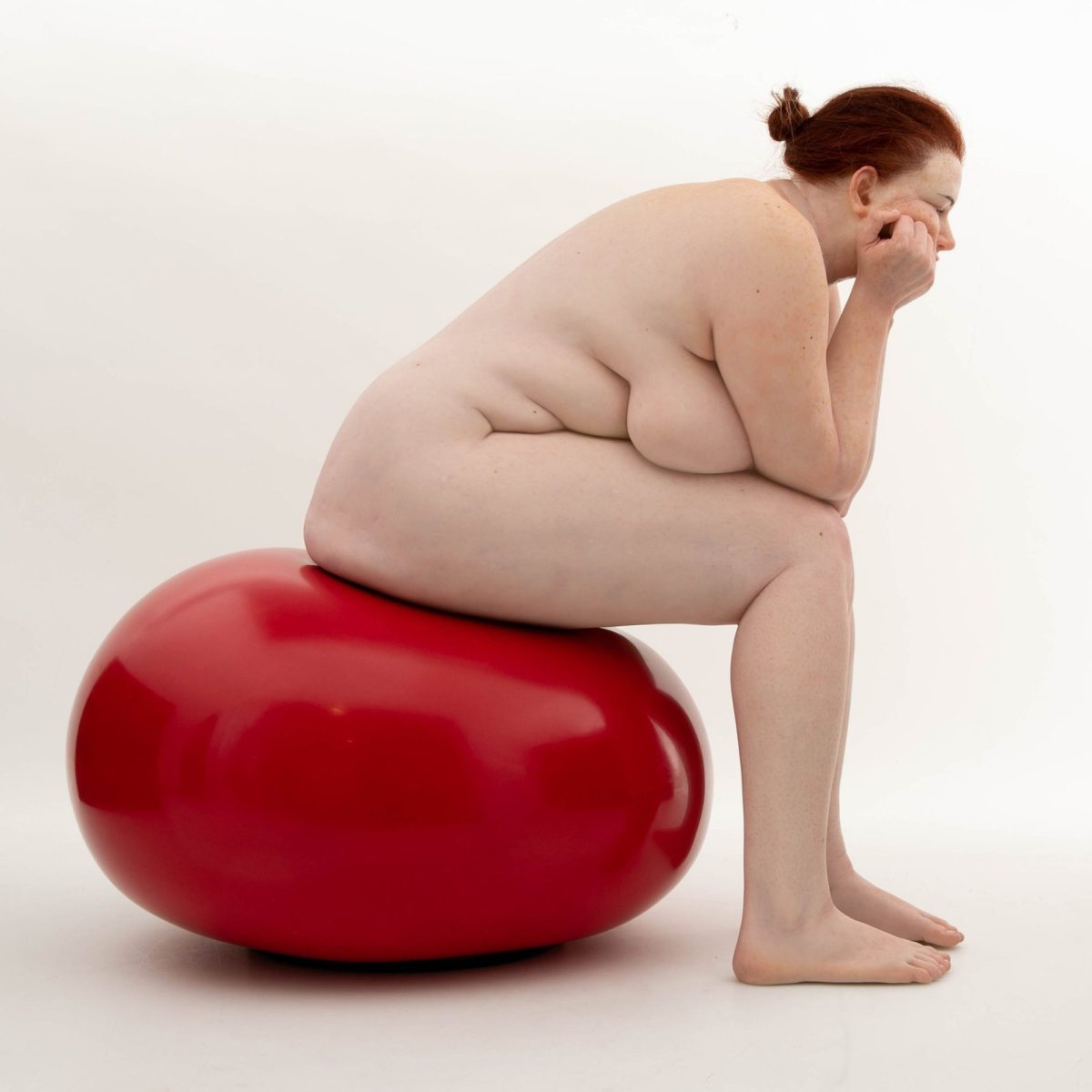
Beauty (and women) comes in all shapes and sizes; and like art, is subjective. This is what ‘Woman on a Balloon’ represents. All women have the right to feel confident in their own skin and embrace their beauty, otherwise… just like a balloon under constant pressure there will become a point where she will simply burst.
 |
||
Woman on a balloon - Paul Trefry
Women have always been bombarded with images of the ideal body shape through the media.
This has escalated in today’s era of social media with the pressure to achieve the unachievable via exposure to unrealistic images, often enhanced by photoshop or filters.
We expect celebrities and models to be beautiful; but what social media has done is provide a platform for influencers to flaunt their flawless skin, perfect curves and cosmetic surgery, which is now more accessible than ever before. As a result, body shaming has become as addictive as our daily feeds.
Beauty (and women) comes in all shapes and sizes; and like art, is subjective. This is what ‘Woman on a Balloon’ represents. All women have the right to feel confident in their own skin and embrace their beauty, otherwise… just like a balloon under constant pressure there will become a point where she will simply burst.
 |
||
Unwanted - Paul Trefry
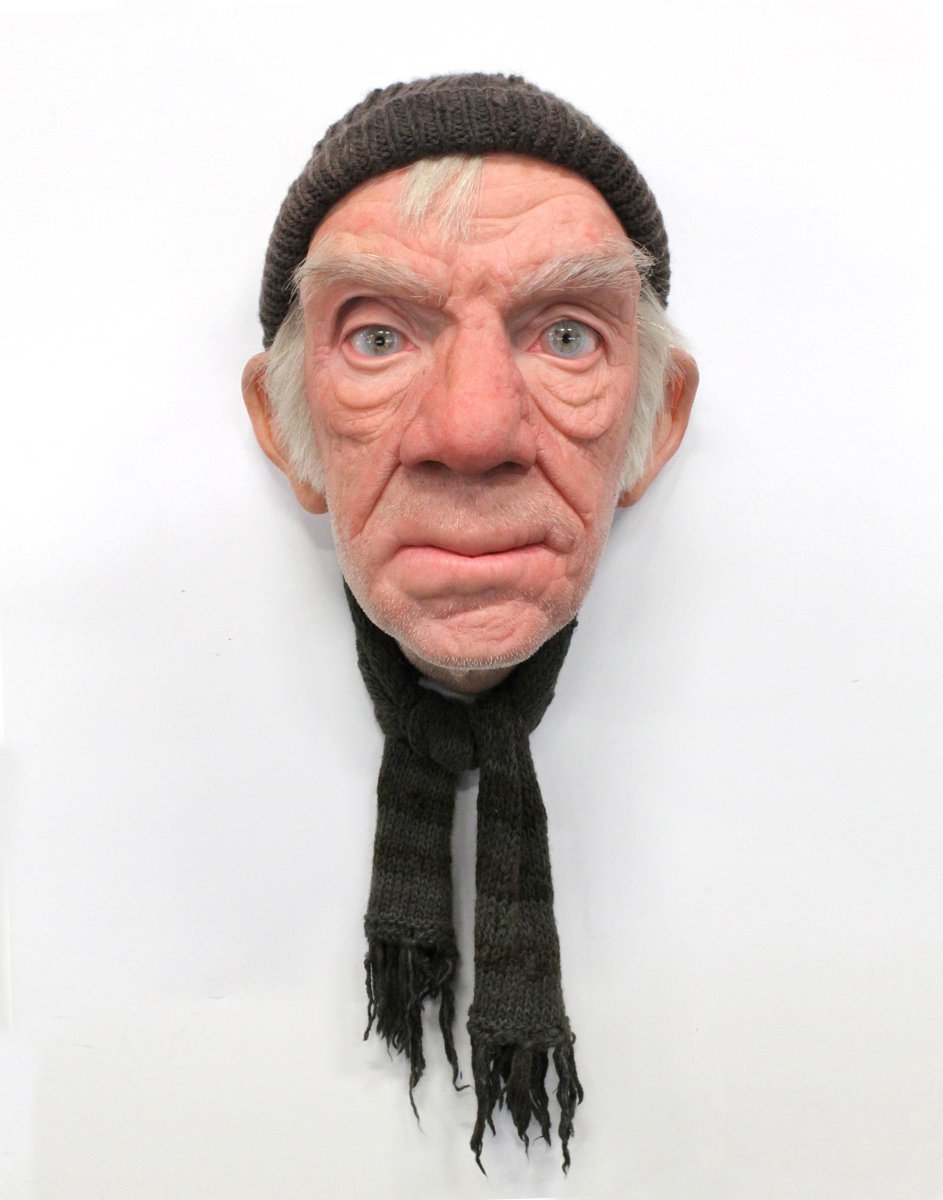
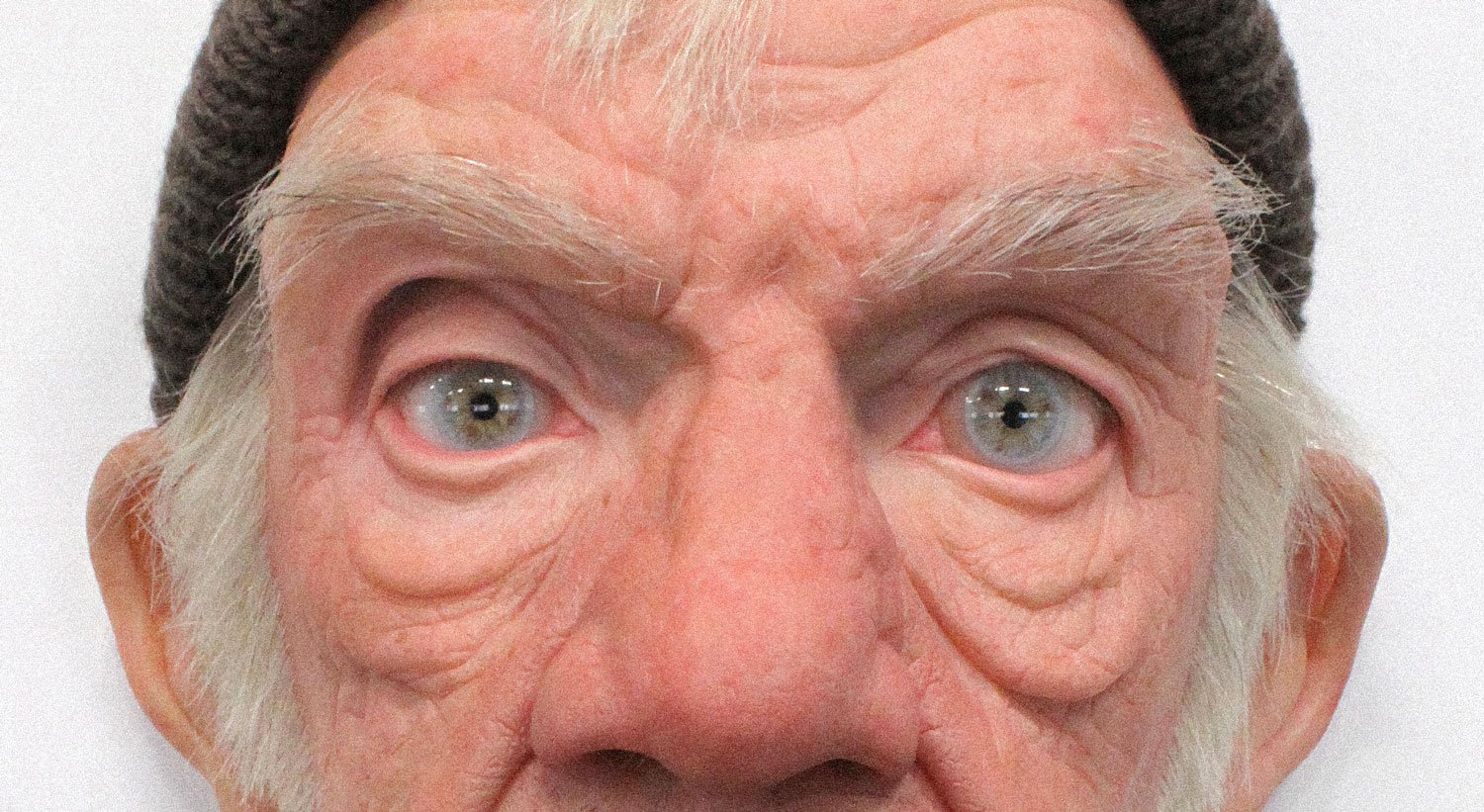
Our faces tell the story of our lives. All of our emotions are expressed through it, joy sadness and anger, our faces carry the burden of our history. Each fold, wrinkle and scar is a constant reminder of the times we have had. Giving us all a unique look. In modern times these facial attributes to some are embarrassing and go to extreme measures to remove them. Face-lifts, fillers and Botox are their tools to remove the facial map of their lives.
 |
||
Unwanted - Paul Trefry
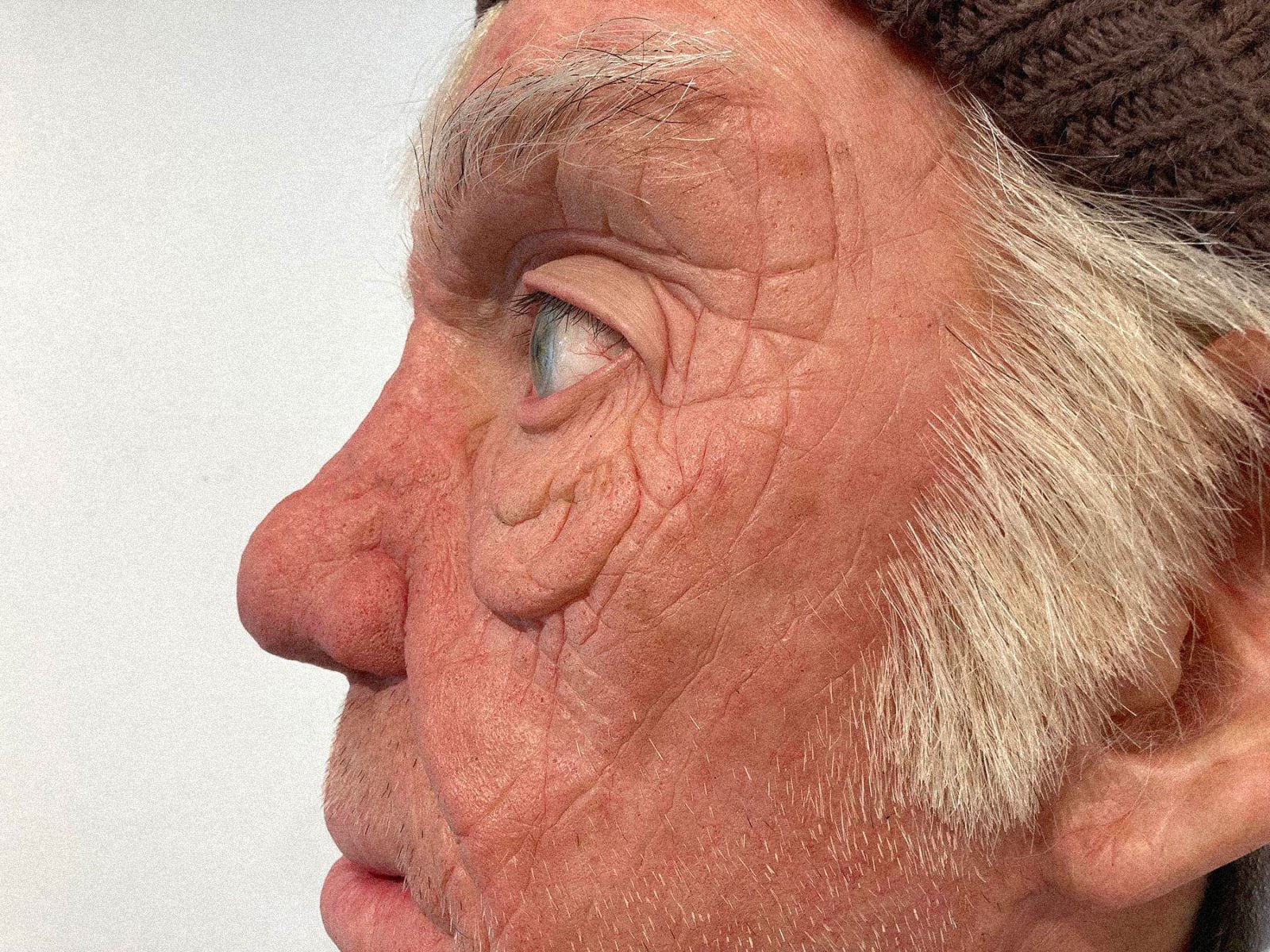
Our faces tell the story of our lives. All of our emotions are expressed through it, joy sadness and anger, our faces carry the burden of our history. Each fold, wrinkle and scar is a constant reminder of the times we have had. Giving us all a unique look. In modern times these facial attributes to some are embarrassing and go to extreme measures to remove them. Face-lifts, fillers and Botox are their tools to remove the facial map of their lives.
 |
||
Unwanted - Paul Trefry
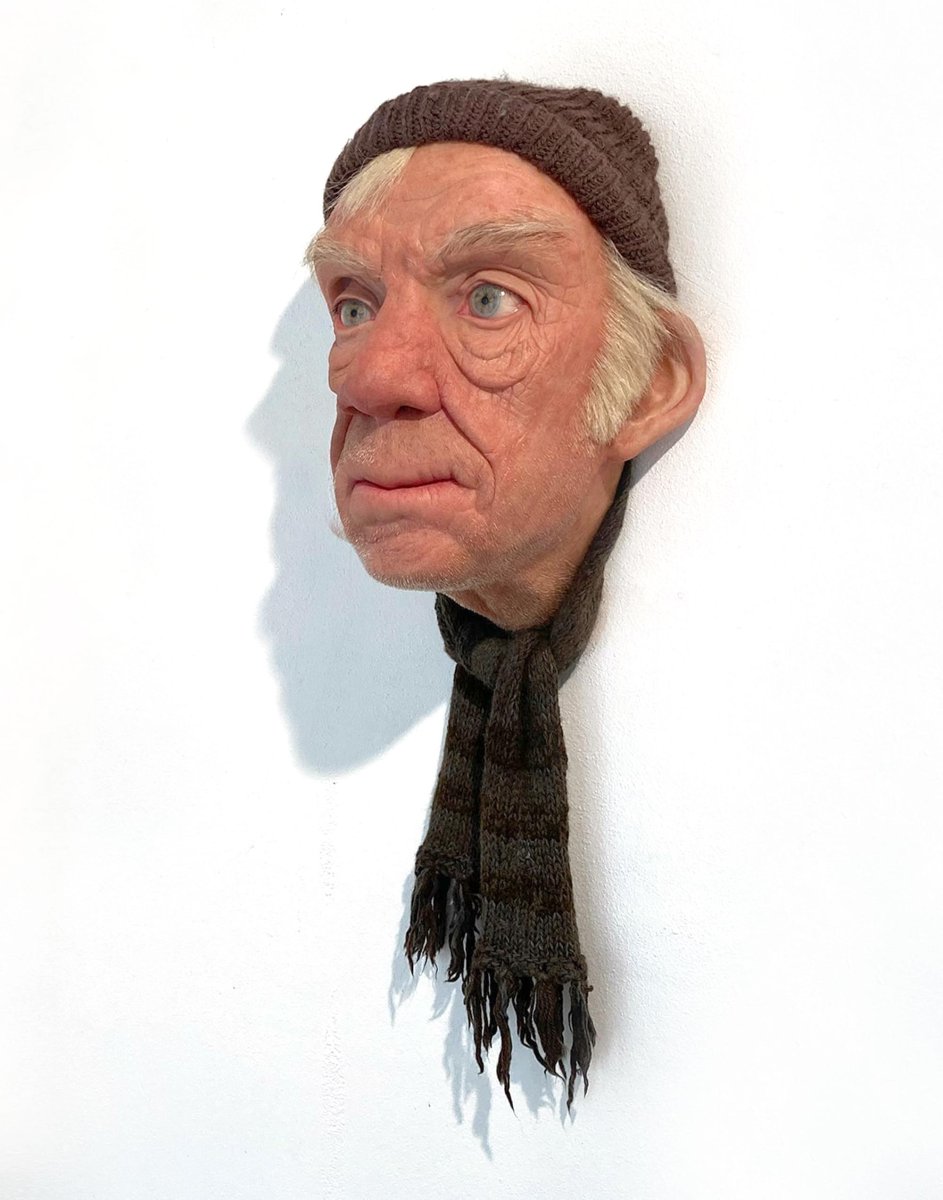
Our faces tell the story of our lives. All of our emotions are expressed through it, joy sadness and anger, our faces carry the burden of our history. Each fold, wrinkle and scar is a constant reminder of the times we have had. Giving us all a unique look. In modern times these facial attributes to some are embarrassing and go to extreme measures to remove them. Face-lifts, fillers and Botox are their tools to remove the facial map of their lives.
 |
||
Unwanted - Paul Trefry
Our faces tell the story of our lives. All of our emotions are expressed through it, joy sadness and anger, our faces carry the burden of our history. Each fold, wrinkle and scar is a constant reminder of the times we have had. Giving us all a unique look. In modern times these facial attributes to some are embarrassing and go to extreme measures to remove them. Face-lifts, fillers and Botox are their tools to remove the facial map of their lives.
 |
||
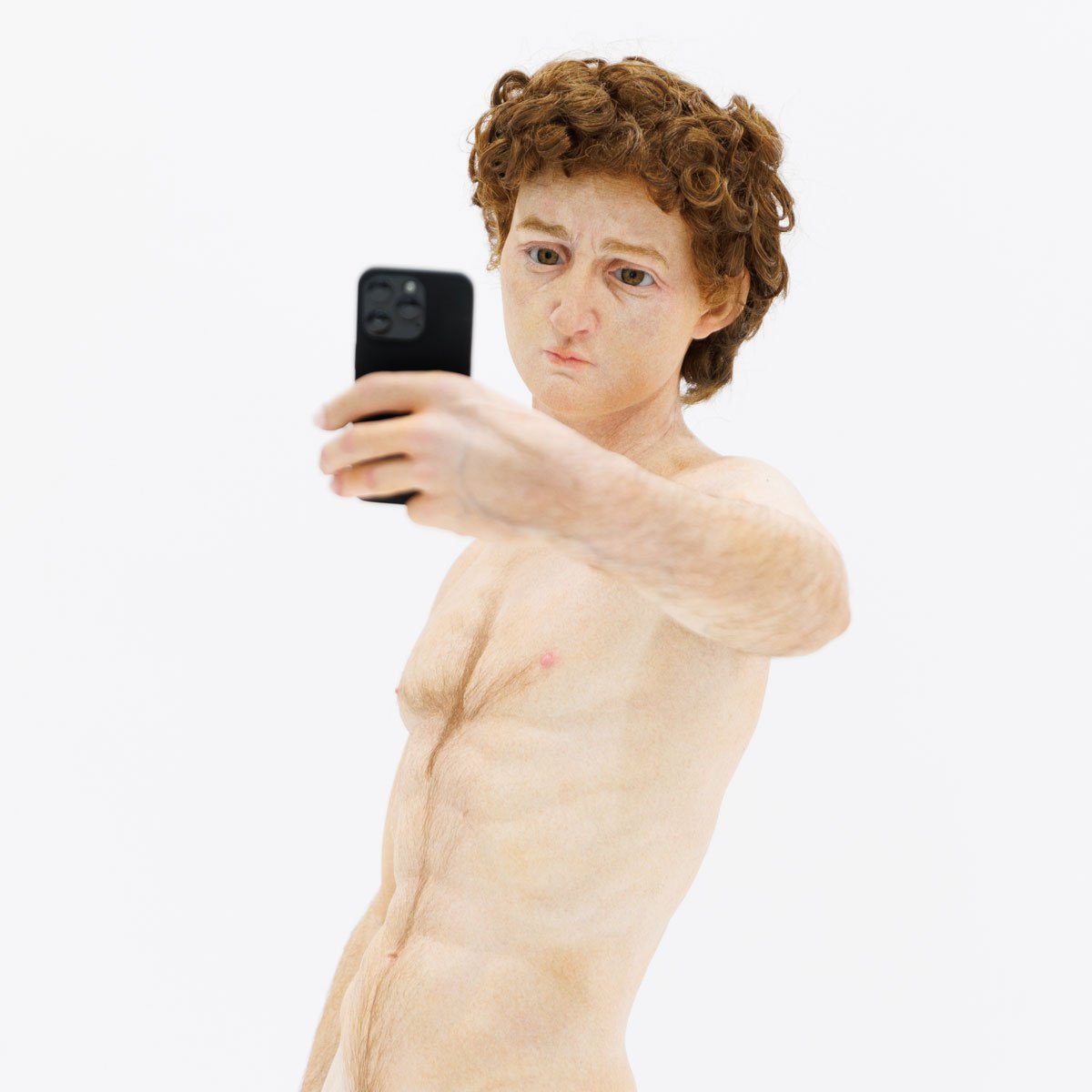
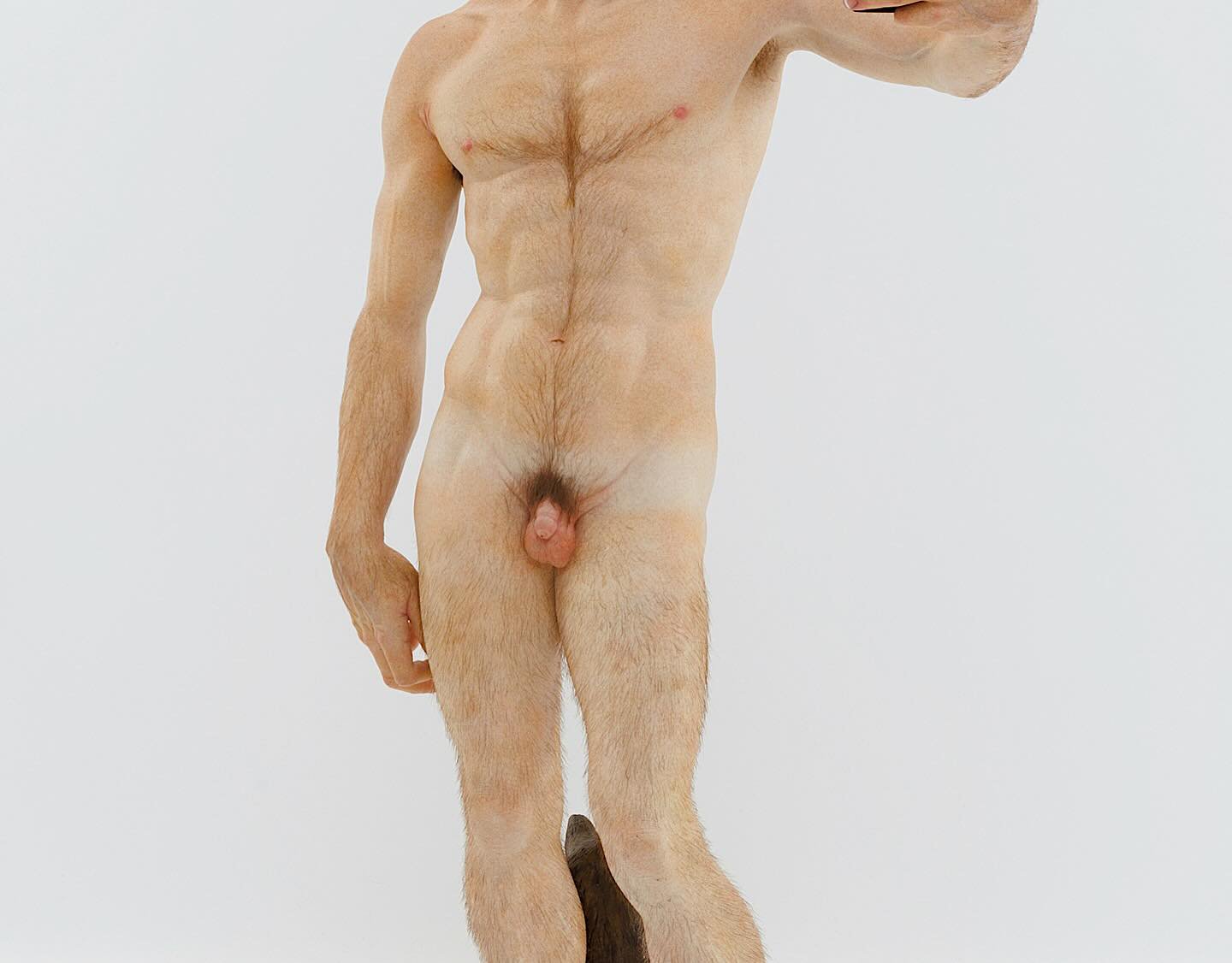
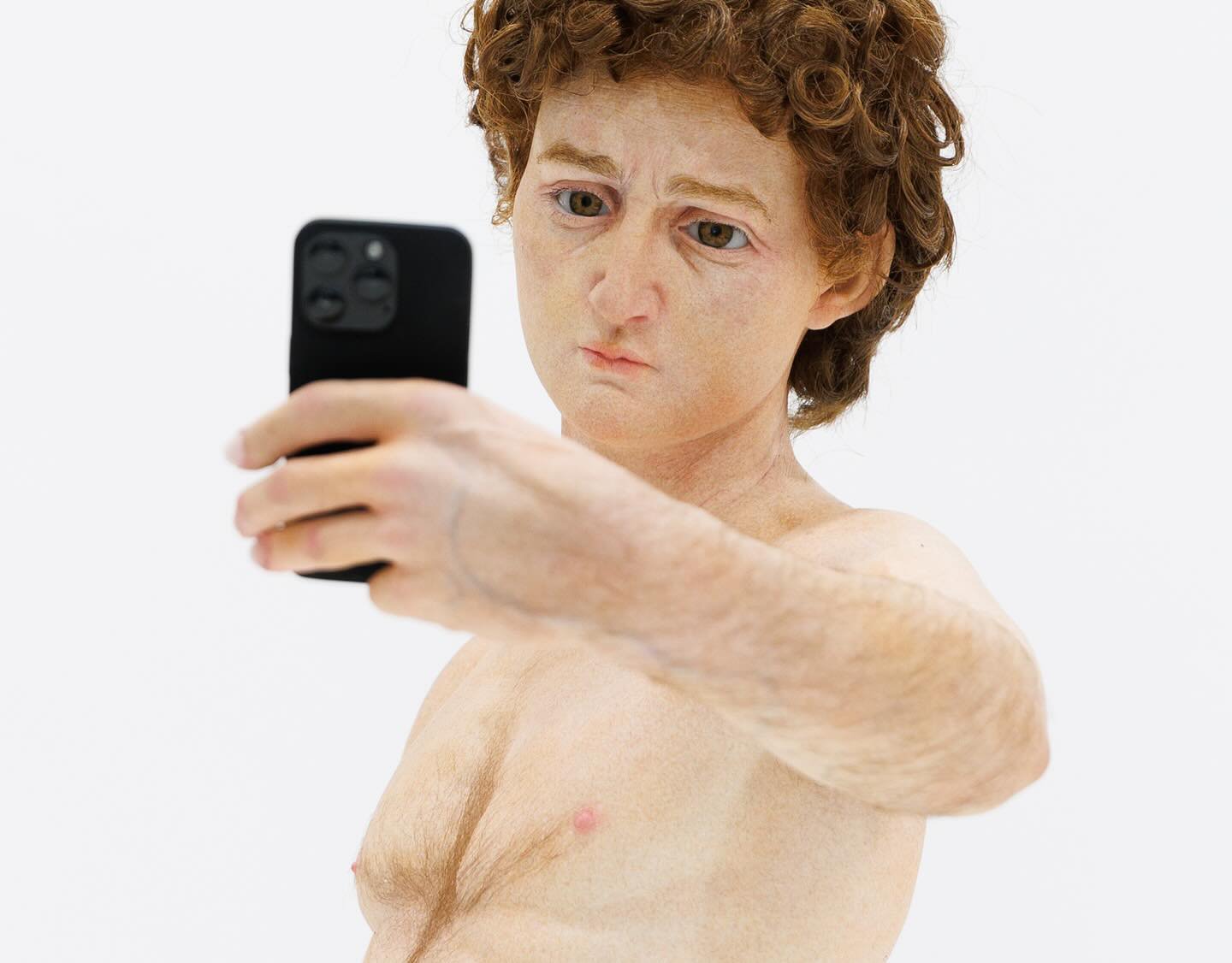
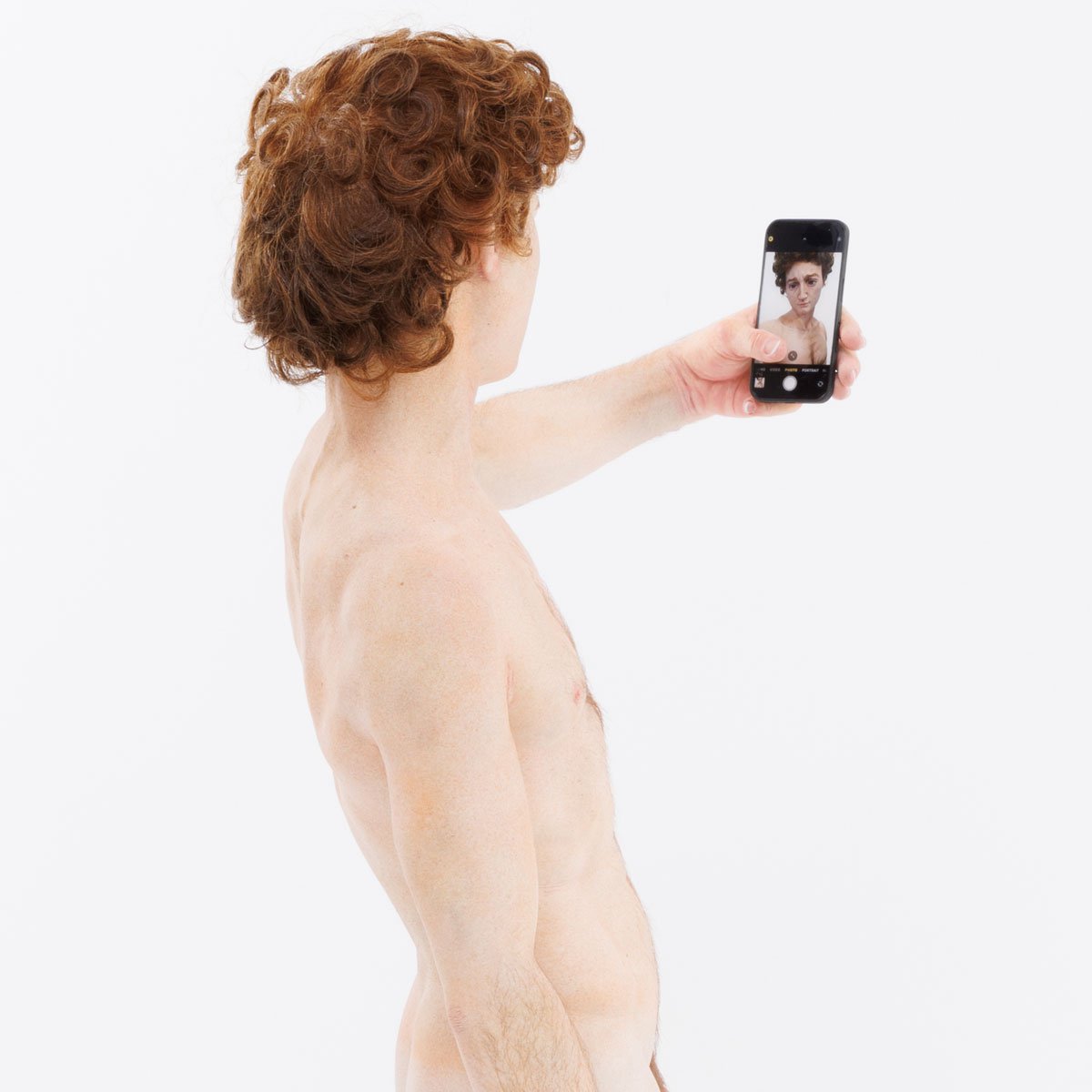
Selfie of David - Paul Trefry
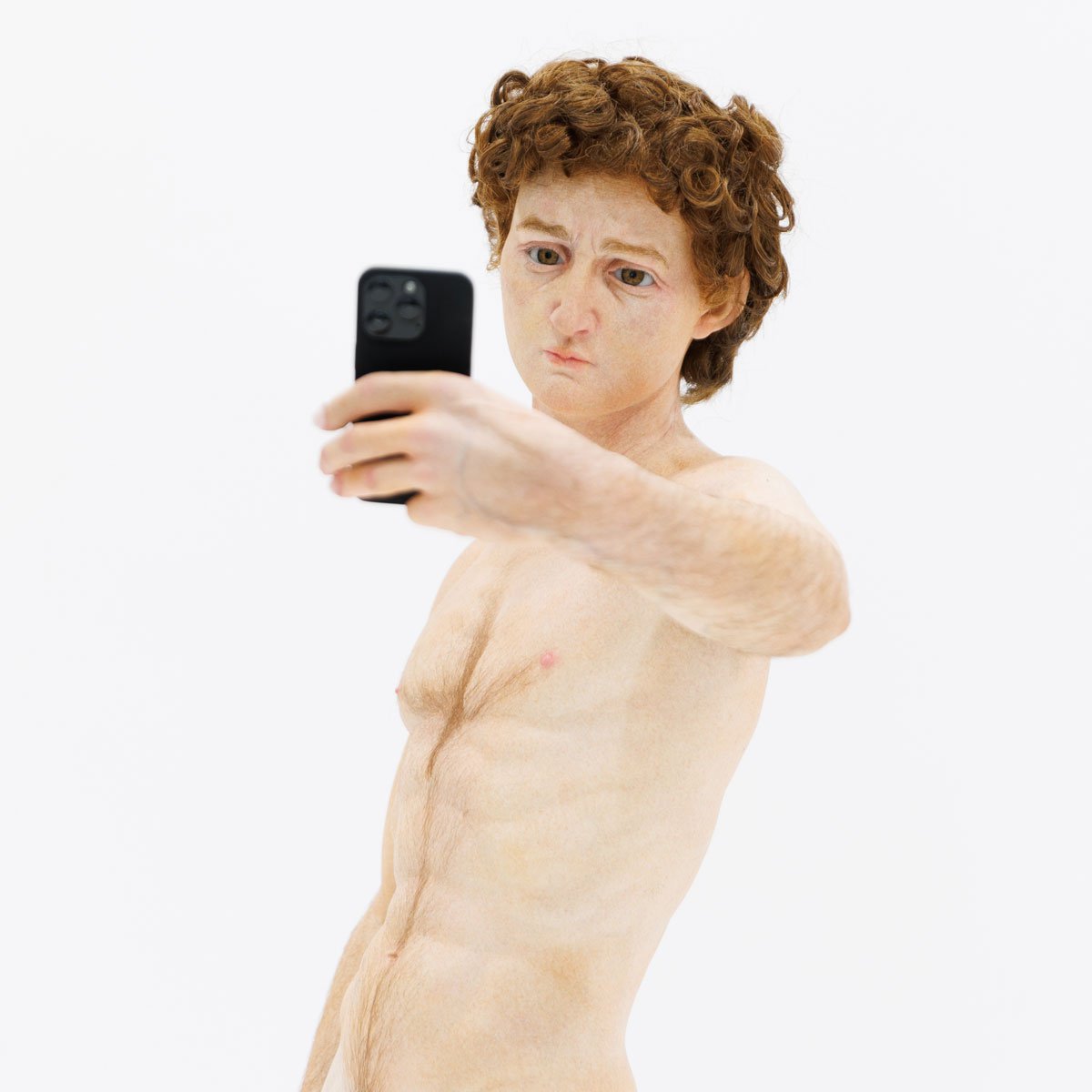
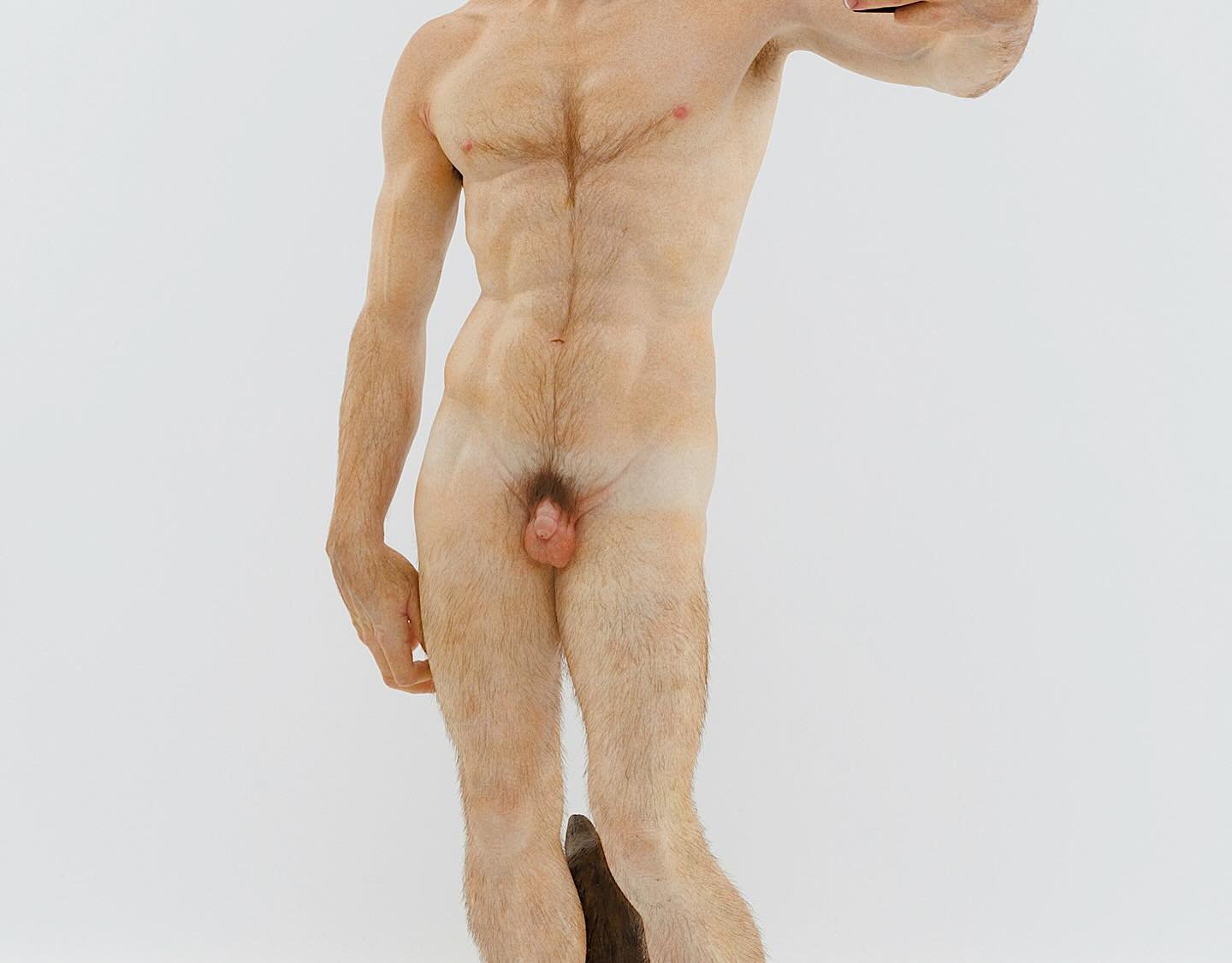
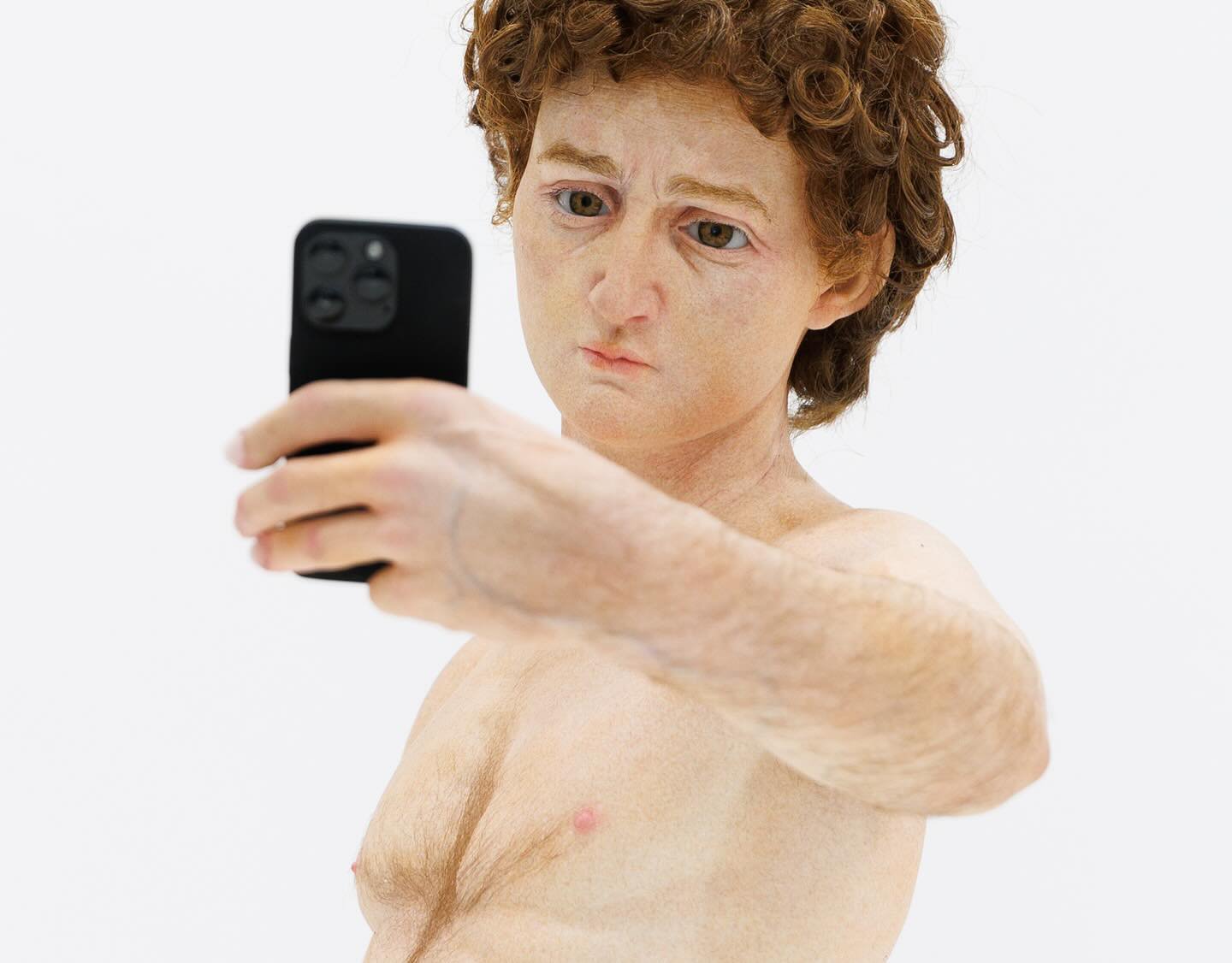
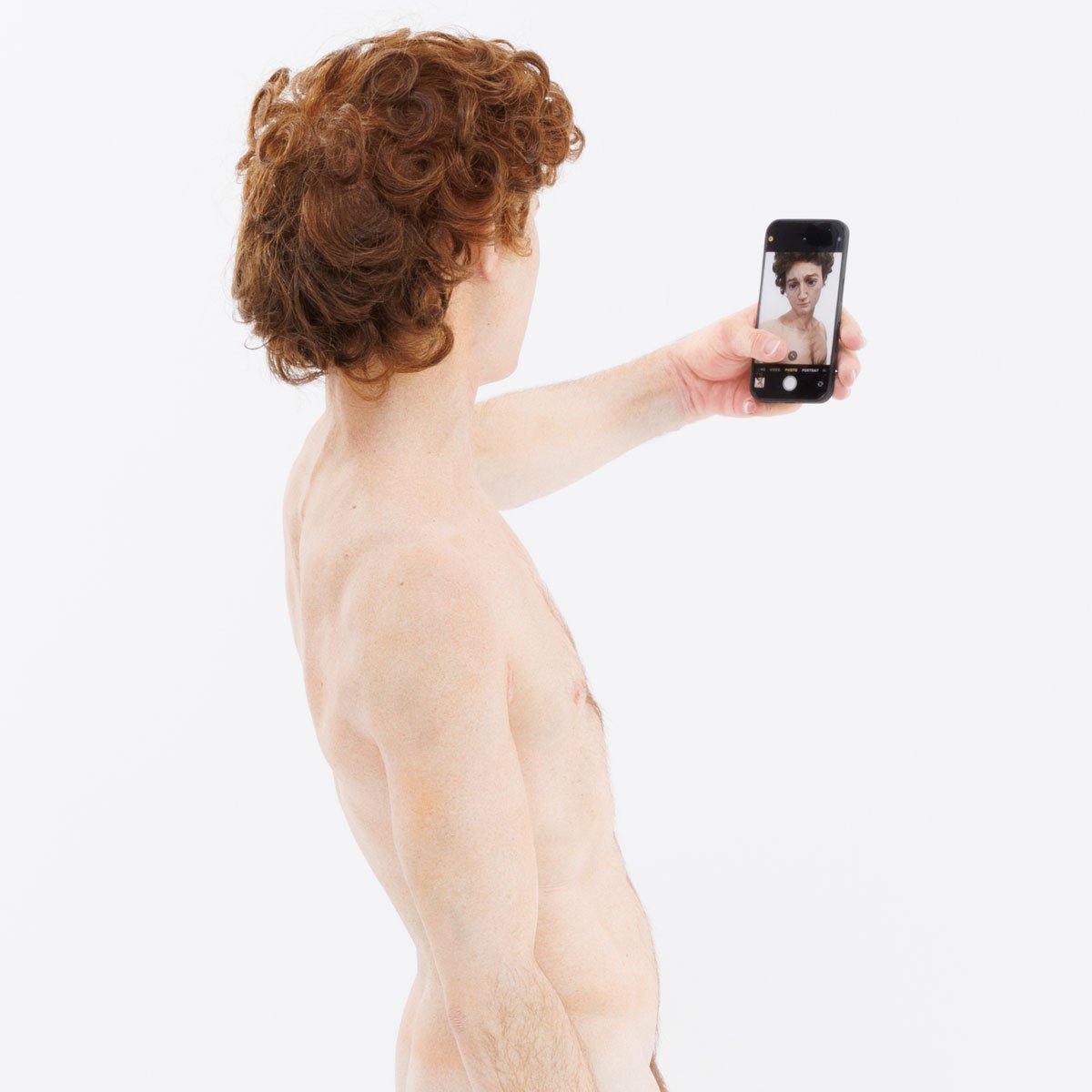
Paul Trefry, based in Sydney, is an artist whose work primarily consists of hyper realistic sculpture. Through his creations, Trefry aims to explore the concept of self-worth in a digital age, where the pursuit of public acceptance and validation through platforms such as Instagram has become ubiquitous. Utilising his medium of choice, Trefry meticulously sculpts statues of famous figures, such as the iconic Statue of David holding a mobile phone.
By blending classical and contemporary elements, Trefry’s sculptures challenge viewers to critically examine their own self-justifications and the impact of social media on their sense of self. As Trefry continues to gain followers and recognition, his work serves as a reminder of the ever-evolving landscape of self-representation and the constant quest for external validation.
 |
||
Selfie of David - Paul Trefry
Paul Trefry, based in Sydney, is an artist whose work primarily consists of hyper realistic sculpture. Through his creations, Trefry aims to explore the concept of self-worth in a digital age, where the pursuit of public acceptance and validation through platforms such as Instagram has become ubiquitous. Utilising his medium of choice, Trefry meticulously sculpts statues of famous figures, such as the iconic Statue of David holding a mobile phone.
By blending classical and contemporary elements, Trefry’s sculptures challenge viewers to critically examine their own self-justifications and the impact of social media on their sense of self. As Trefry continues to gain followers and recognition, his work serves as a reminder of the ever-evolving landscape of self-representation and the constant quest for external validation.
 |
||
Selfie of David - Paul Trefry
Paul Trefry, based in Sydney, is an artist whose work primarily consists of hyper realistic sculpture. Through his creations, Trefry aims to explore the concept of self-worth in a digital age, where the pursuit of public acceptance and validation through platforms such as Instagram has become ubiquitous. Utilising his medium of choice, Trefry meticulously sculpts statues of famous figures, such as the iconic Statue of David holding a mobile phone.
By blending classical and contemporary elements, Trefry’s sculptures challenge viewers to critically examine their own self-justifications and the impact of social media on their sense of self. As Trefry continues to gain followers and recognition, his work serves as a reminder of the ever-evolving landscape of self-representation and the constant quest for external validation.
 |
||
Selfie of David - Paul Trefry
Paul Trefry, based in Sydney, is an artist whose work primarily consists of hyper realistic sculpture. Through his creations, Trefry aims to explore the concept of self-worth in a digital age, where the pursuit of public acceptance and validation through platforms such as Instagram has become ubiquitous. Utilising his medium of choice, Trefry meticulously sculpts statues of famous figures, such as the iconic Statue of David holding a mobile phone.
By blending classical and contemporary elements, Trefry’s sculptures challenge viewers to critically examine their own self-justifications and the impact of social media on their sense of self. As Trefry continues to gain followers and recognition, his work serves as a reminder of the ever-evolving landscape of self-representation and the constant quest for external validation.
 |
||
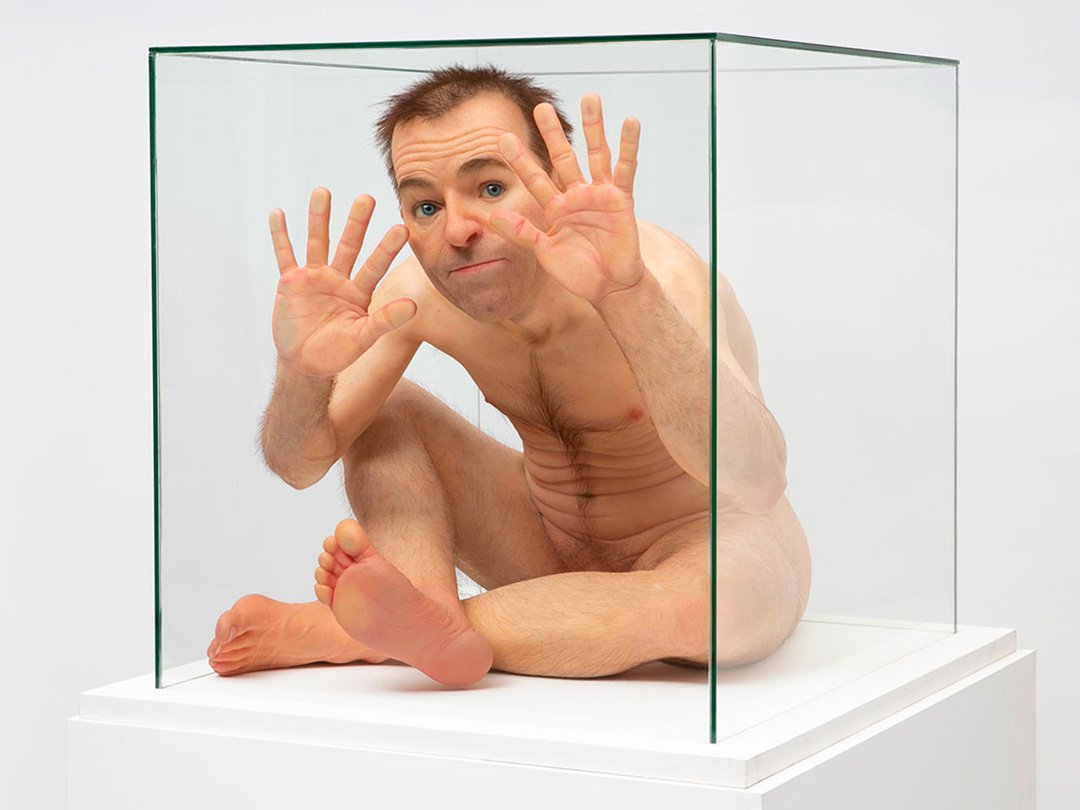
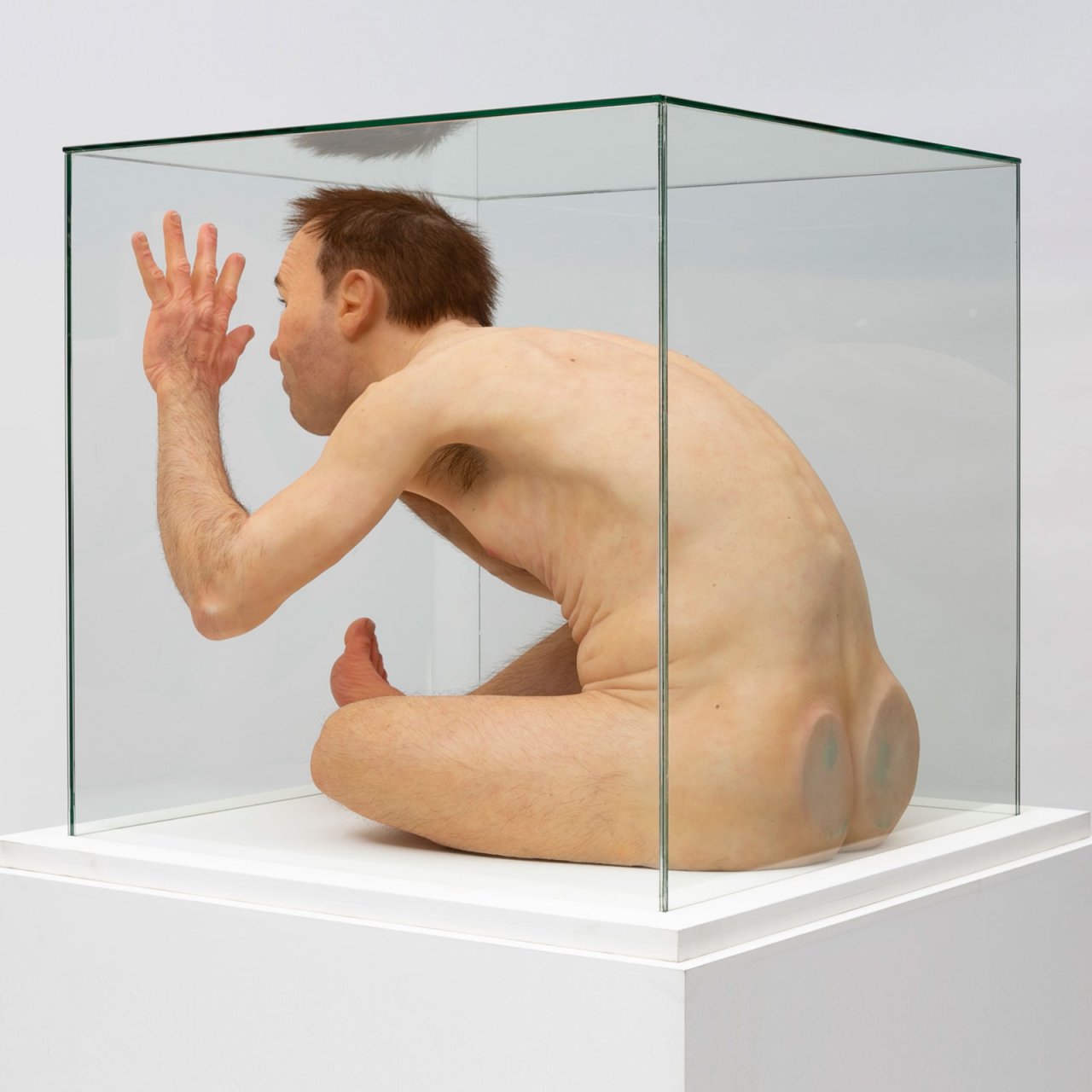
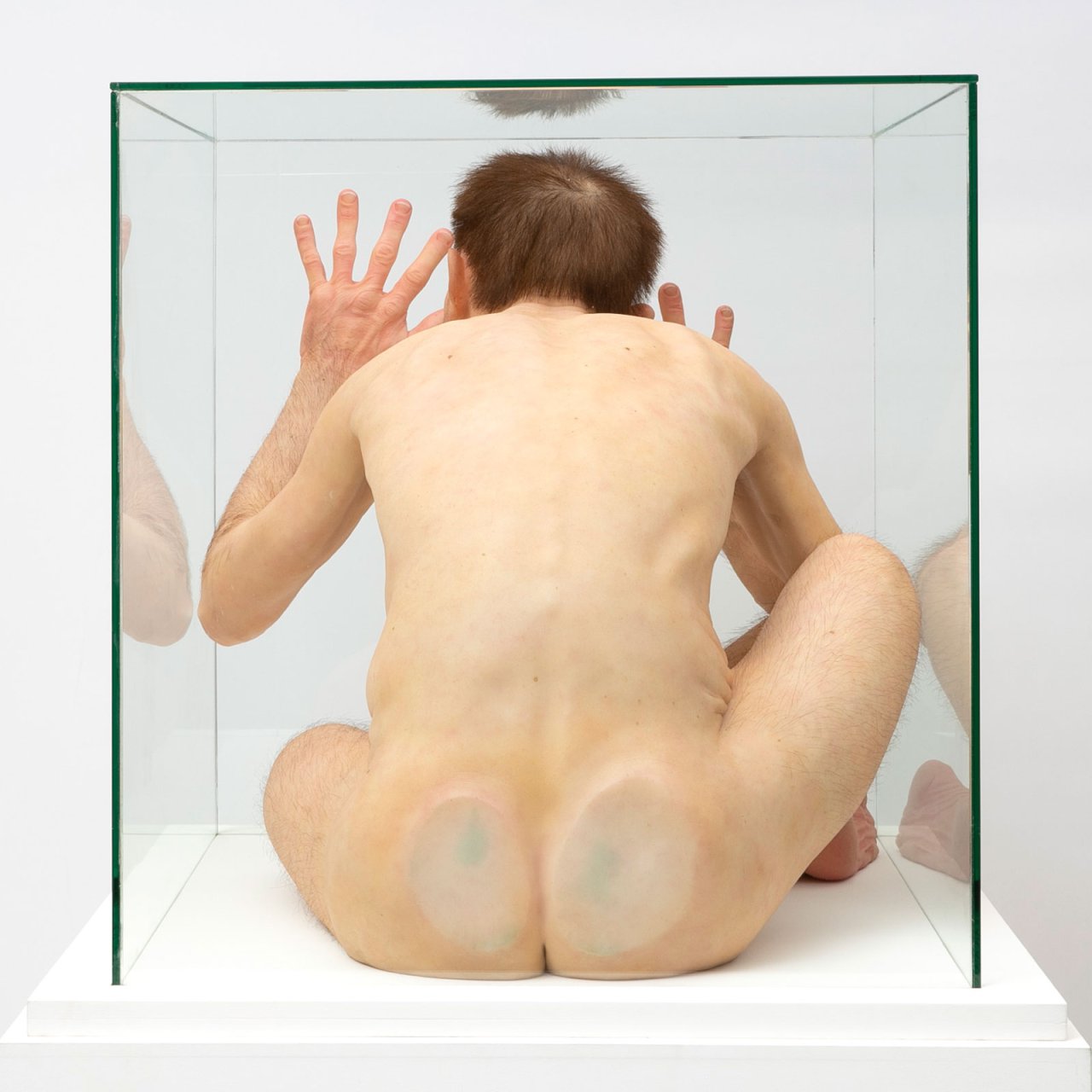
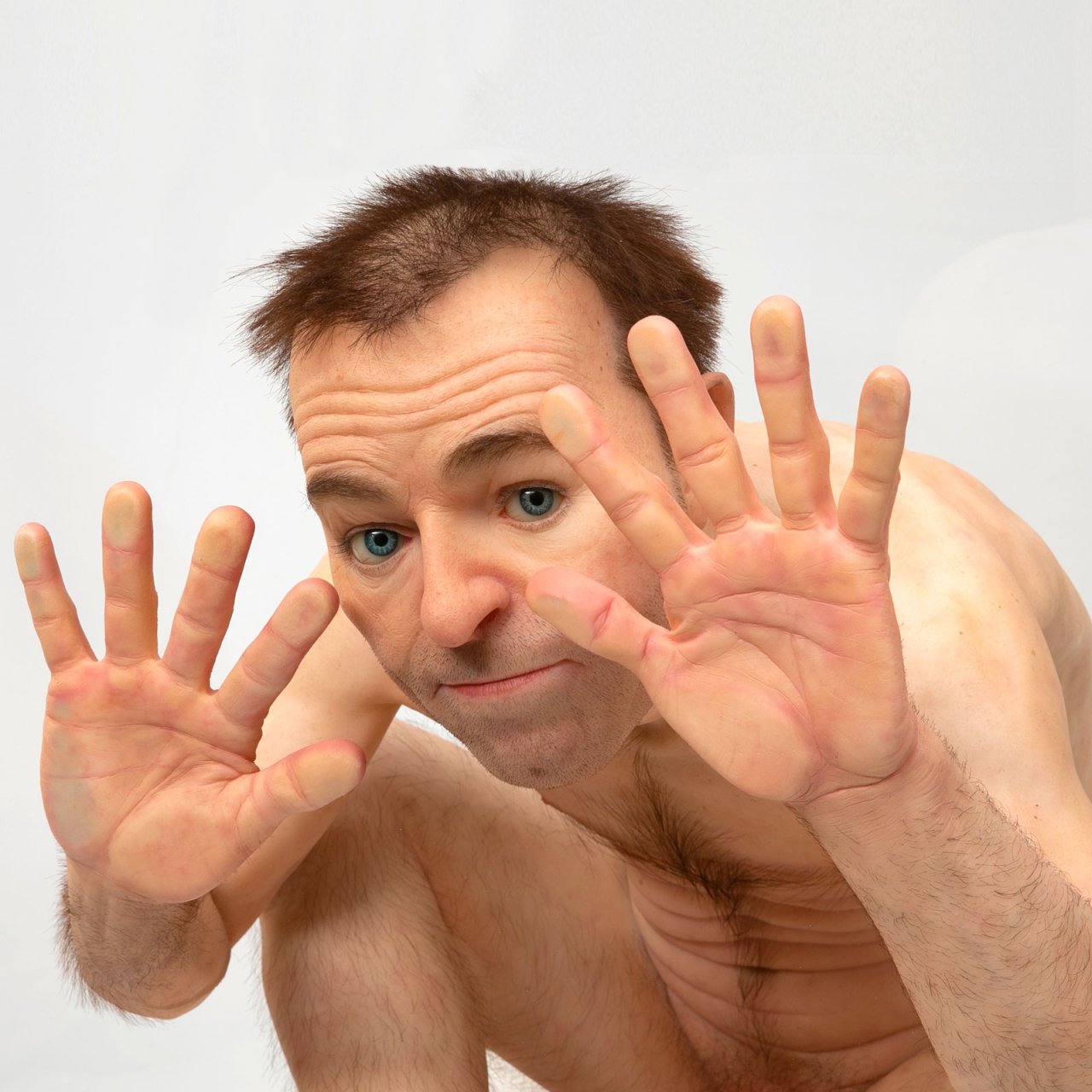
Man in a cube - Paul Trefry
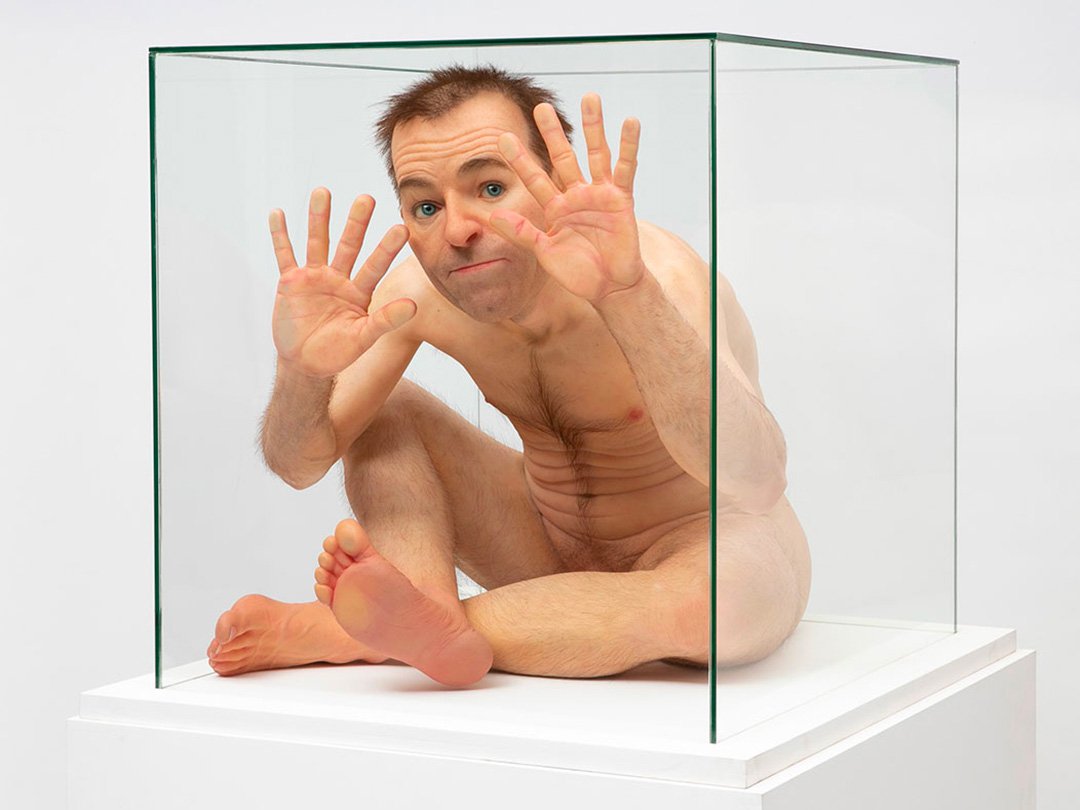
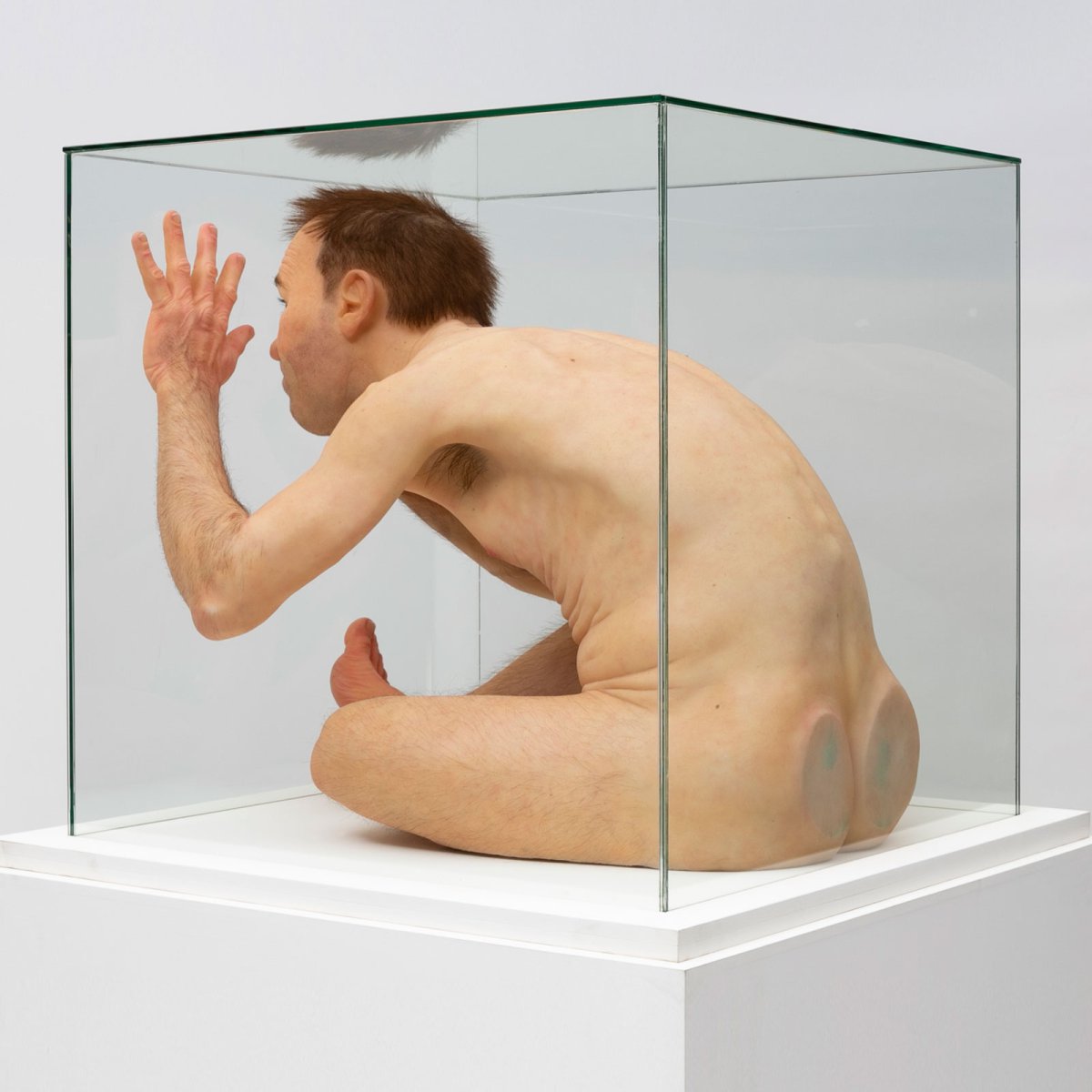
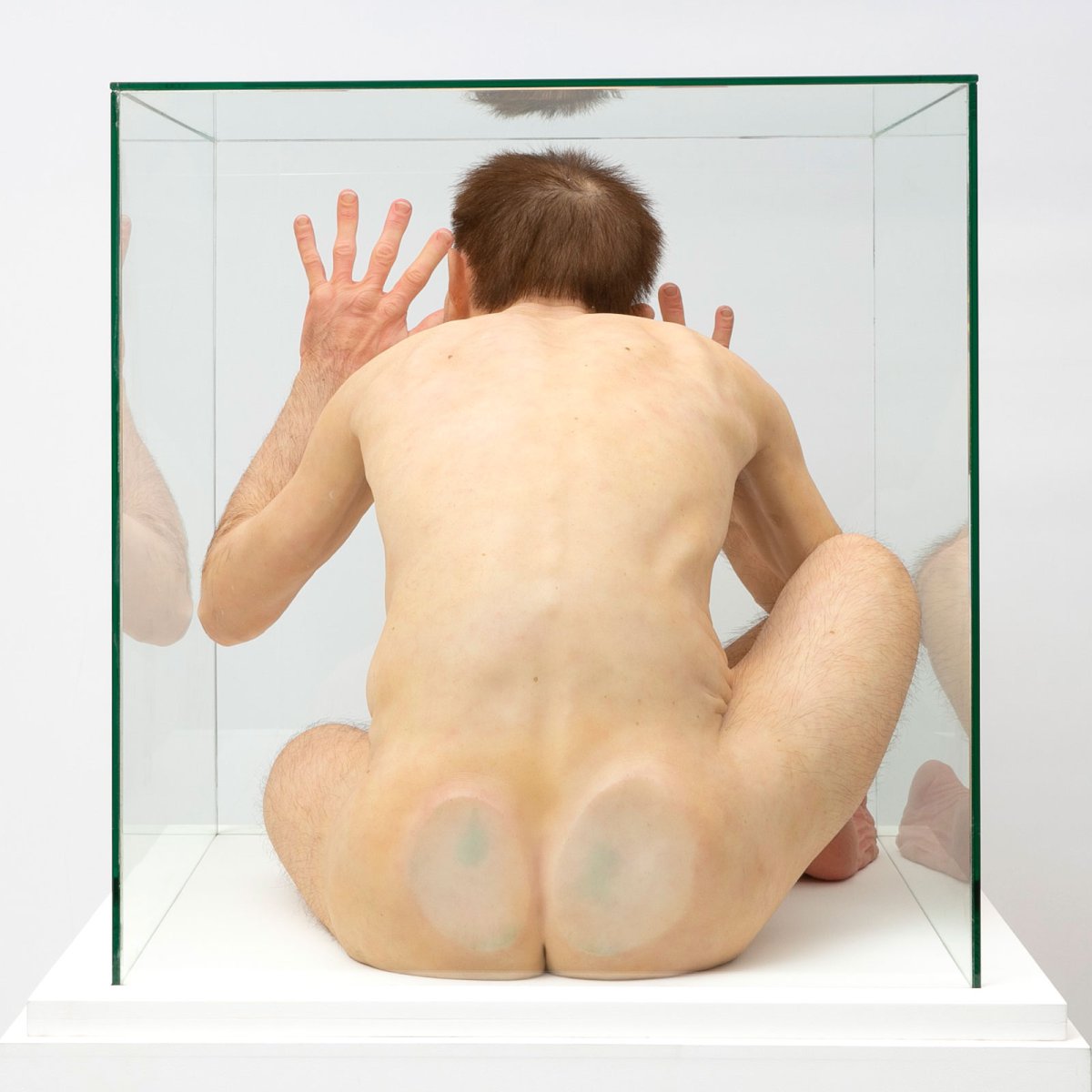
In an age where everyone is labelled and boxed to fit into society’s norm, we often place an invisible barrier, a social pressure, which can hold us back.
“Will they accept me?” “Am I good enough?” “Can I do it?” are all questions we ask ourselves, as society perpetuates self doubt.
A glass cube enables us to see out freely, but physically restrains us from moving forward.
While being naked is when we feel most vulnerable, with nothing to hide behind and the fear of being socially judged.
MAN IN A CUBE identifies these social pressures and restrictions and asks the question “Are we really being true ourselves?”
 |
||
Man in a cube - Paul Trefry
In an age where everyone is labelled and boxed to fit into society’s norm, we often place an invisible barrier, a social pressure, which can hold us back.
“Will they accept me?” “Am I good enough?” “Can I do it?” are all questions we ask ourselves, as society perpetuates self doubt.
A glass cube enables us to see out freely, but physically restrains us from moving forward.
While being naked is when we feel most vulnerable, with nothing to hide behind and the fear of being socially judged.
MAN IN A CUBE identifies these social pressures and restrictions and asks the question “Are we really being true ourselves?”
 |
||
Man in a cube - Paul Trefry
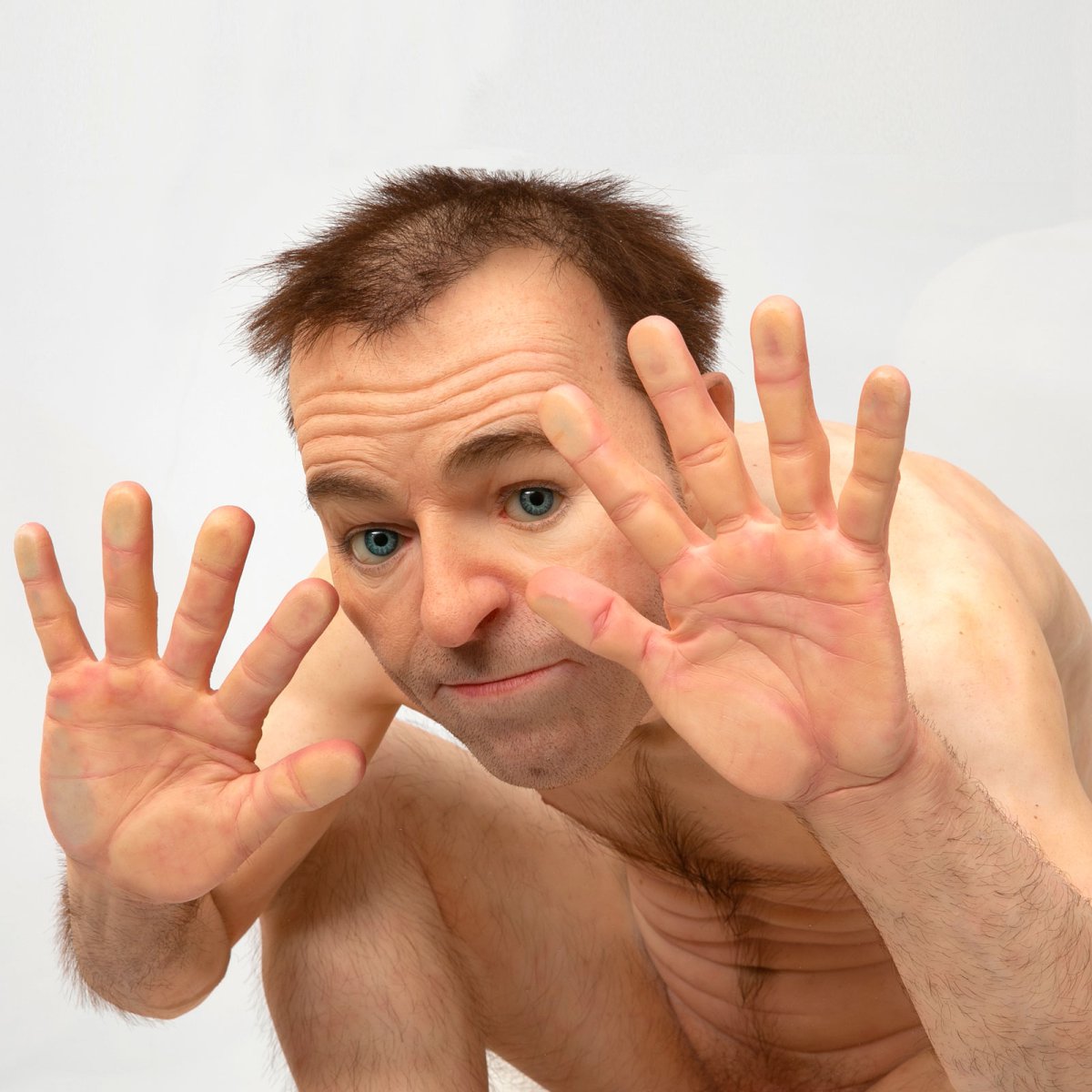
In an age where everyone is labelled and boxed to fit into society’s norm, we often place an invisible barrier, a social pressure, which can hold us back.
“Will they accept me?” “Am I good enough?” “Can I do it?” are all questions we ask ourselves, as society perpetuates self doubt.
A glass cube enables us to see out freely, but physically restrains us from moving forward.
While being naked is when we feel most vulnerable, with nothing to hide behind and the fear of being socially judged.
MAN IN A CUBE identifies these social pressures and restrictions and asks the question “Are we really being true ourselves?”
 |
||
Man in a cube - Paul Trefry
In an age where everyone is labelled and boxed to fit into society’s norm, we often place an invisible barrier, a social pressure, which can hold us back.
“Will they accept me?” “Am I good enough?” “Can I do it?” are all questions we ask ourselves, as society perpetuates self doubt.
A glass cube enables us to see out freely, but physically restrains us from moving forward.
While being naked is when we feel most vulnerable, with nothing to hide behind and the fear of being socially judged.
MAN IN A CUBE identifies these social pressures and restrictions and asks the question “Are we really being true ourselves?”
 |
||
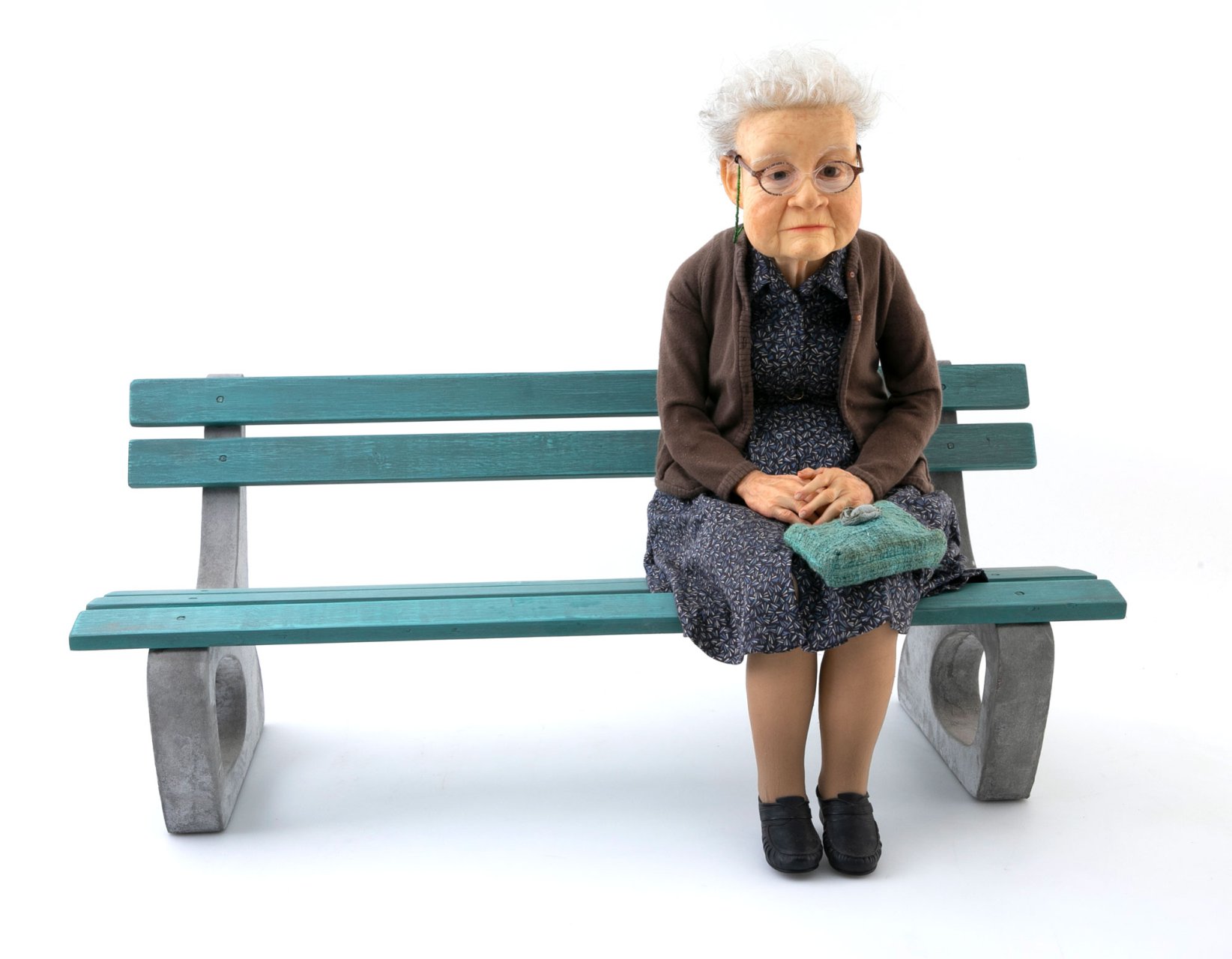
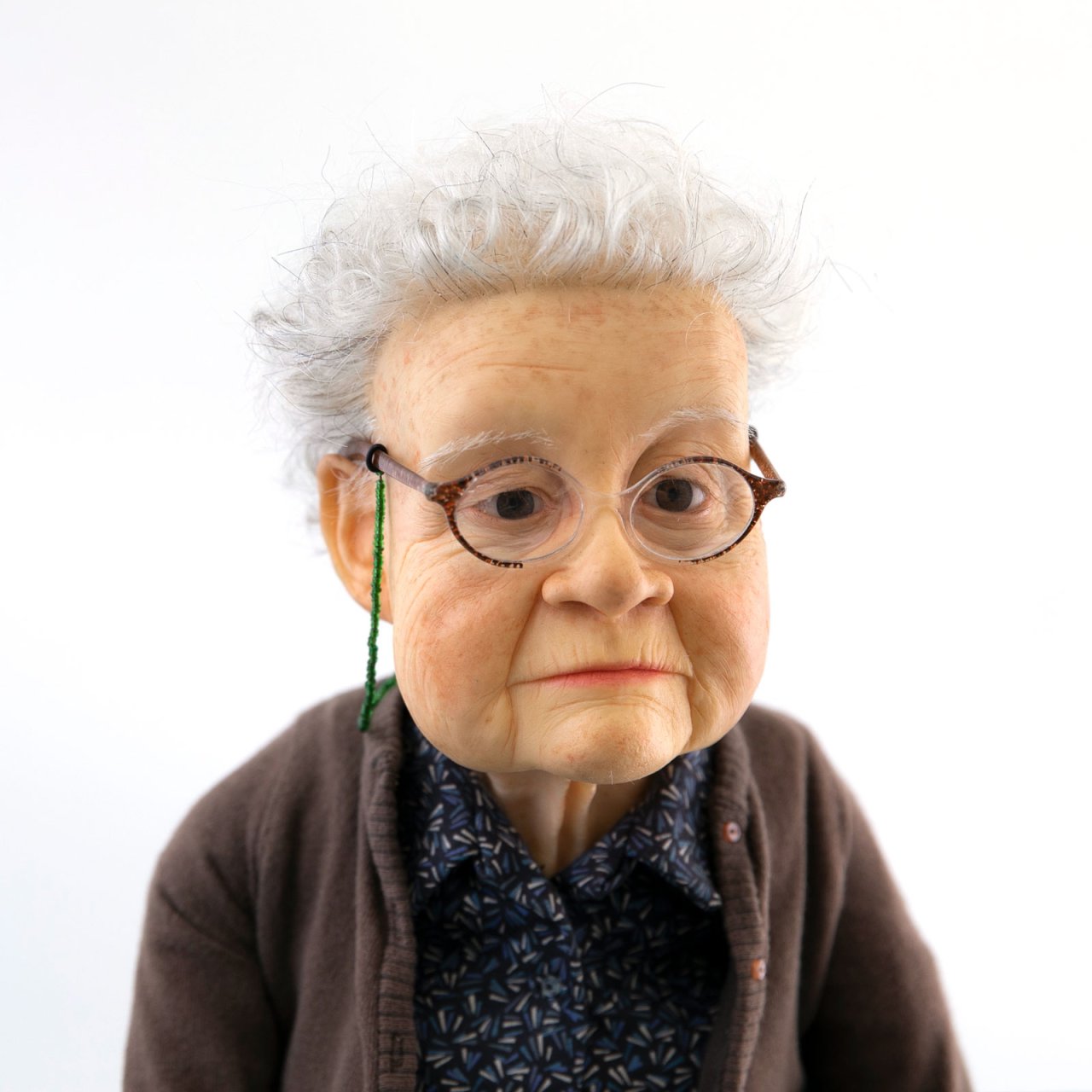
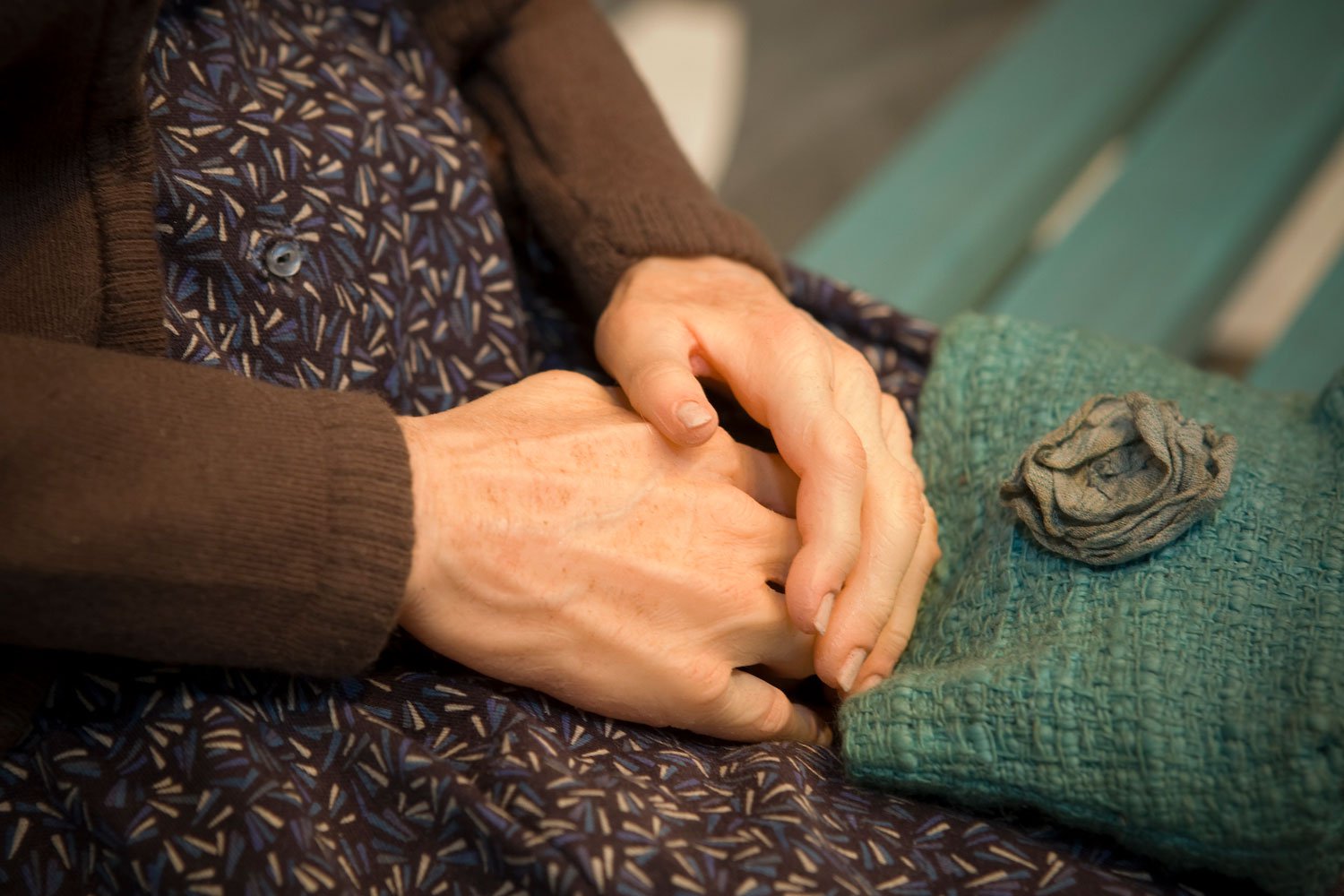
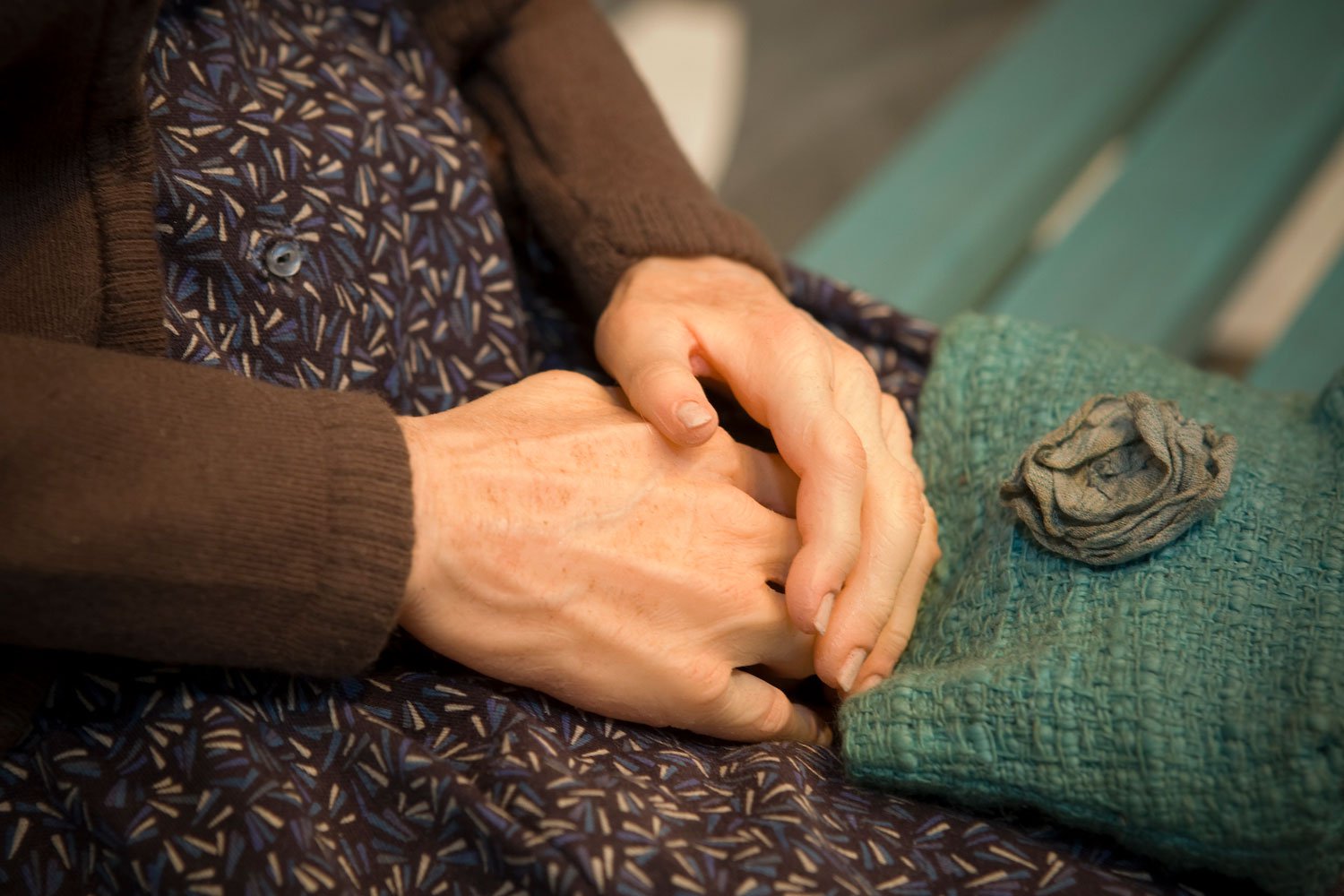
Gladys Always Knew Charlie Was Late - Paul Trefry
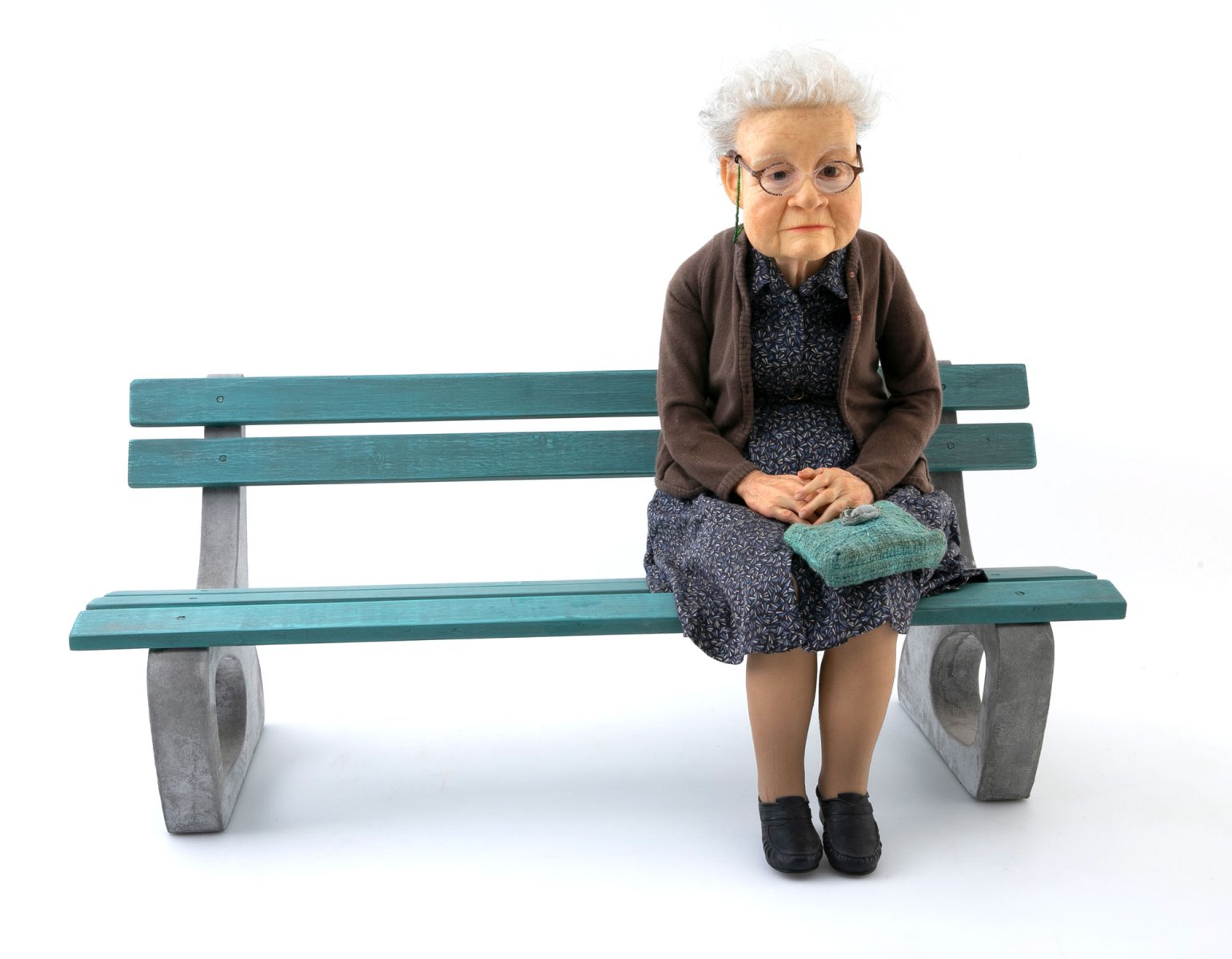
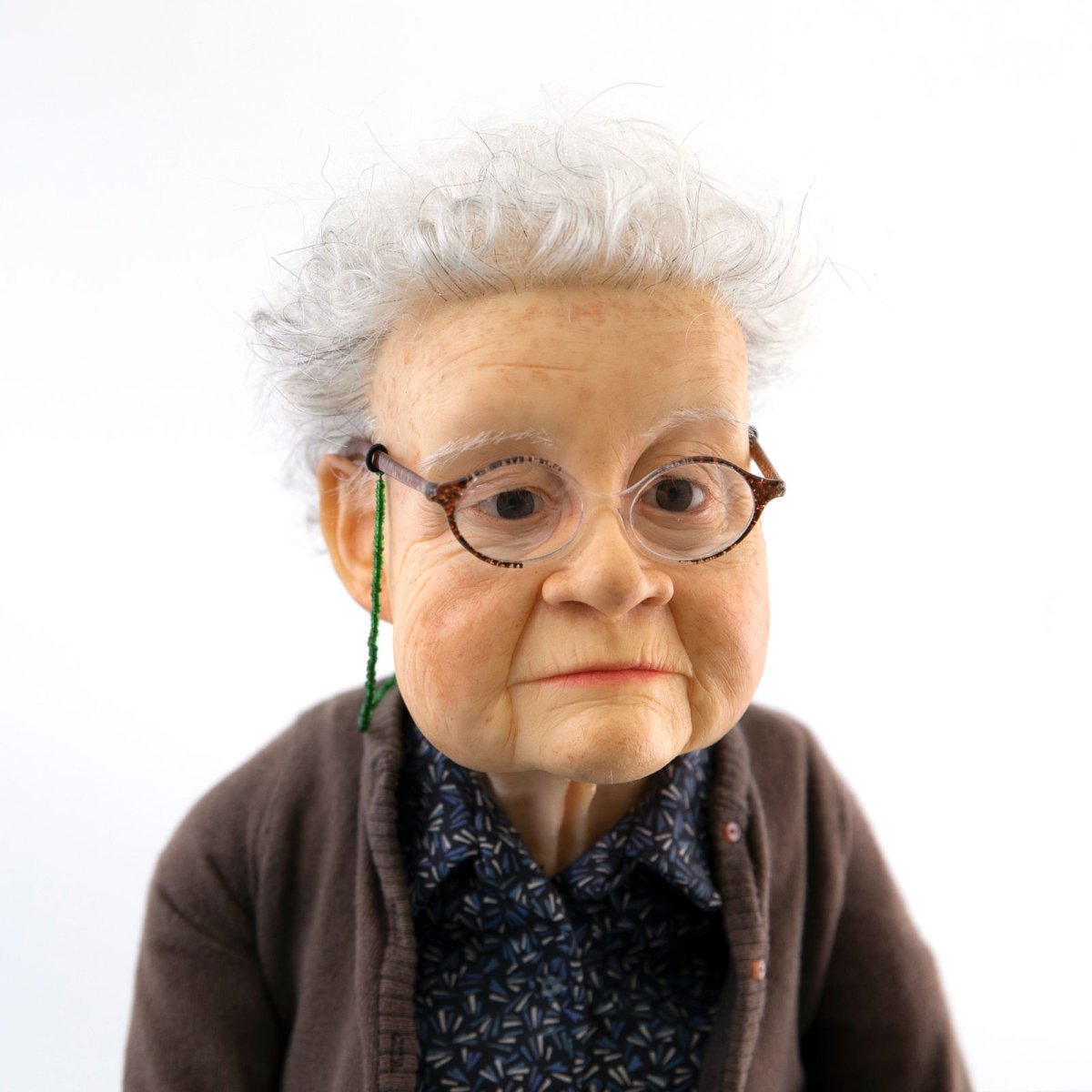
As we all go about our busy lives, the elderly often get forgotten and seen sitting alone.
Many of us prioritise work and social commitments over visiting our parents or grandparents, who after devoting their lives to loving and caring for us, are left alone and lonely.
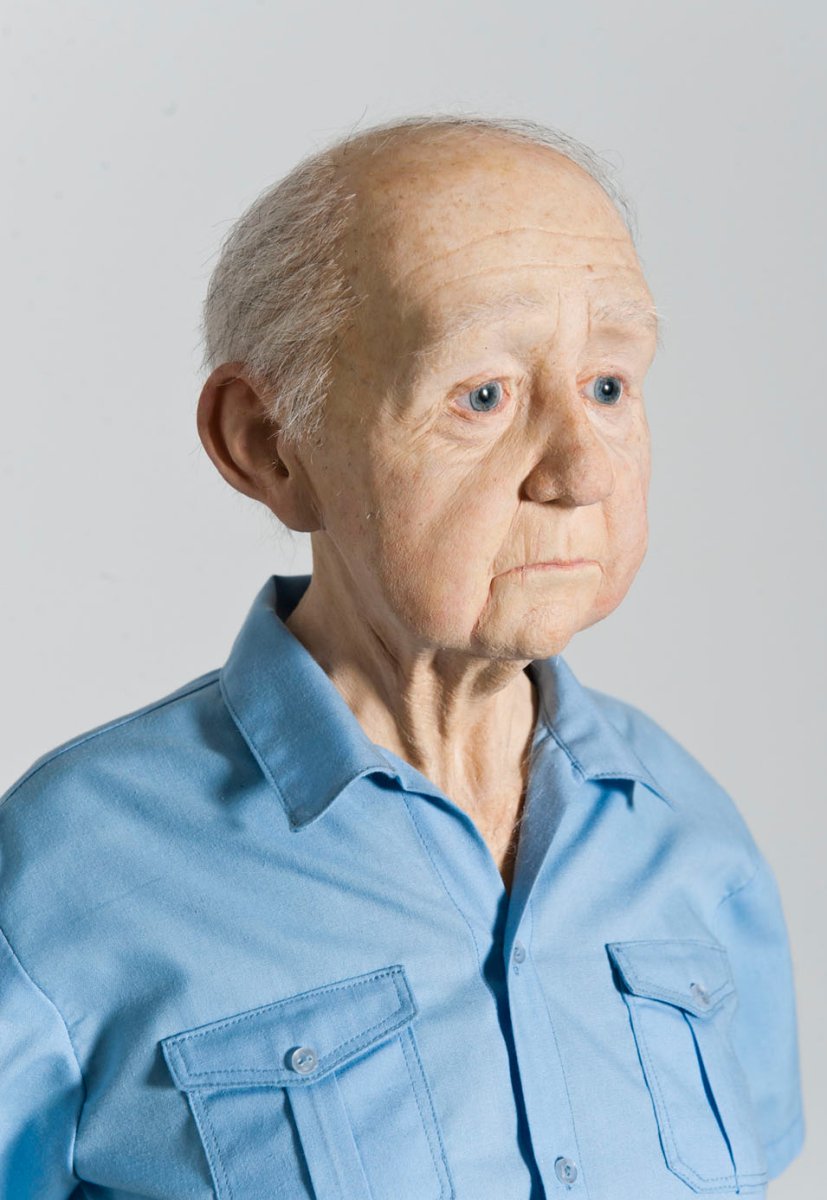
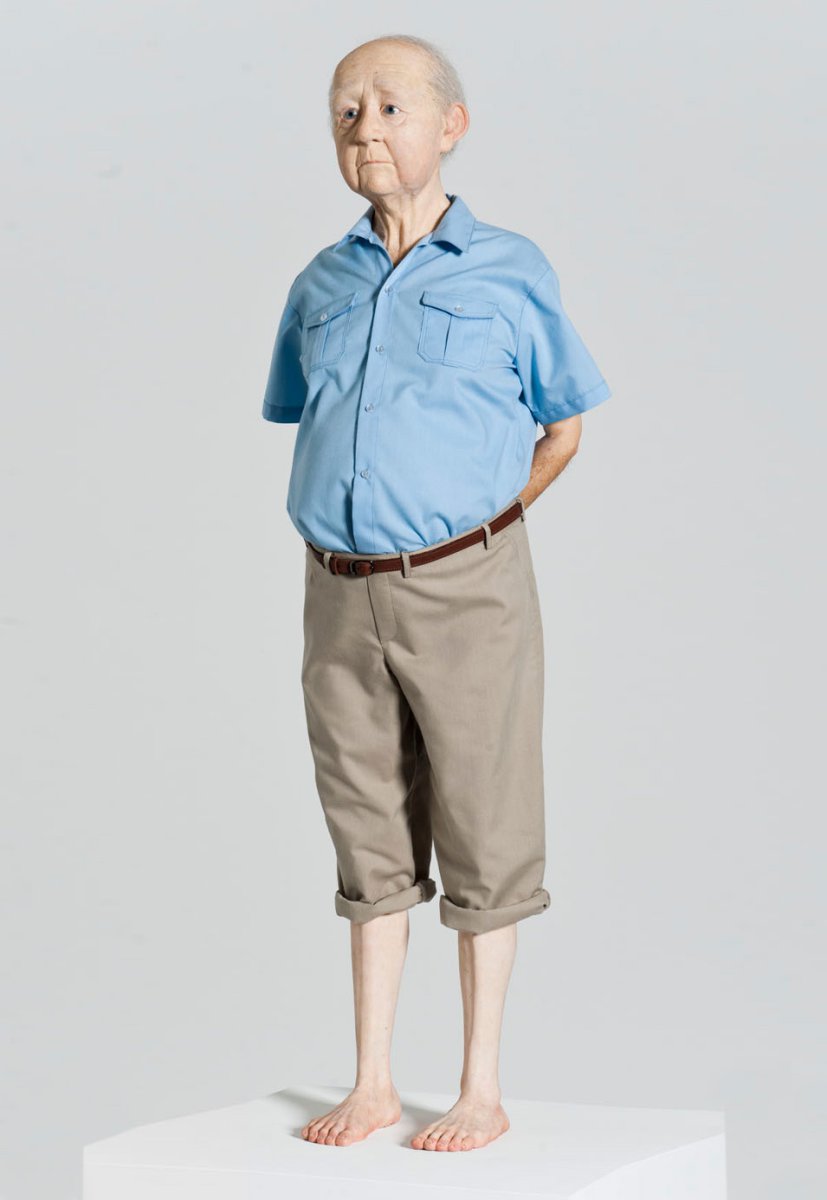
The elderly are the most interesting people you can meet, with a lifetime of wisdom, experience and stories to share. They deserve to be heard, they deserve to be loved and they deserve your time.
 |
||
Gladys Always Knew Charlie Was Late - Paul Trefry
As we all go about our busy lives, the elderly often get forgotten and seen sitting alone.
Many of us prioritise work and social commitments over visiting our parents or grandparents, who after devoting their lives to loving and caring for us, are left alone and lonely.
The elderly are the most interesting people you can meet, with a lifetime of wisdom, experience and stories to share. They deserve to be heard, they deserve to be loved and they deserve your time.
 |
||
Gladys Always Knew Charlie Was Late - Paul Trefry
As we all go about our busy lives, the elderly often get forgotten and seen sitting alone.
Many of us prioritise work and social commitments over visiting our parents or grandparents, who after devoting their lives to loving and caring for us, are left alone and lonely.
The elderly are the most interesting people you can meet, with a lifetime of wisdom, experience and stories to share. They deserve to be heard, they deserve to be loved and they deserve your time.
 |
||
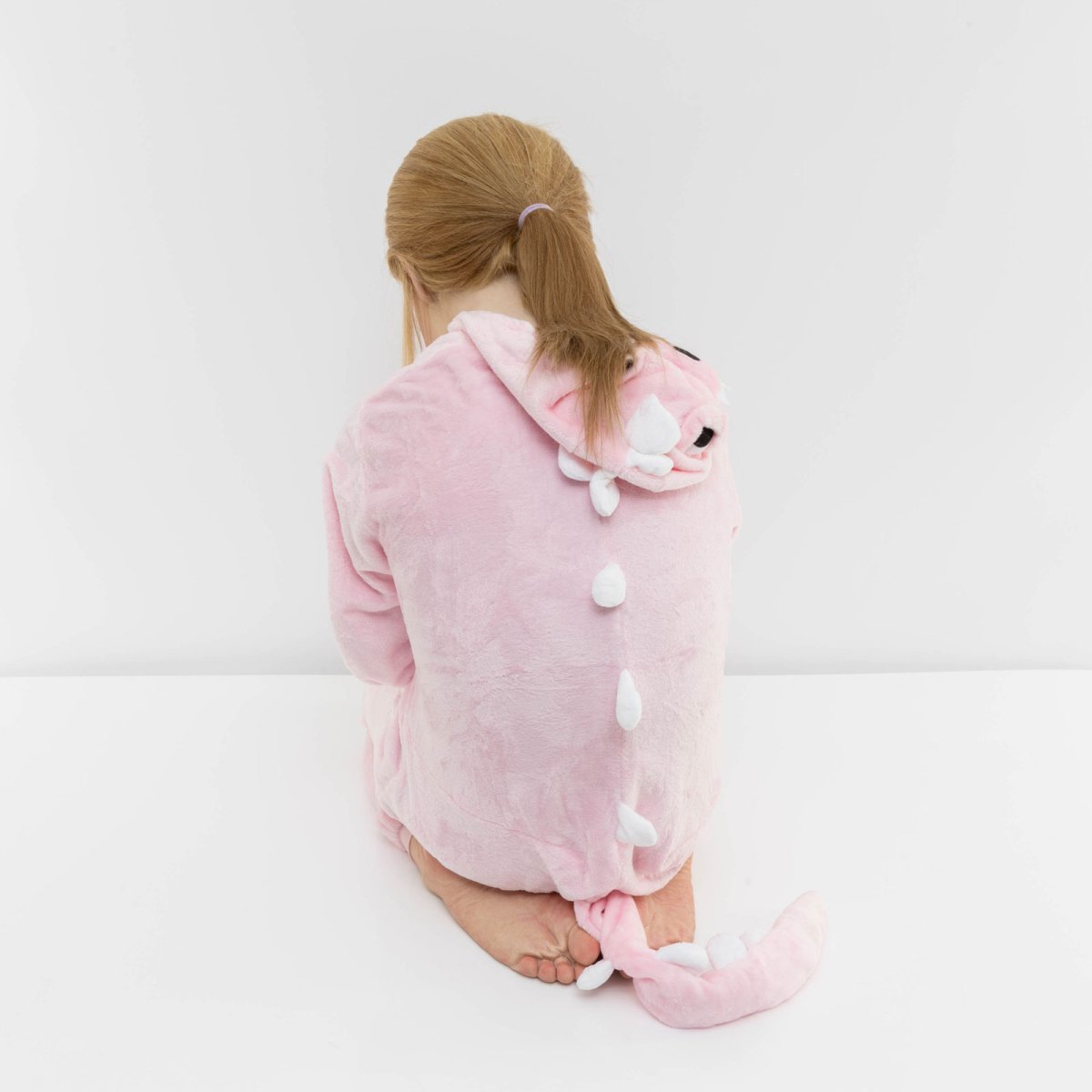
Praying to the Modern God - Paul Trefry
Praying to the Modern God engages into our weddedness to smartphones, suggesting that they have a near-divine hold on our daily lives. With over 8.5 billion users worldwide, these devices transcend their role as mere tools, serving as a source of education, information, and guidance, however uneven and imperfect, even devastating. With them, we have truly become what Freud stated, ‘prosthetic gods’, with an immeasurable amount of knowledge at our fingertips. Yet their omnipresence raises concerns about dependence and the erosion of genuine human connection. This work prompts reflection on the parallels between our reverence for smartphones and traditional religious devotion, urging a more nuanced approach to our habituation to technology.
 |
||
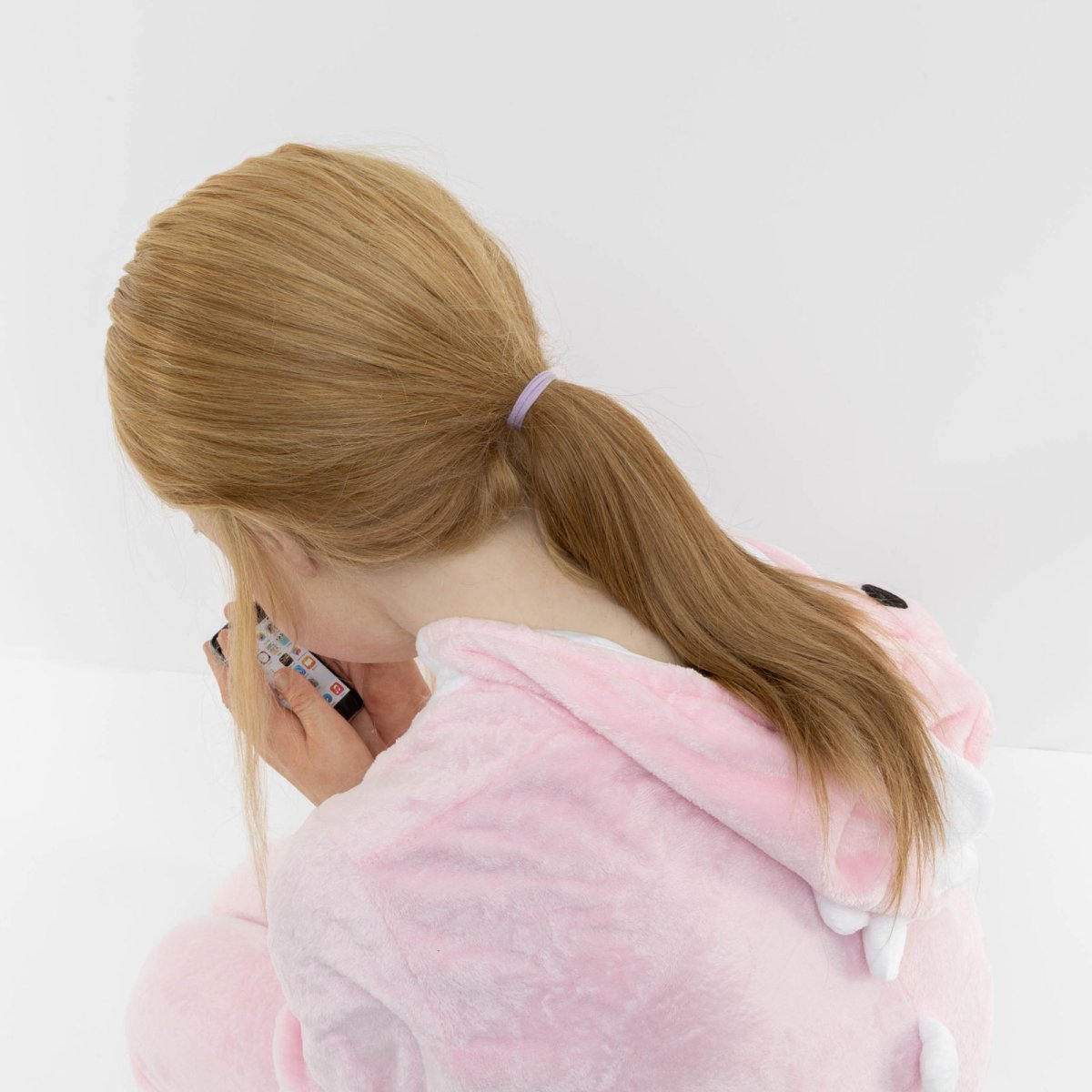
Praying to the Modern God - Paul Trefry
Praying to the Modern God engages into our weddedness to smartphones, suggesting that they have a near-divine hold on our daily lives. With over 8.5 billion users worldwide, these devices transcend their role as mere tools, serving as a source of education, information, and guidance, however uneven and imperfect, even devastating. With them, we have truly become what Freud stated, ‘prosthetic gods’, with an immeasurable amount of knowledge at our fingertips. Yet their omnipresence raises concerns about dependence and the erosion of genuine human connection. This work prompts reflection on the parallels between our reverence for smartphones and traditional religious devotion, urging a more nuanced approach to our habituation to technology.
 |
||
Praying to the Modern God - Paul Trefry
Praying to the Modern God engages into our weddedness to smartphones, suggesting that they have a near-divine hold on our daily lives. With over 8.5 billion users worldwide, these devices transcend their role as mere tools, serving as a source of education, information, and guidance, however uneven and imperfect, even devastating. With them, we have truly become what Freud stated, ‘prosthetic gods’, with an immeasurable amount of knowledge at our fingertips. Yet their omnipresence raises concerns about dependence and the erosion of genuine human connection. This work prompts reflection on the parallels between our reverence for smartphones and traditional religious devotion, urging a more nuanced approach to our habituation to technology.
 |
||
Praying to the Modern God - Paul Trefry
Praying to the Modern God engages into our weddedness to smartphones, suggesting that they have a near-divine hold on our daily lives. With over 8.5 billion users worldwide, these devices transcend their role as mere tools, serving as a source of education, information, and guidance, however uneven and imperfect, even devastating. With them, we have truly become what Freud stated, ‘prosthetic gods’, with an immeasurable amount of knowledge at our fingertips. Yet their omnipresence raises concerns about dependence and the erosion of genuine human connection. This work prompts reflection on the parallels between our reverence for smartphones and traditional religious devotion, urging a more nuanced approach to our habituation to technology.
 |
||
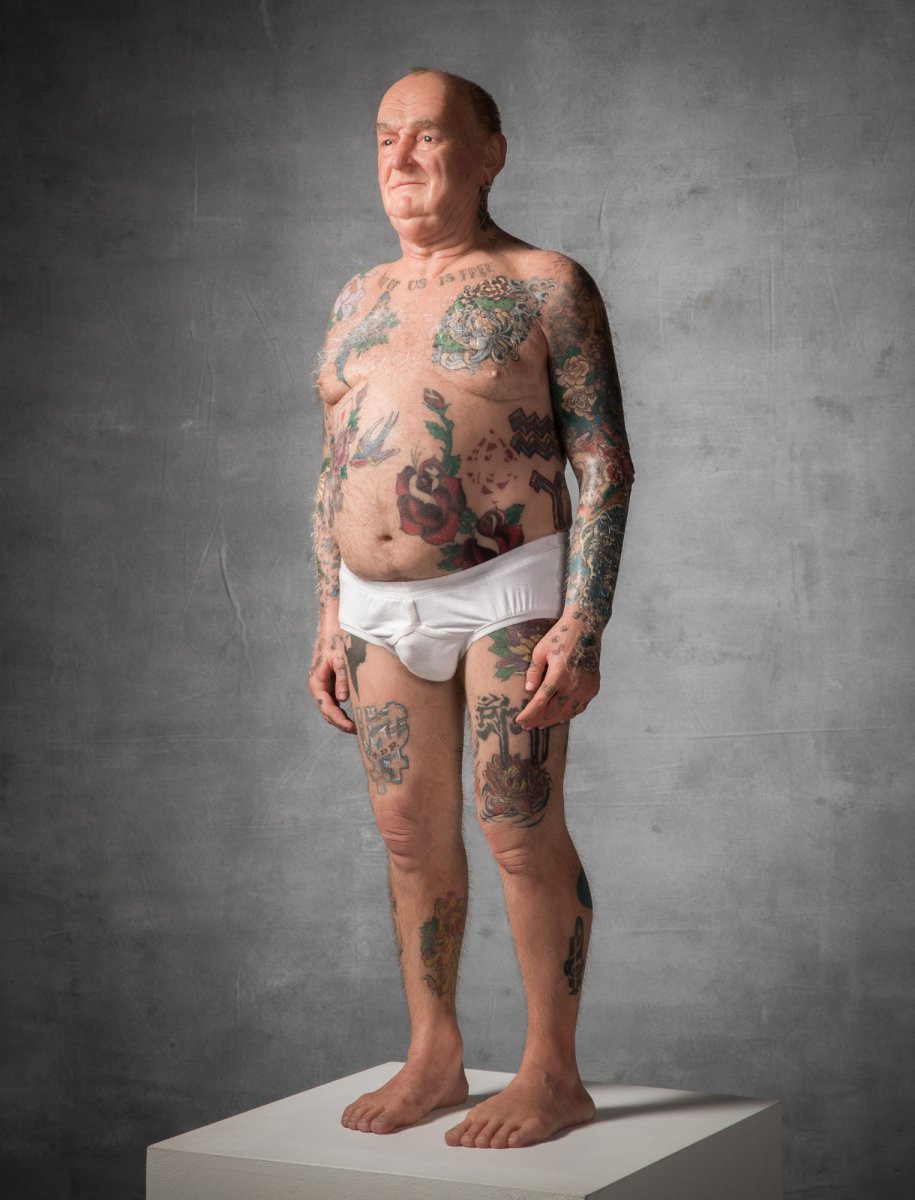
The artist - Paul Trefry
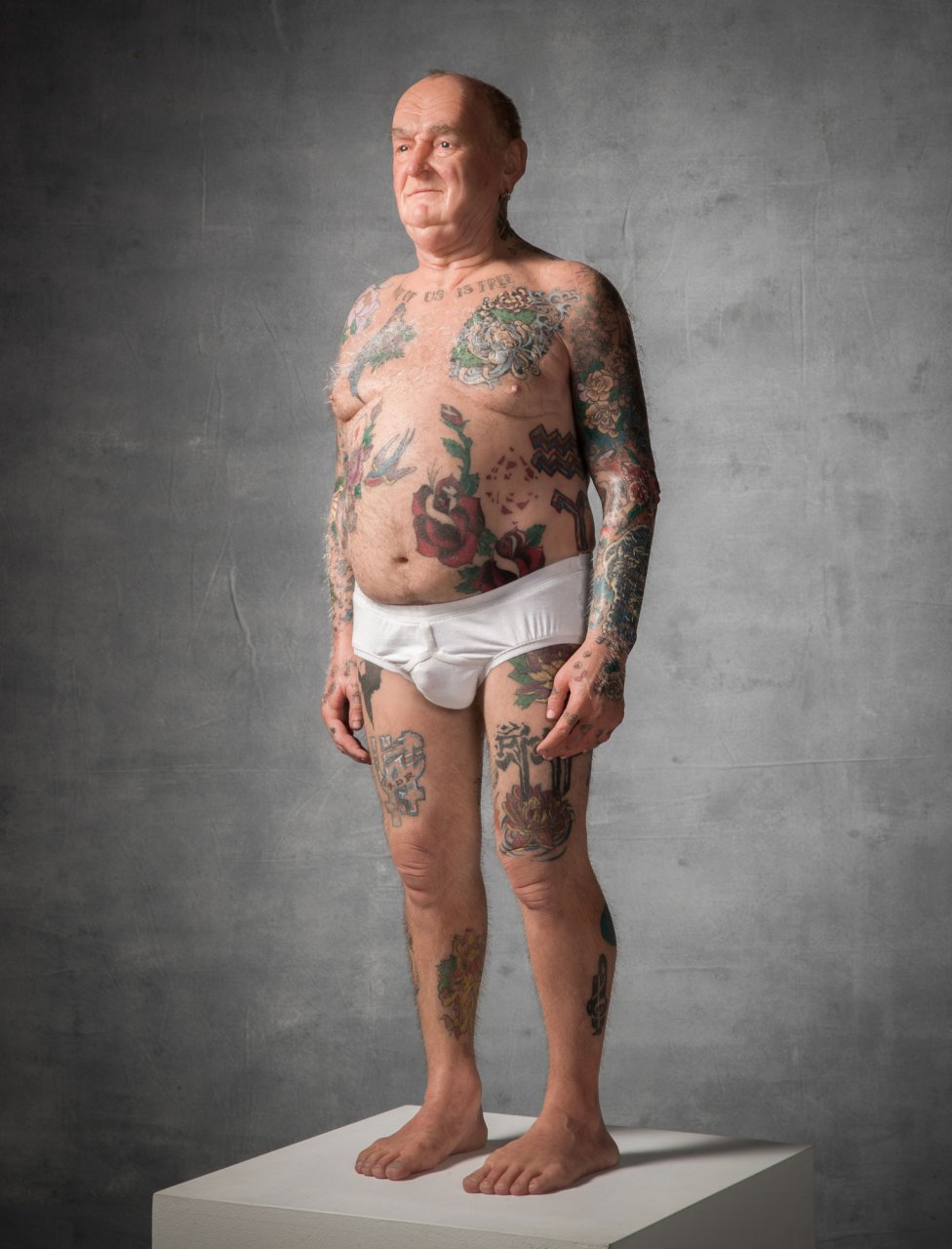
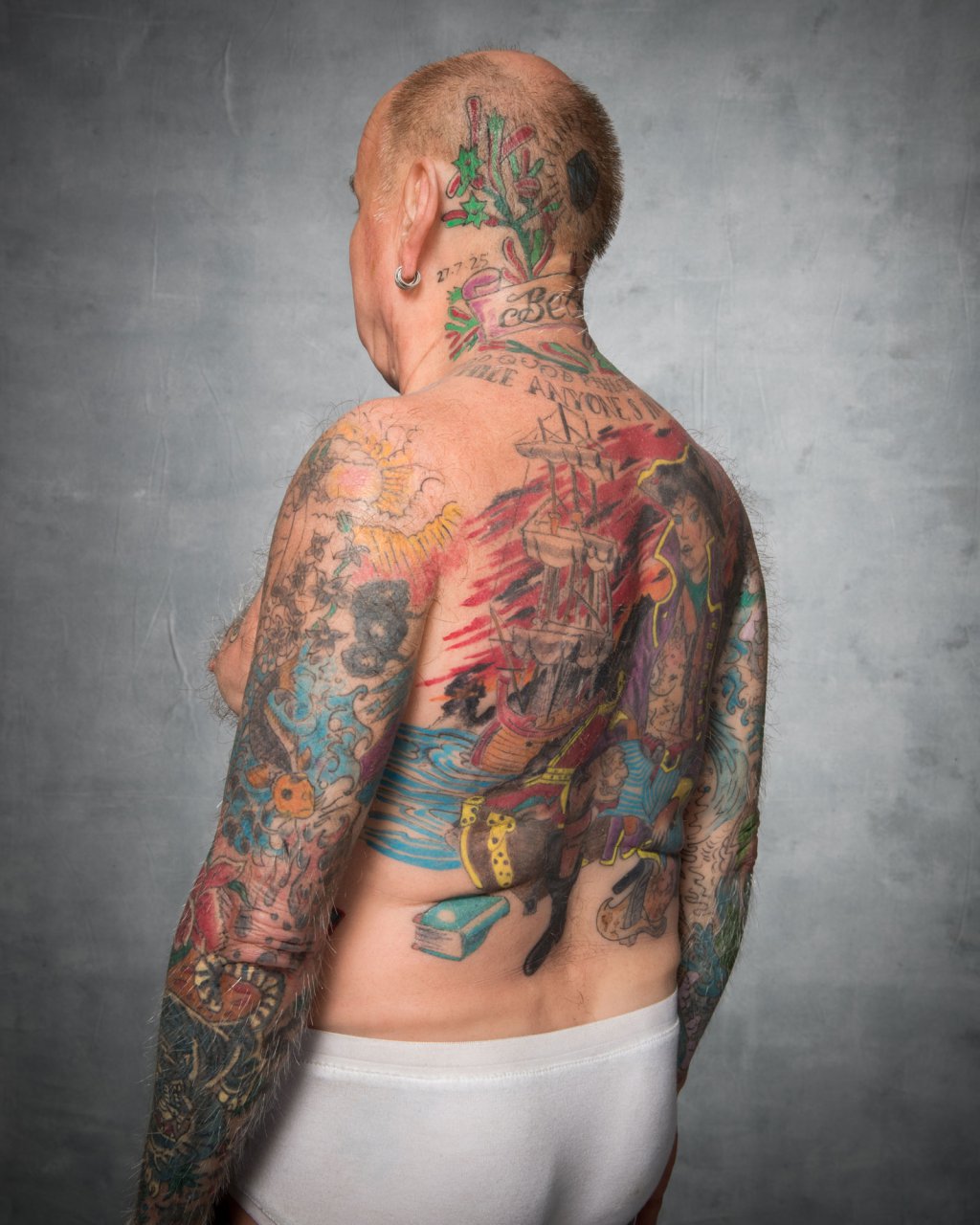
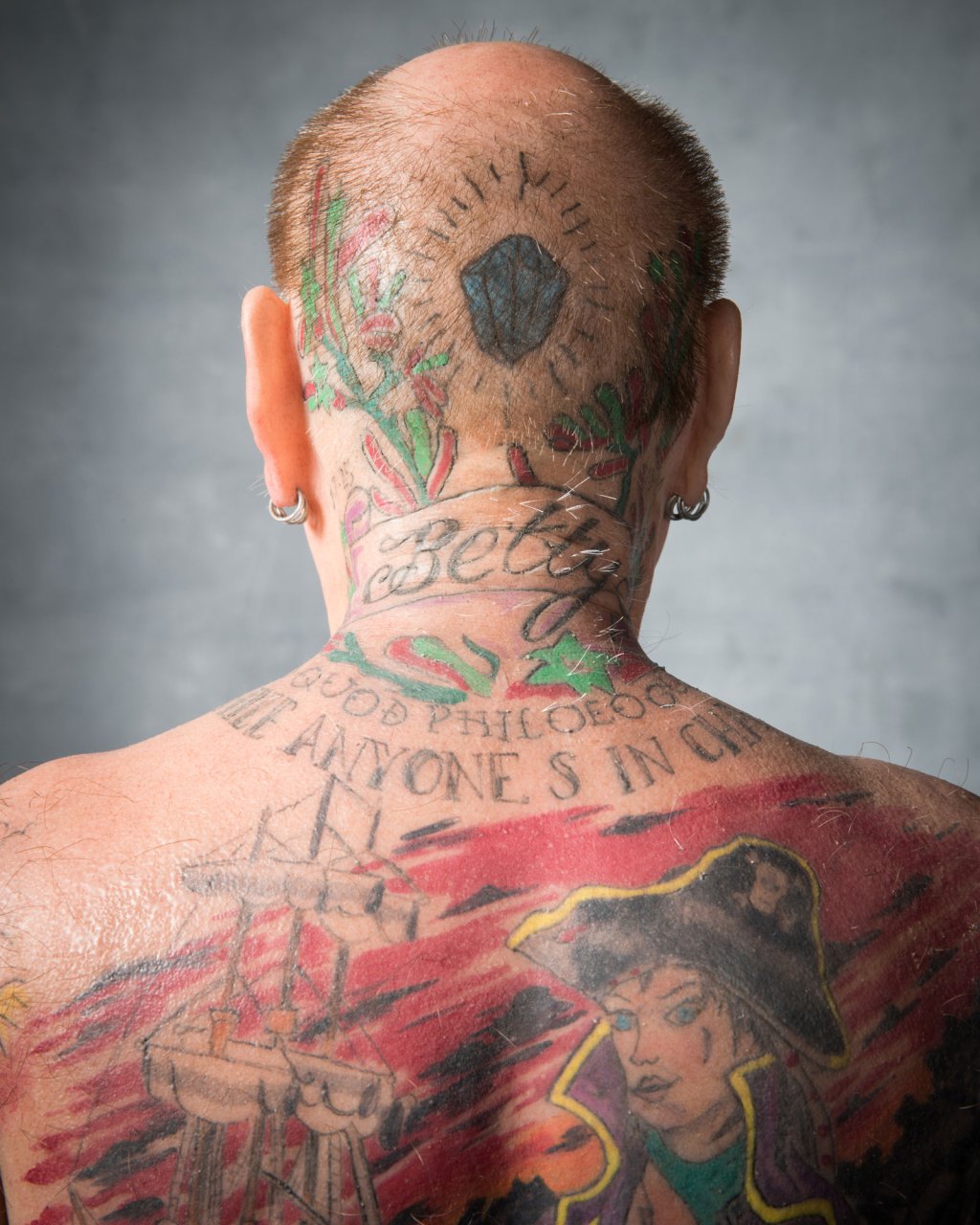
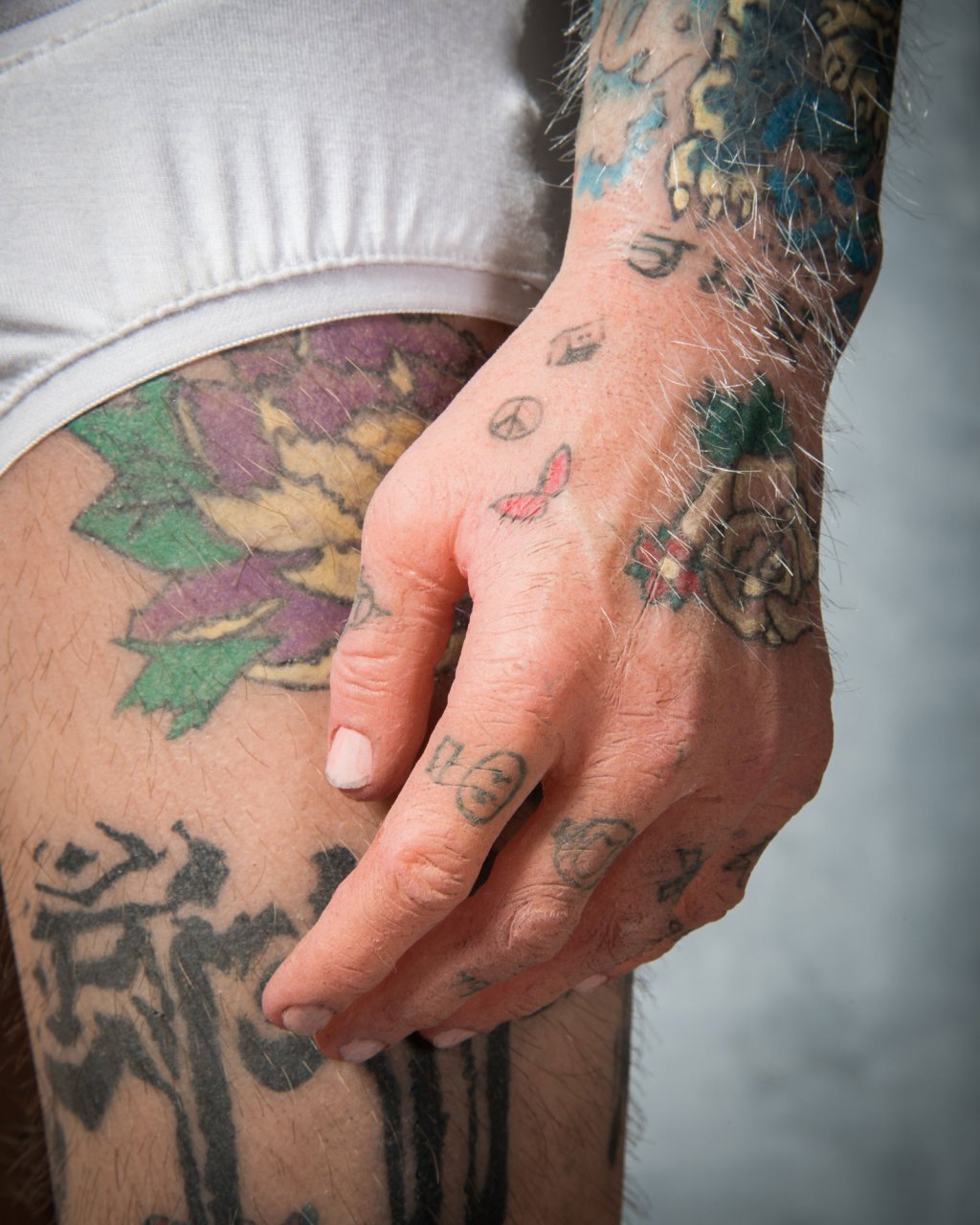
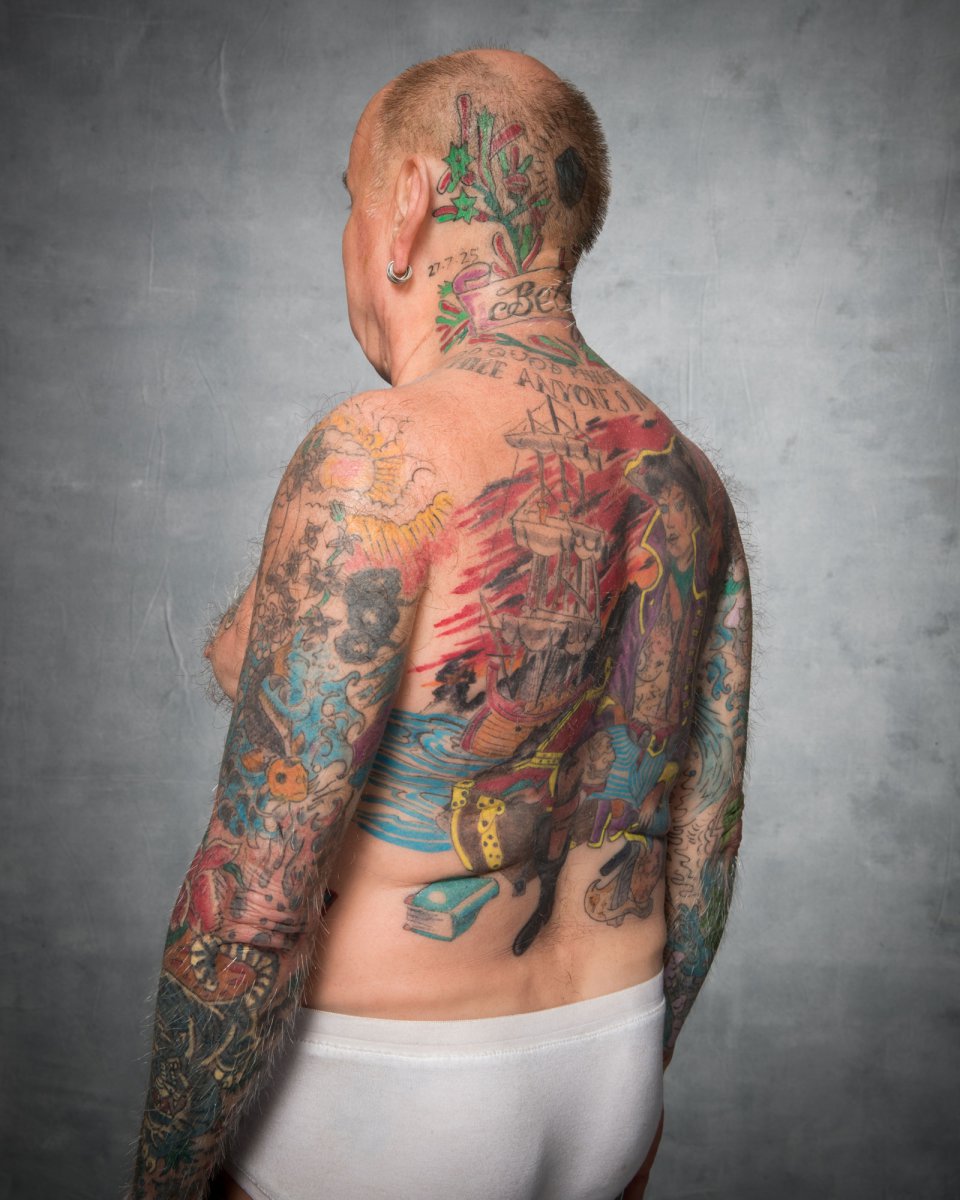
The human skin is far more than a life support system, it is a modern-day canvas. Tattoos can display the life story of an individual, exploring their relationships, experiences, ideology and culture over periods of time.
Permanent markings can either attract or repel the viewer. They provoke us to think and ask the question: ‘what goes on inside a person’s mind to cover their body with their life story, exposed for all to see?’ Tattoos allow you to express your personality, without having to say a thing.
 |
||
The artist - Paul Trefry
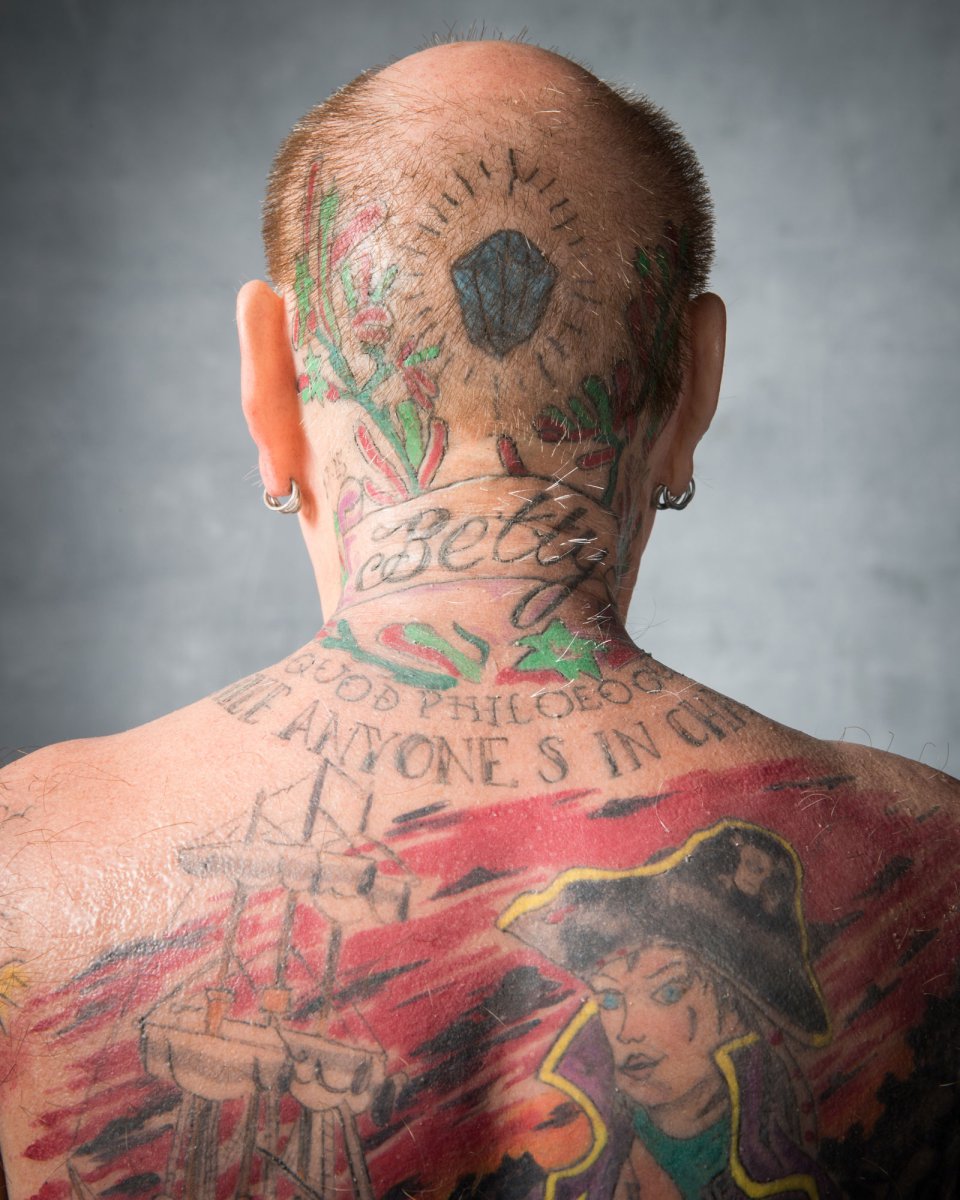
The human skin is far more than a life support system, it is a modern-day canvas. Tattoos can display the life story of an individual, exploring their relationships, experiences, ideology and culture over periods of time.
Permanent markings can either attract or repel the viewer. They provoke us to think and ask the question: ‘what goes on inside a person’s mind to cover their body with their life story, exposed for all to see?’ Tattoos allow you to express your personality, without having to say a thing.
 |
||
The artist - Paul Trefry
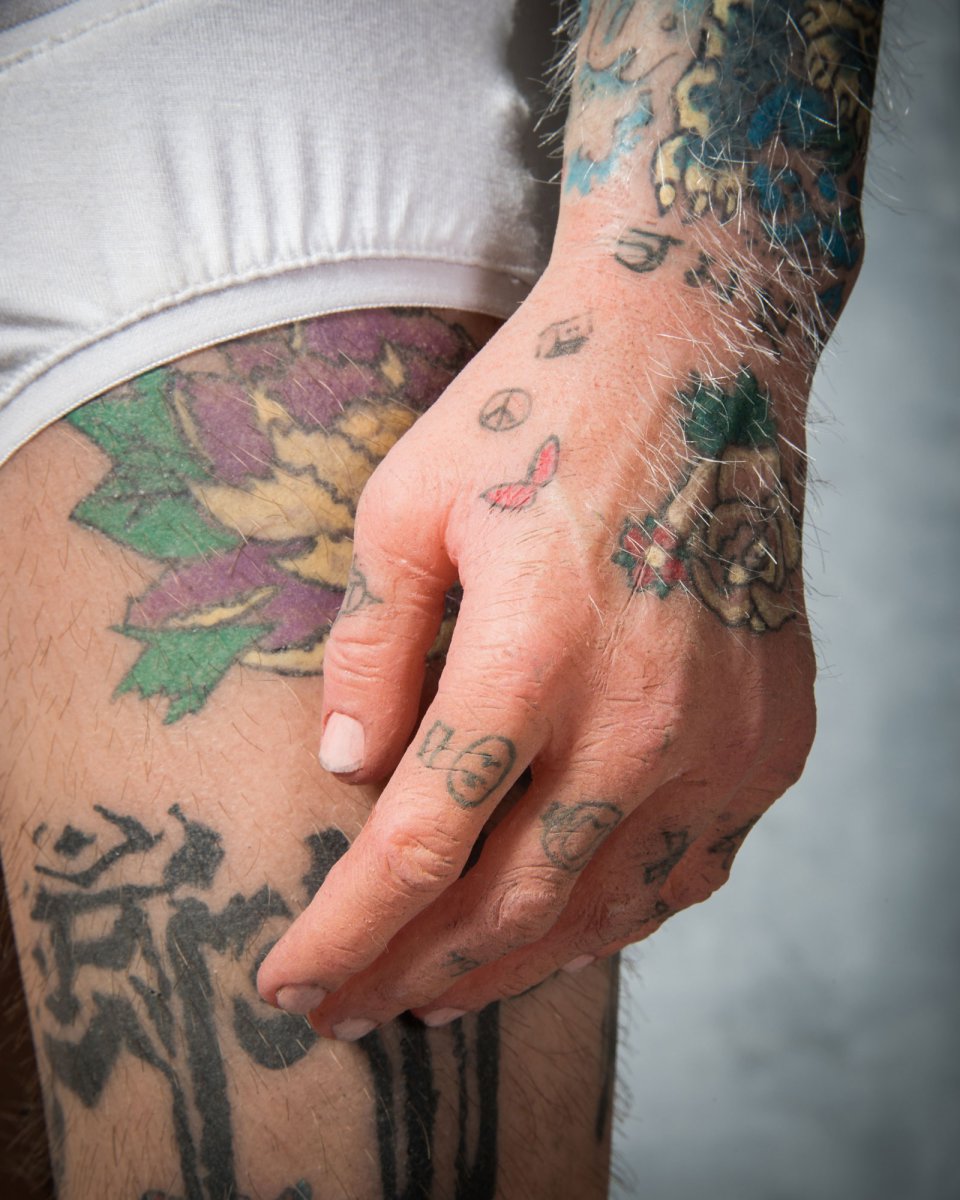
The human skin is far more than a life support system, it is a modern-day canvas. Tattoos can display the life story of an individual, exploring their relationships, experiences, ideology and culture over periods of time.
Permanent markings can either attract or repel the viewer. They provoke us to think and ask the question: ‘what goes on inside a person’s mind to cover their body with their life story, exposed for all to see?’ Tattoos allow you to express your personality, without having to say a thing.
 |
||
The artist - Paul Trefry
The human skin is far more than a life support system, it is a modern-day canvas. Tattoos can display the life story of an individual, exploring their relationships, experiences, ideology and culture over periods of time.
Permanent markings can either attract or repel the viewer. They provoke us to think and ask the question: ‘what goes on inside a person’s mind to cover their body with their life story, exposed for all to see?’ Tattoos allow you to express your personality, without having to say a thing.
 |
||
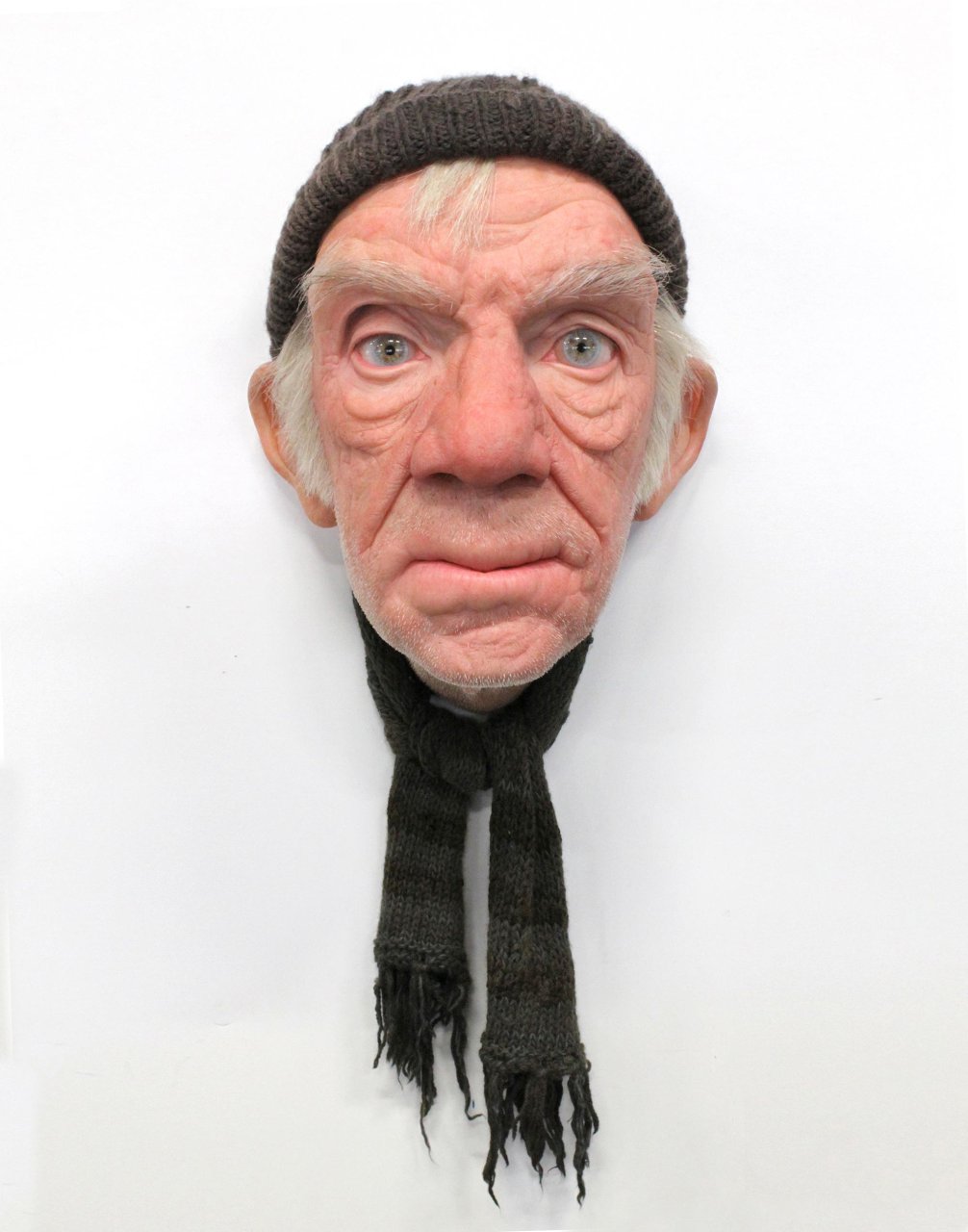
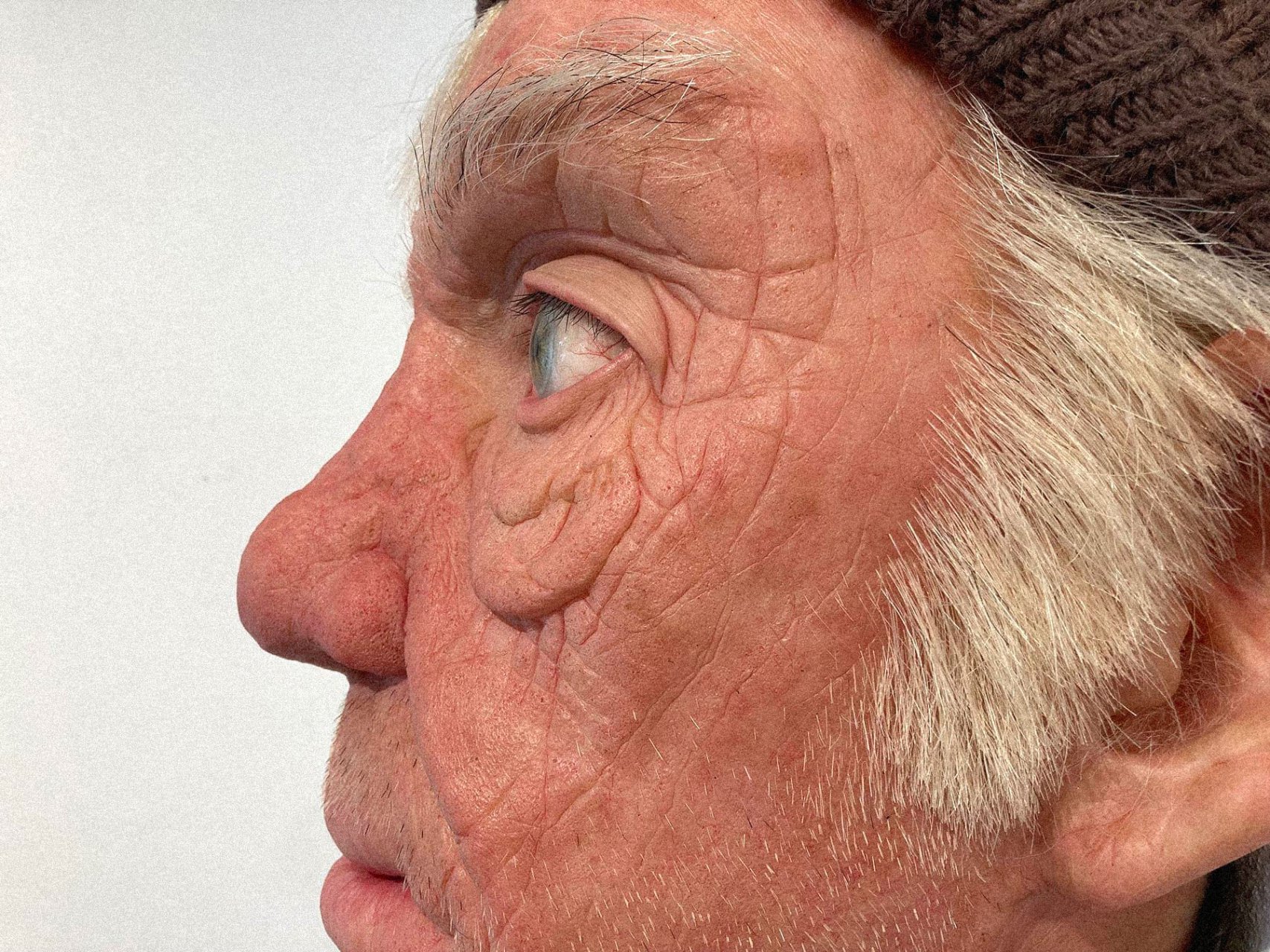
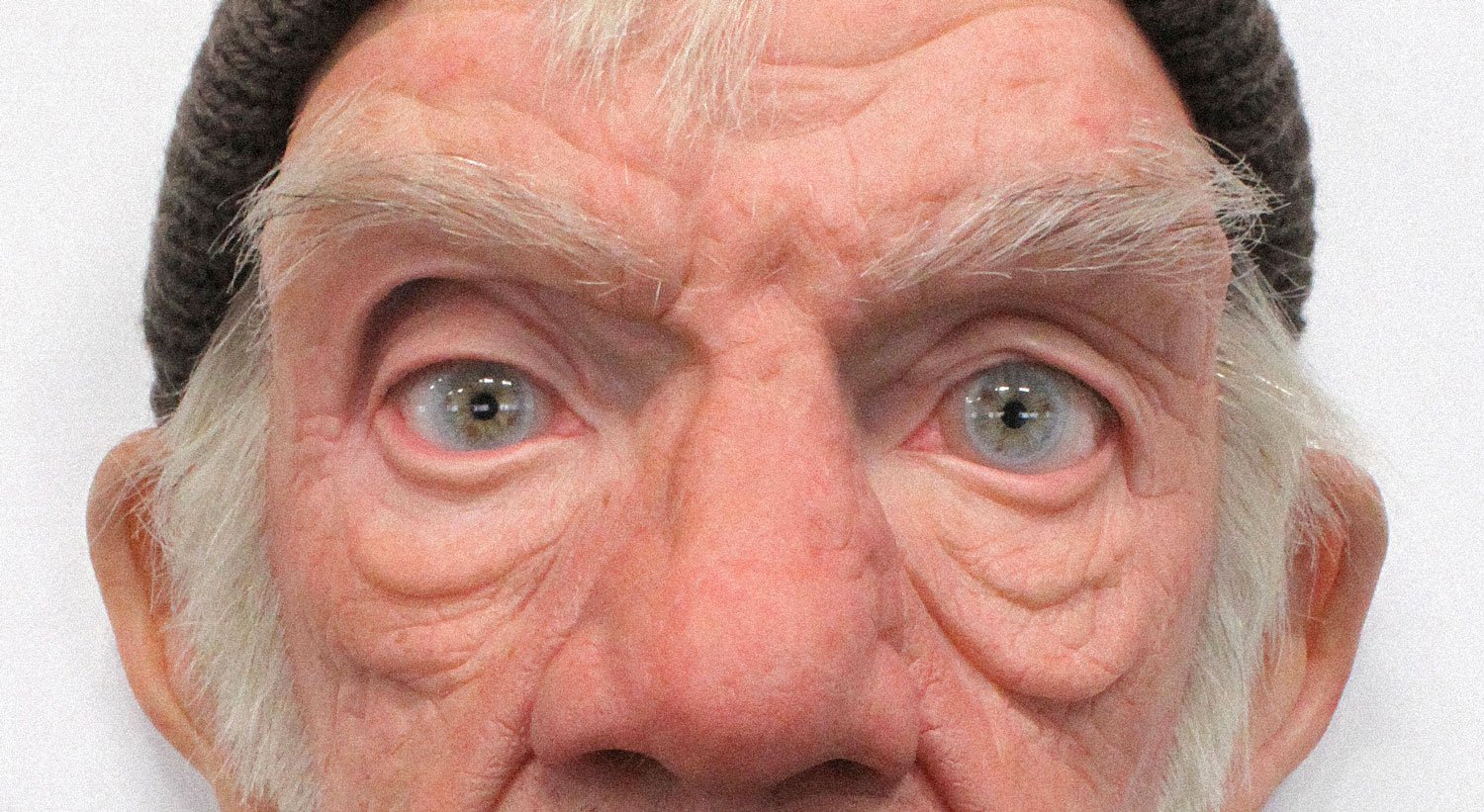
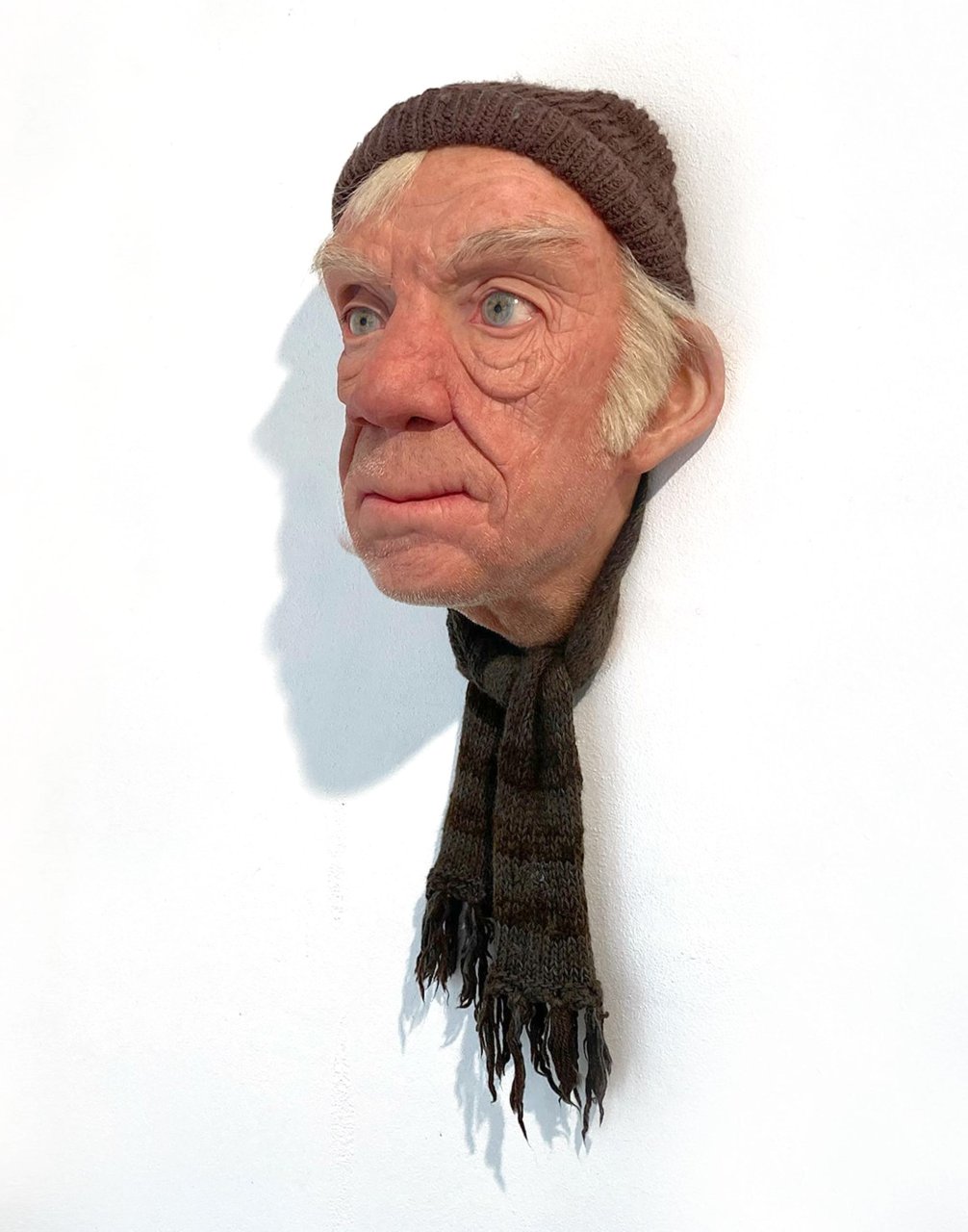
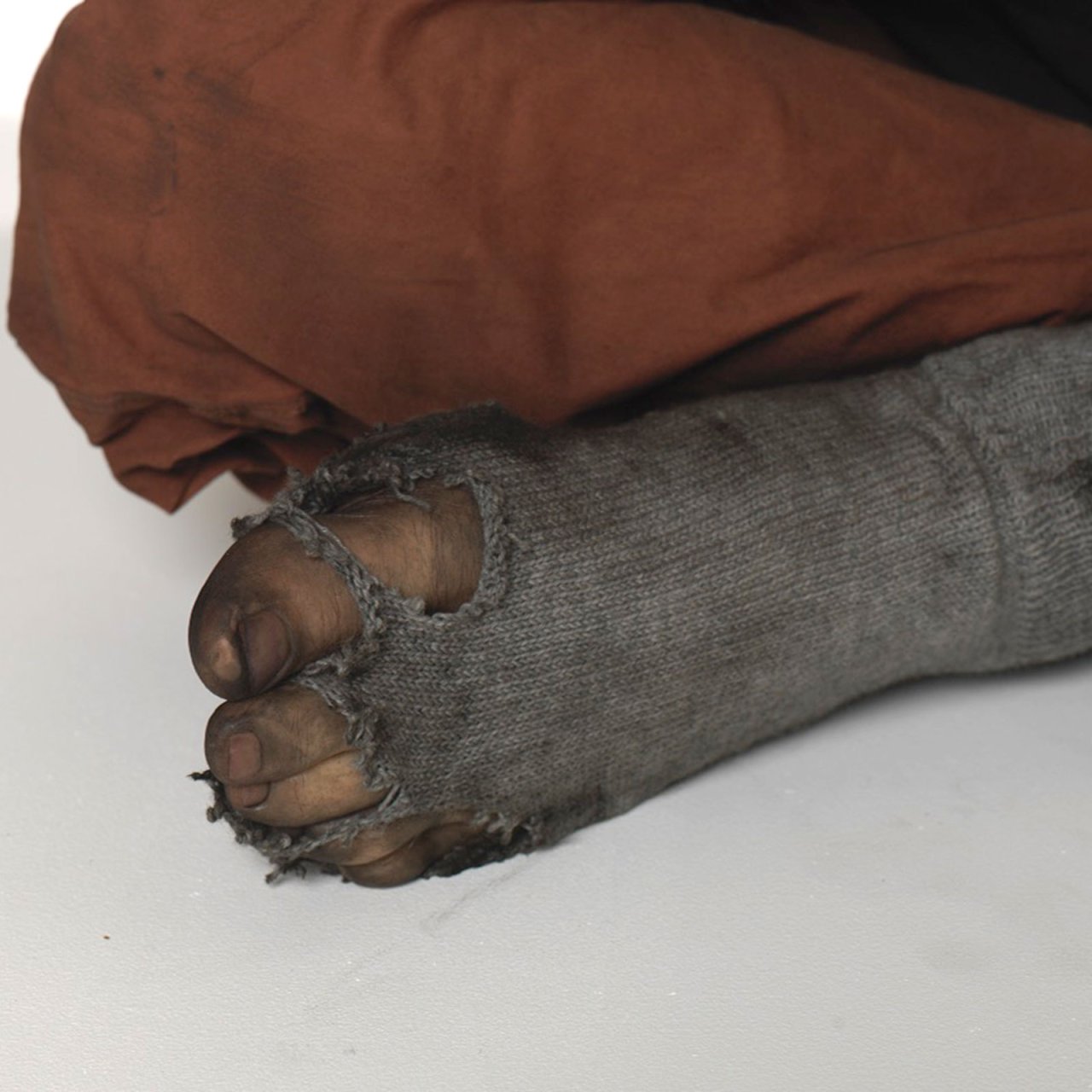
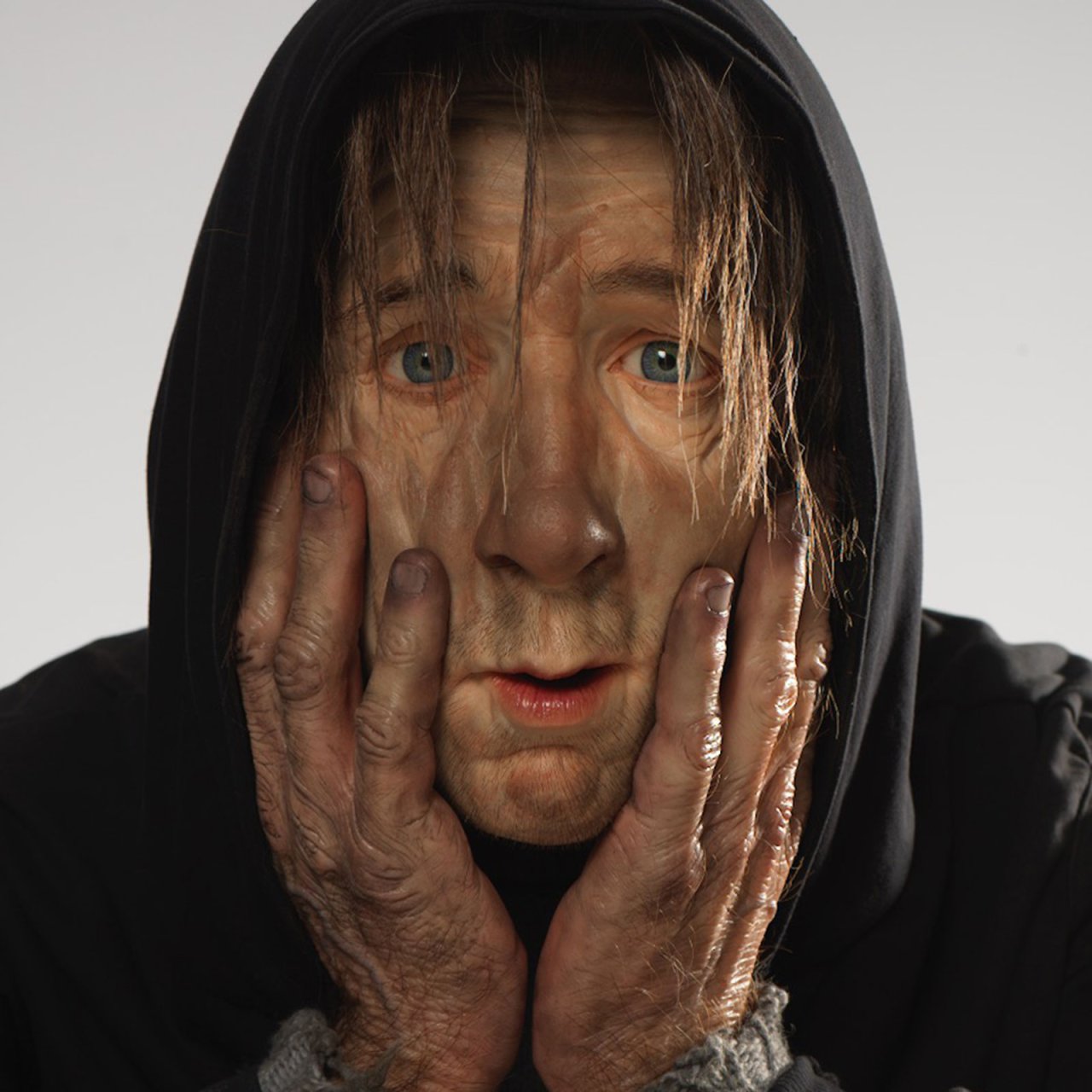
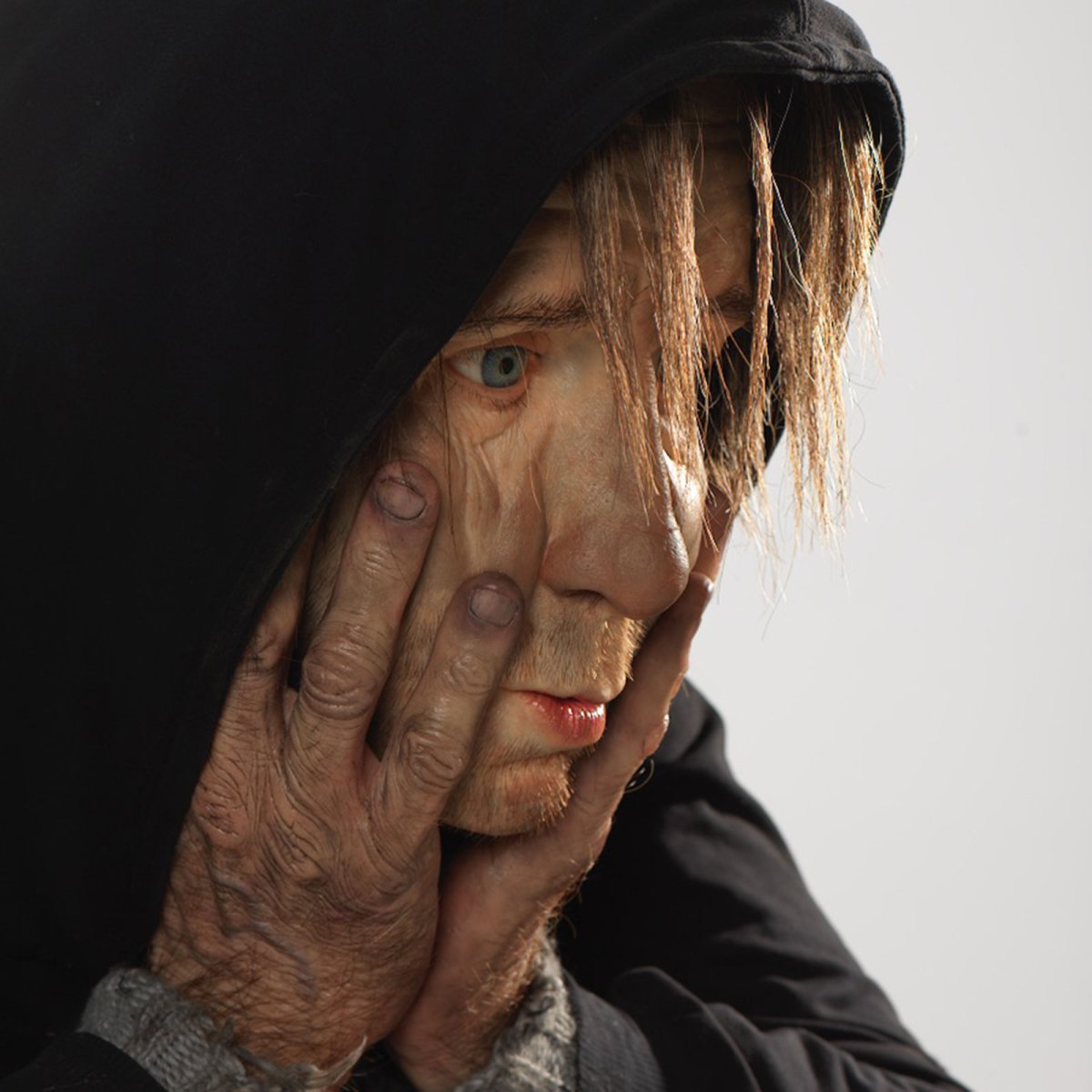
Homeless still human - Paul Trefry
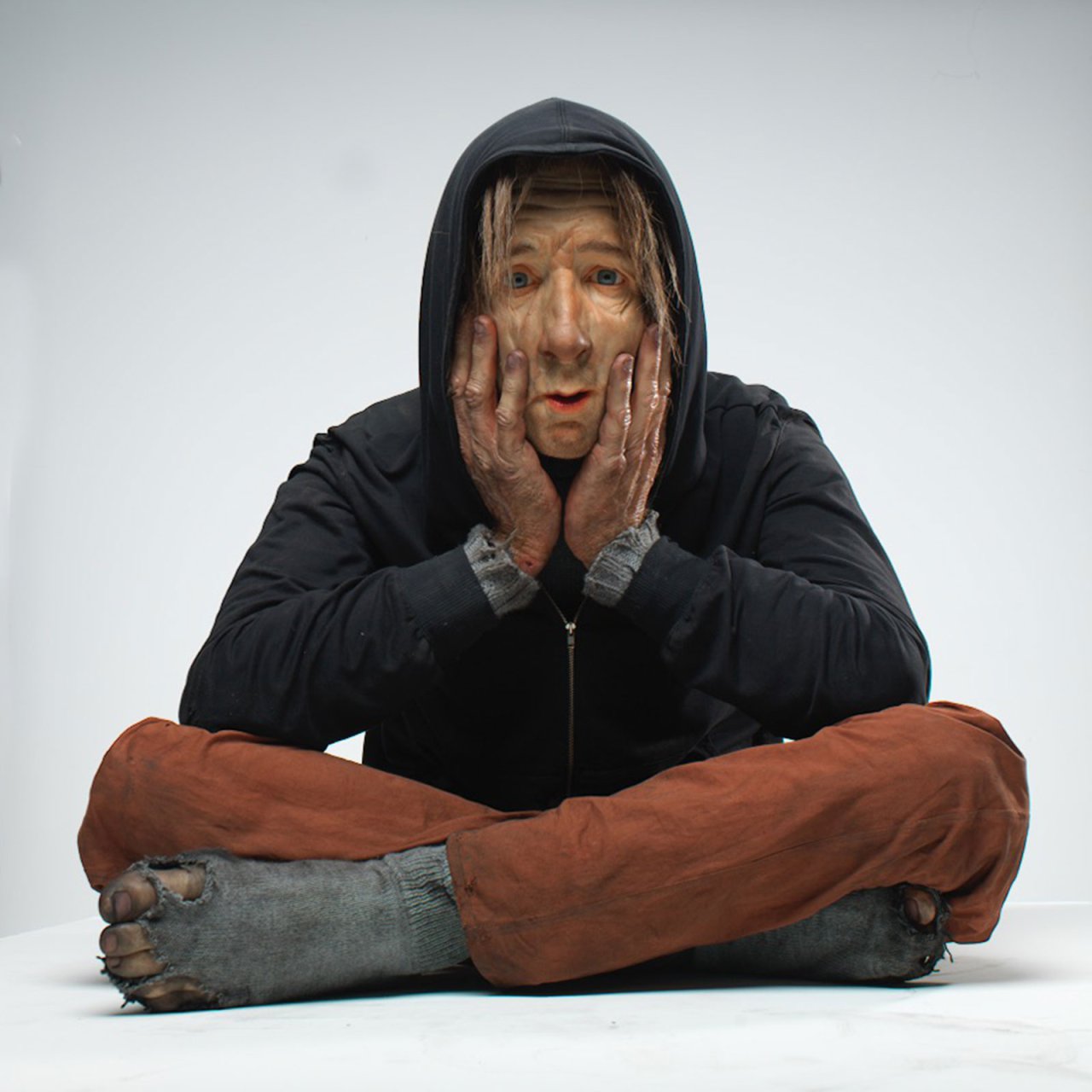
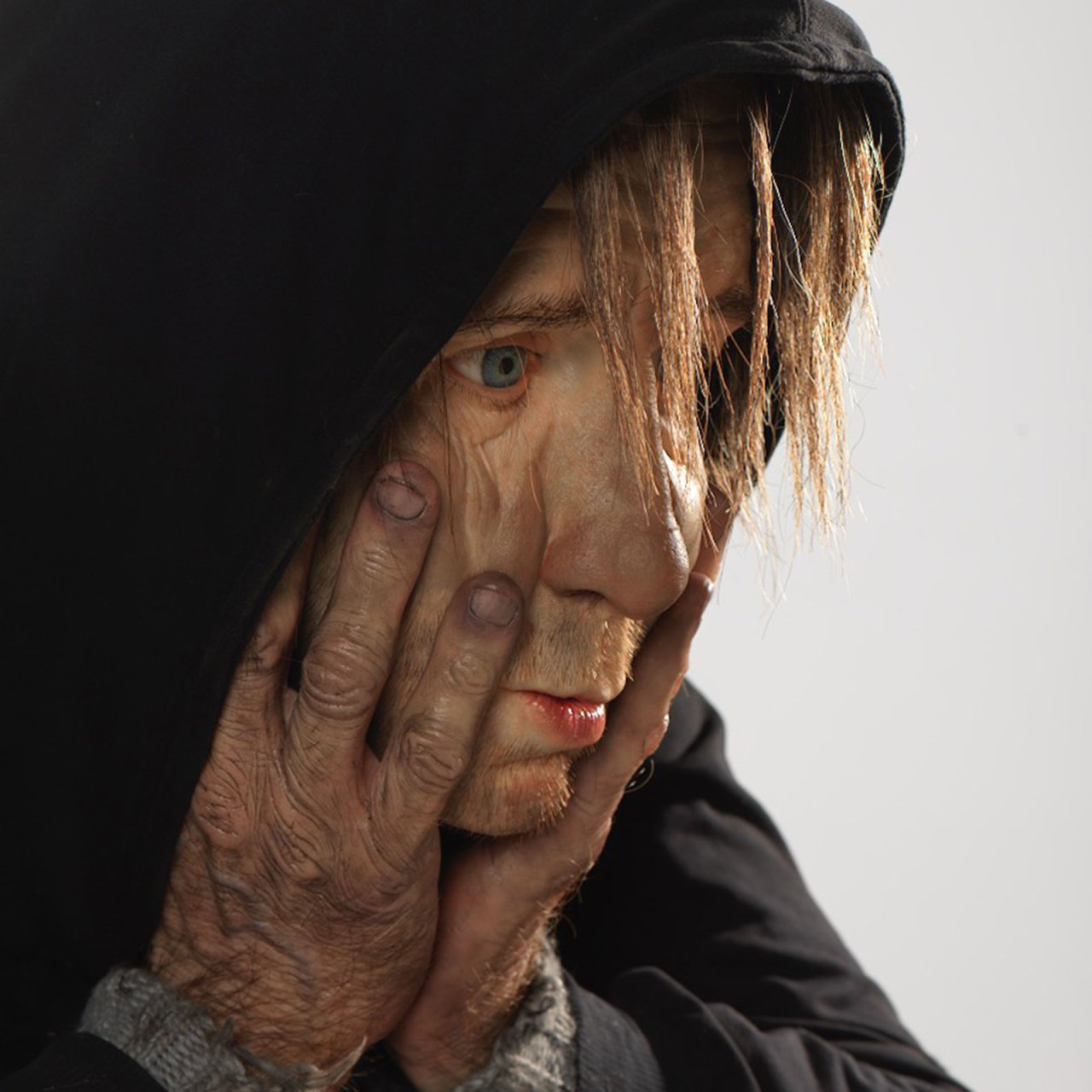
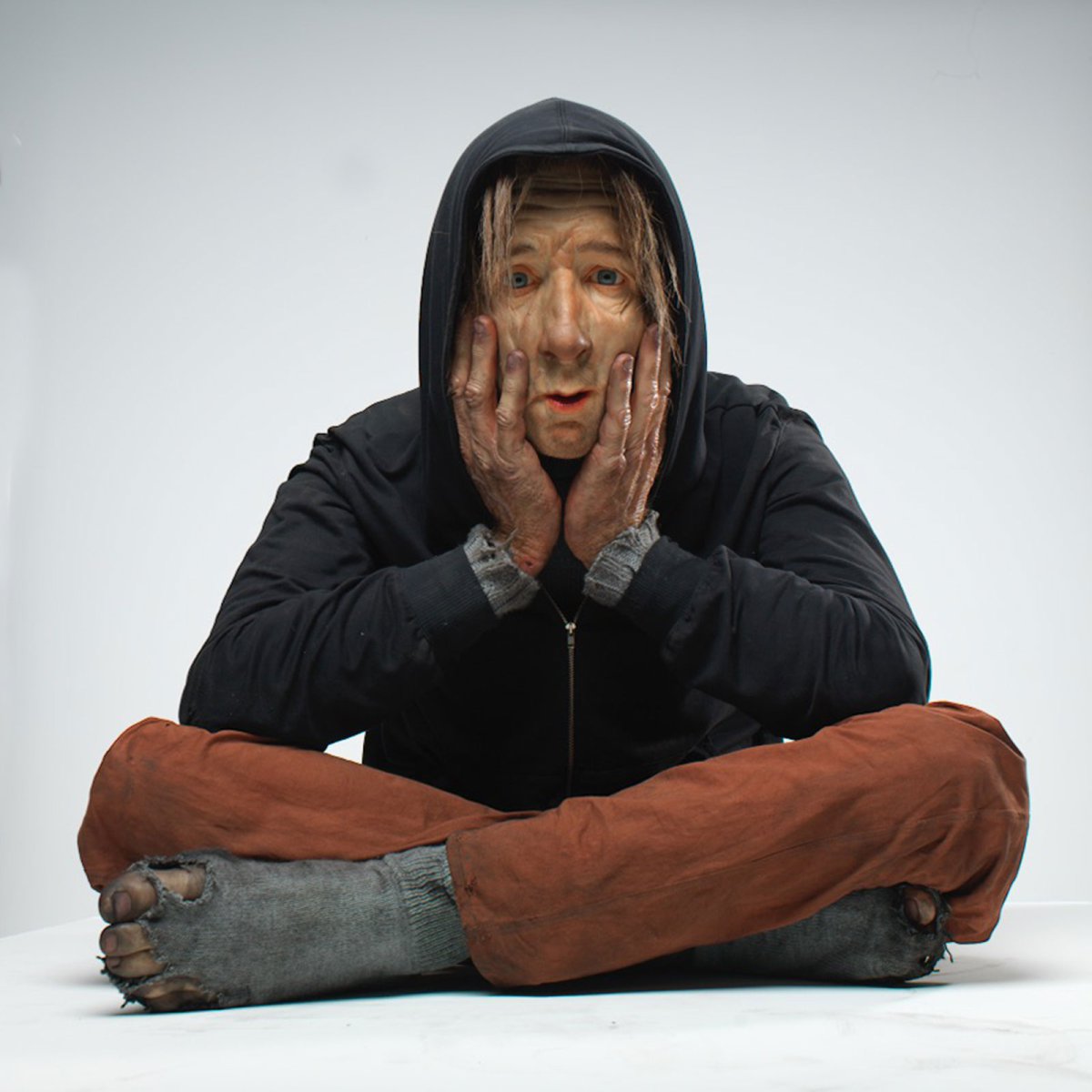
The idea of this piece came from sitting down with a homeless man in Sydney
He had run his own electrical company, was married with 2 kids.
A contractor didn’t pay him, things got rough, the wife and kids left him, and he ended up on the streets with nothing but the clothes on his back.
Being homeless isn’t a choice, nor is it something anyone wants to become. Drugs, alcohol and anger are the mechanisms they use to block out the reality of what has become of their lives.
The homeless are avoided and frowned upon, and for the most part treated as worthless beings in human society. The reality is they were once husbands or wives, mothers and fathers, or children to someone just like ourselves, but now they wander alone.
The concept of this piece was to make people aware of the plight of the homeless, to treat them like everyone else, acknowledge them and smile, show them they aren’t invisible. It’s amazing how these little acts can brighten someone’s day.
His parting words to me were, “I’m homeless but still human”.
 |
||
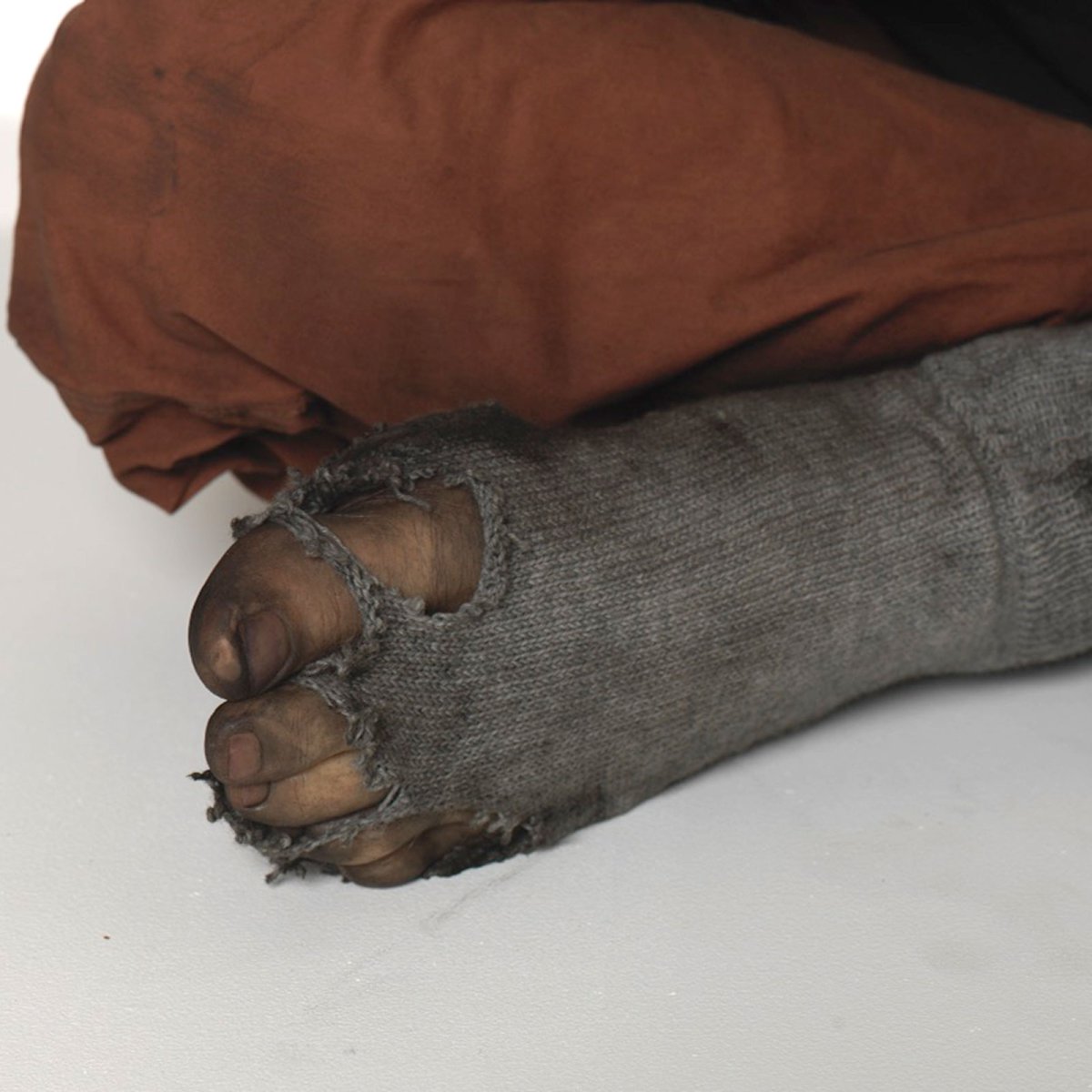
Homeless still human - Paul Trefry
The idea of this piece came from sitting down with a homeless man in Sydney
He had run his own electrical company, was married with 2 kids.
A contractor didn’t pay him, things got rough, the wife and kids left him, and he ended up on the streets with nothing but the clothes on his back.
Being homeless isn’t a choice, nor is it something anyone wants to become. Drugs, alcohol and anger are the mechanisms they use to block out the reality of what has become of their lives.
The homeless are avoided and frowned upon, and for the most part treated as worthless beings in human society. The reality is they were once husbands or wives, mothers and fathers, or children to someone just like ourselves, but now they wander alone.
The concept of this piece was to make people aware of the plight of the homeless, to treat them like everyone else, acknowledge them and smile, show them they aren’t invisible. It’s amazing how these little acts can brighten someone’s day.
His parting words to me were, “I’m homeless but still human”.
 |
||
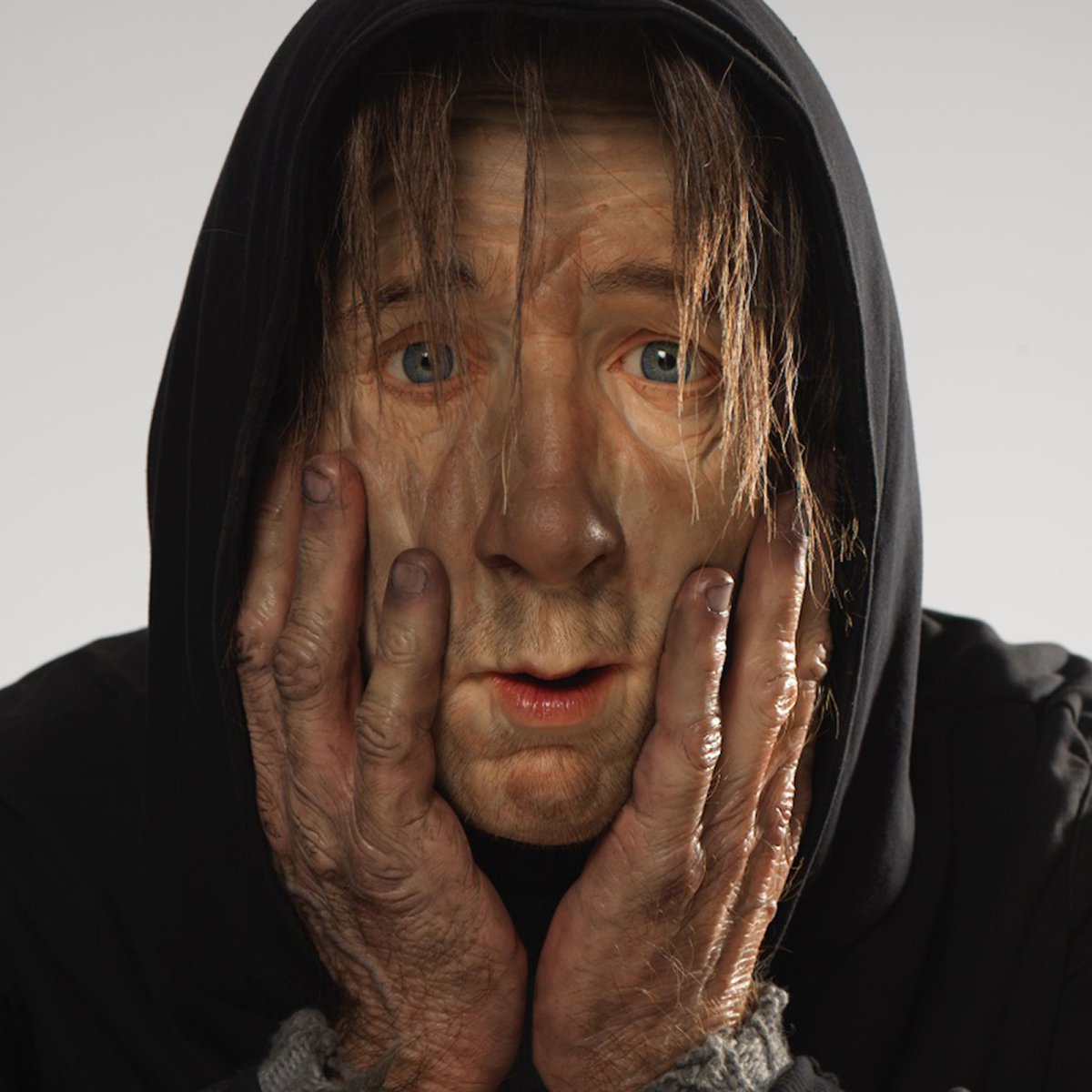
Homeless still human - Paul Trefry
The idea of this piece came from sitting down with a homeless man in Sydney
He had run his own electrical company, was married with 2 kids.
A contractor didn’t pay him, things got rough, the wife and kids left him, and he ended up on the streets with nothing but the clothes on his back.
Being homeless isn’t a choice, nor is it something anyone wants to become. Drugs, alcohol and anger are the mechanisms they use to block out the reality of what has become of their lives.
The homeless are avoided and frowned upon, and for the most part treated as worthless beings in human society. The reality is they were once husbands or wives, mothers and fathers, or children to someone just like ourselves, but now they wander alone.
The concept of this piece was to make people aware of the plight of the homeless, to treat them like everyone else, acknowledge them and smile, show them they aren’t invisible. It’s amazing how these little acts can brighten someone’s day.
His parting words to me were, “I’m homeless but still human”.
 |
||
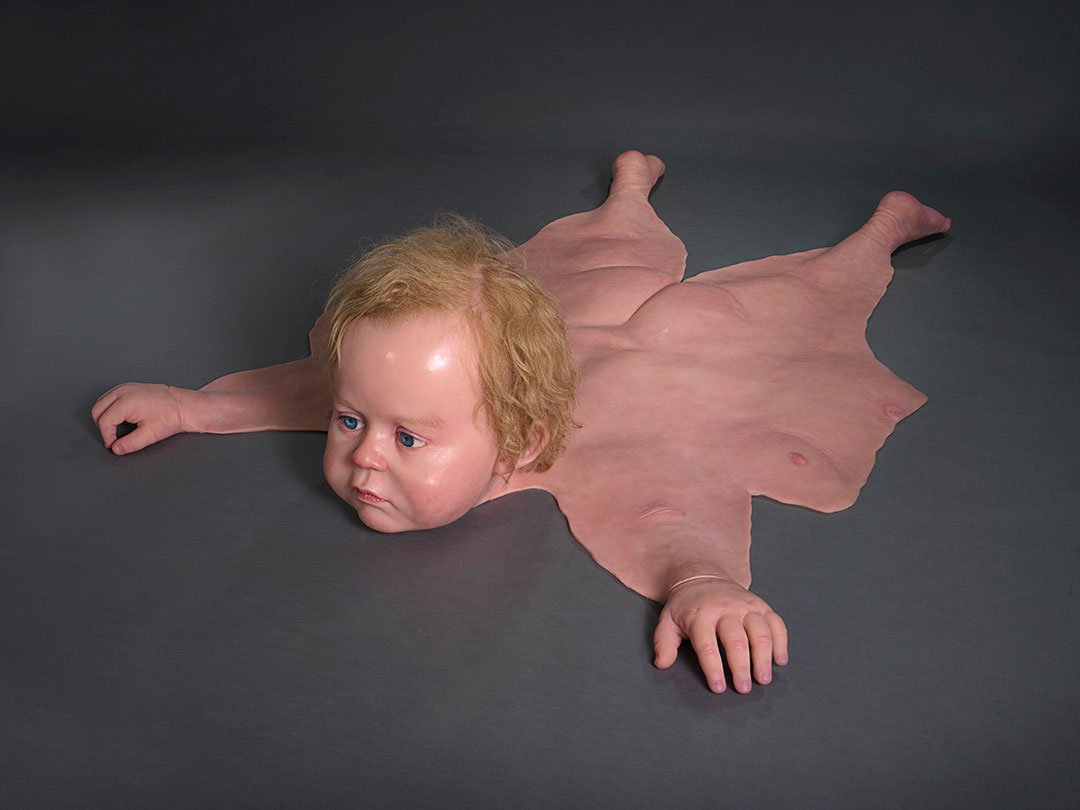
Homeless still human - Paul Trefry
The idea of this piece came from sitting down with a homeless man in Sydney
He had run his own electrical company, was married with 2 kids.
A contractor didn’t pay him, things got rough, the wife and kids left him, and he ended up on the streets with nothing but the clothes on his back.
Being homeless isn’t a choice, nor is it something anyone wants to become. Drugs, alcohol and anger are the mechanisms they use to block out the reality of what has become of their lives.
The homeless are avoided and frowned upon, and for the most part treated as worthless beings in human society. The reality is they were once husbands or wives, mothers and fathers, or children to someone just like ourselves, but now they wander alone.
The concept of this piece was to make people aware of the plight of the homeless, to treat them like everyone else, acknowledge them and smile, show them they aren’t invisible. It’s amazing how these little acts can brighten someone’s day.
His parting words to me were, “I’m homeless but still human”.
 |
||
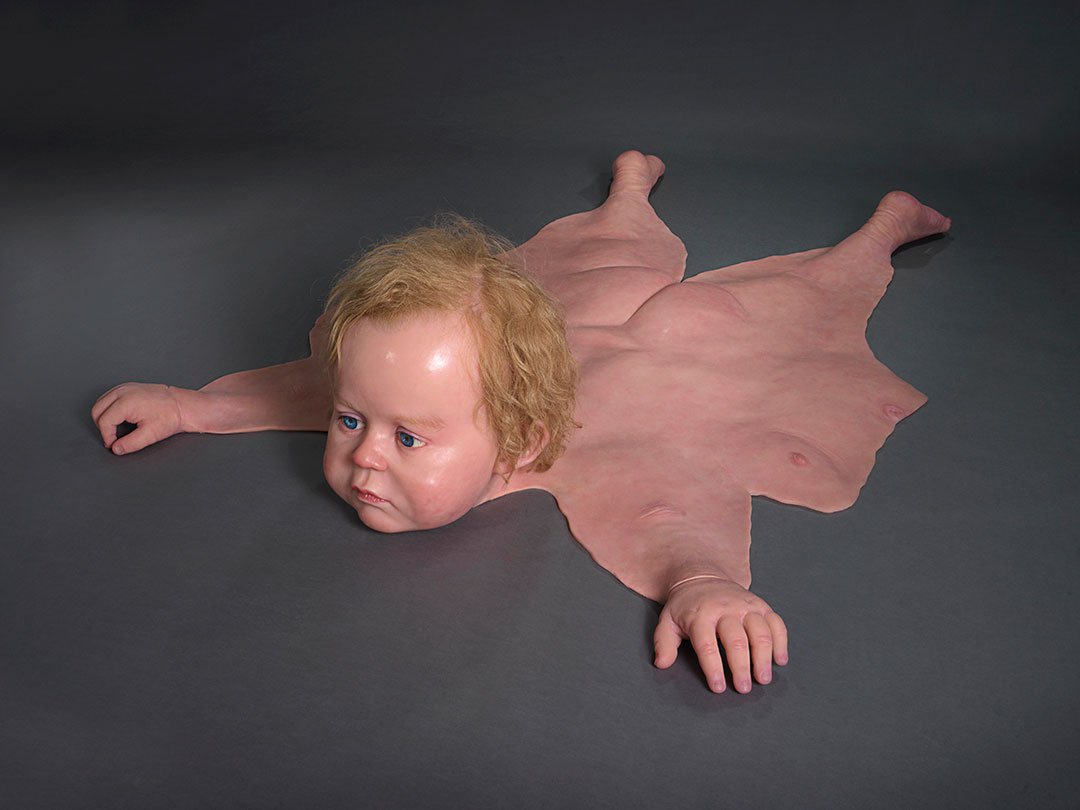
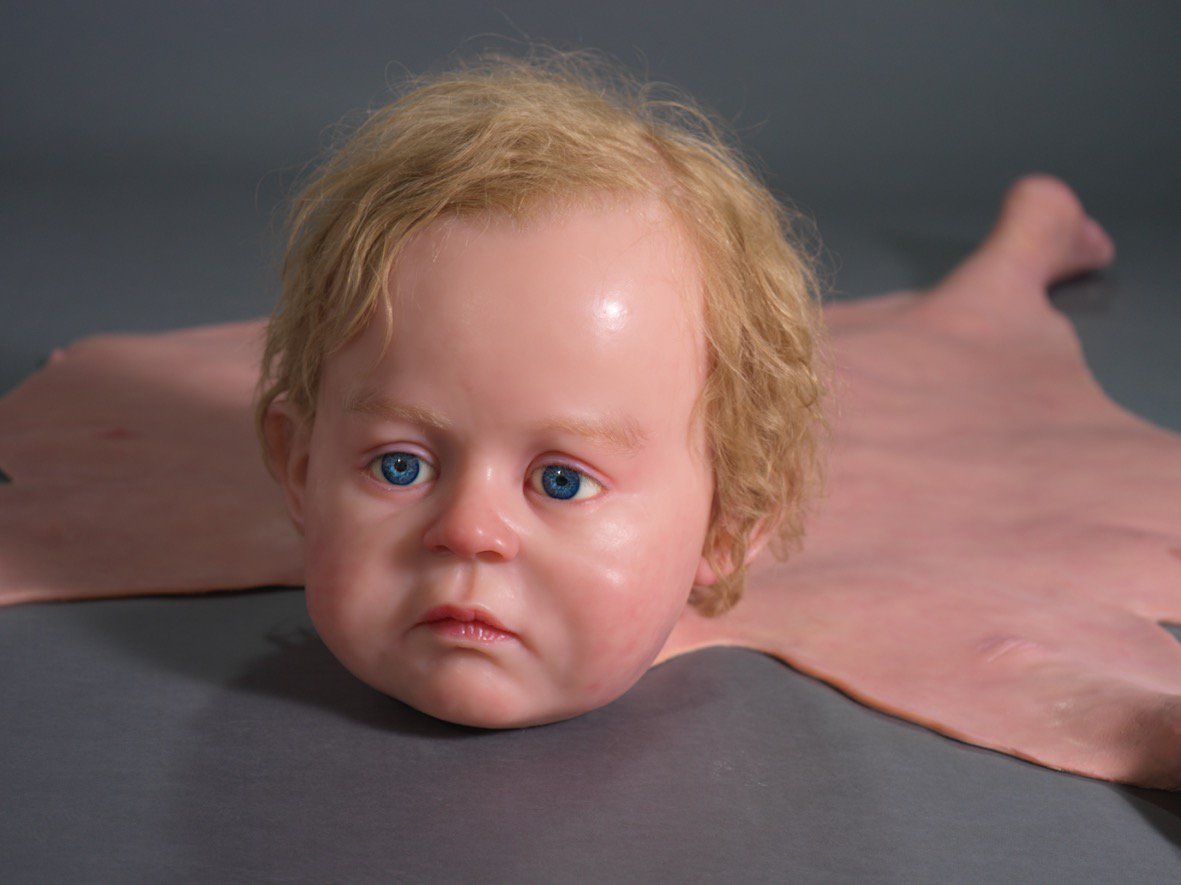
Its beautiful so kill it - Paul Trefry
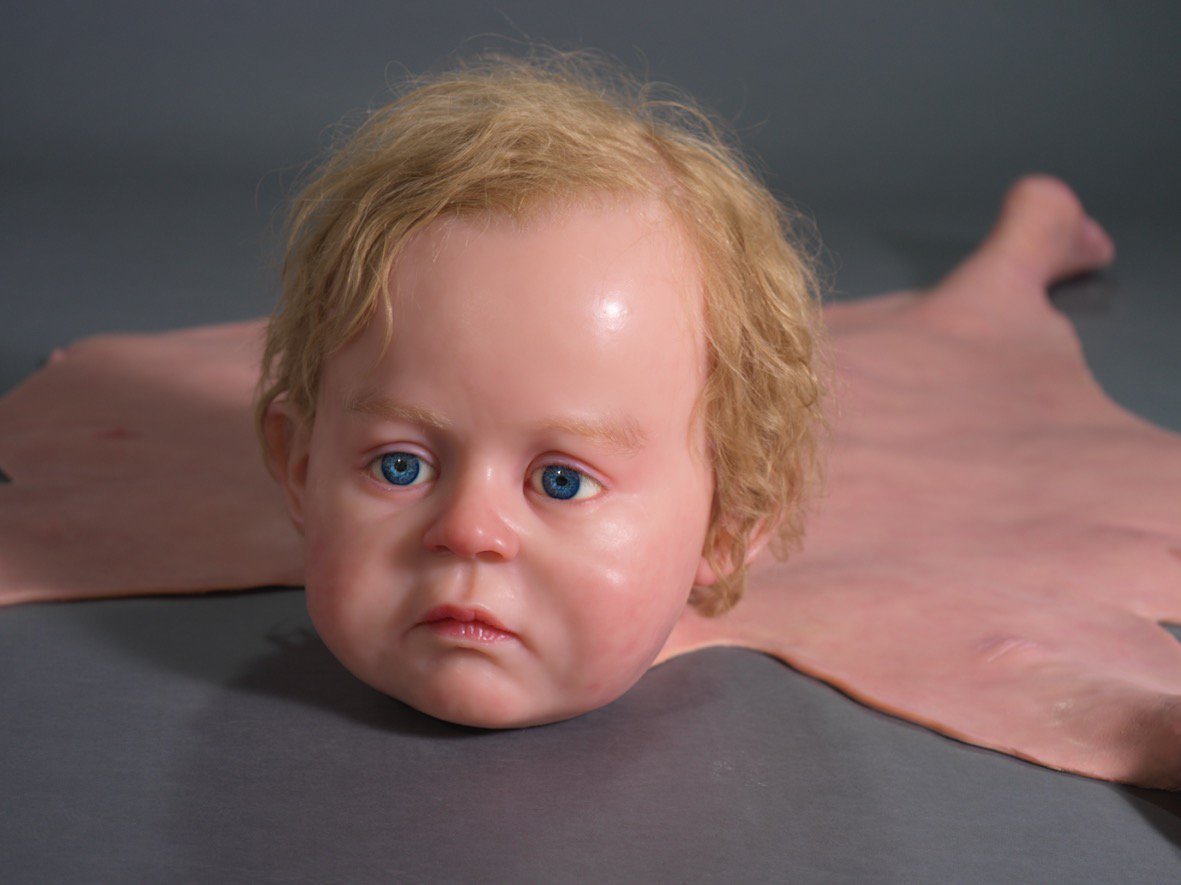
This sculpture delves into the grim world of trophy hunting, depicting the heartless pursuit of animals for their visual appeal. At its center lies a poignant representation of innocence embodied by a baby figure, evoking a universal sense of attachment. As observers confront the baby transformed into a rug, the artwork compels them to question the ethics of this purported sport. Whether the victim is an animal or a human, the sculpture serves as a stark reminder of the somber truth behind killing for pleasure, laying bare humanity’s darker impulses.
 |
||
Its beautiful so kill it - Paul Trefry
This sculpture delves into the grim world of trophy hunting, depicting the heartless pursuit of animals for their visual appeal. At its center lies a poignant representation of innocence embodied by a baby figure, evoking a universal sense of attachment. As observers confront the baby transformed into a rug, the artwork compels them to question the ethics of this purported sport. Whether the victim is an animal or a human, the sculpture serves as a stark reminder of the somber truth behind killing for pleasure, laying bare humanity’s darker impulses.
 |
||
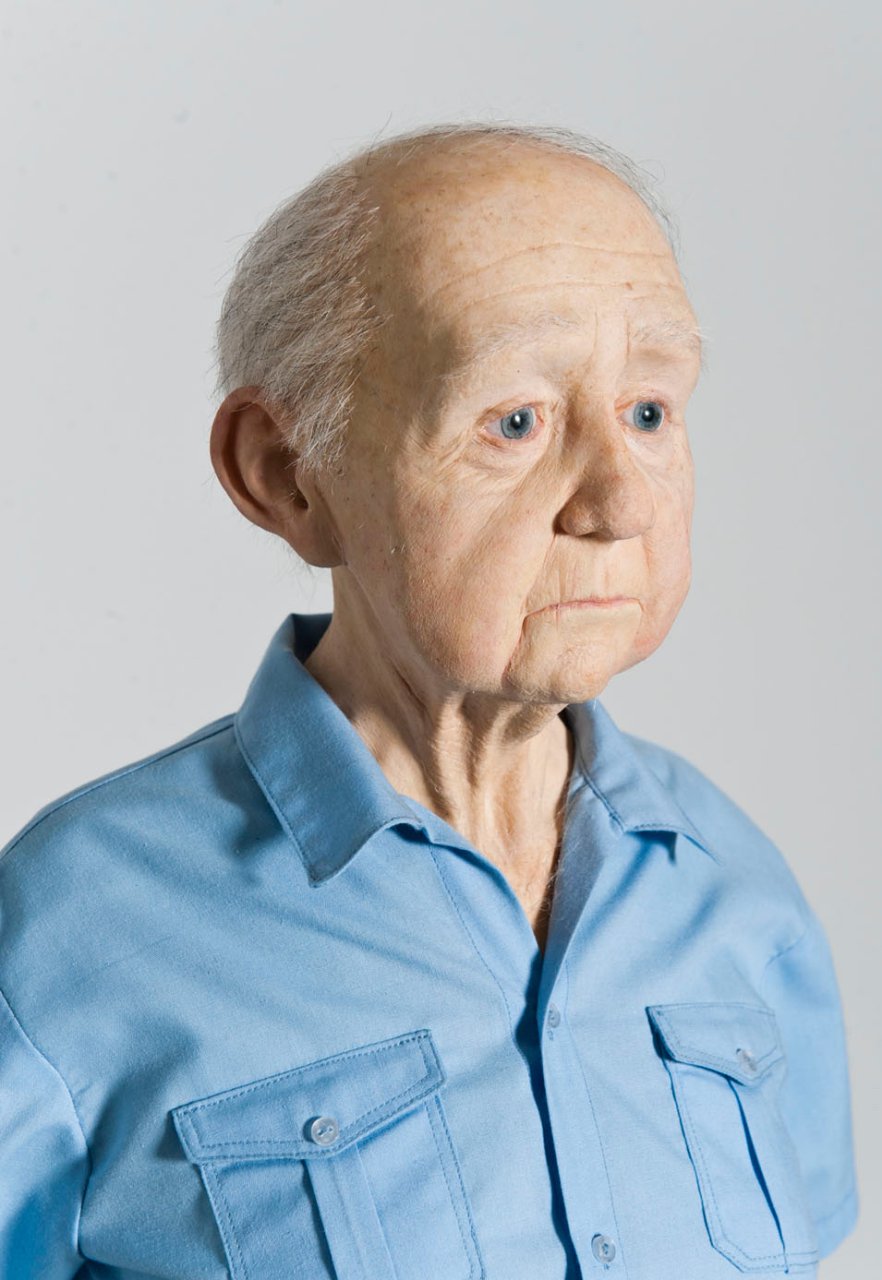
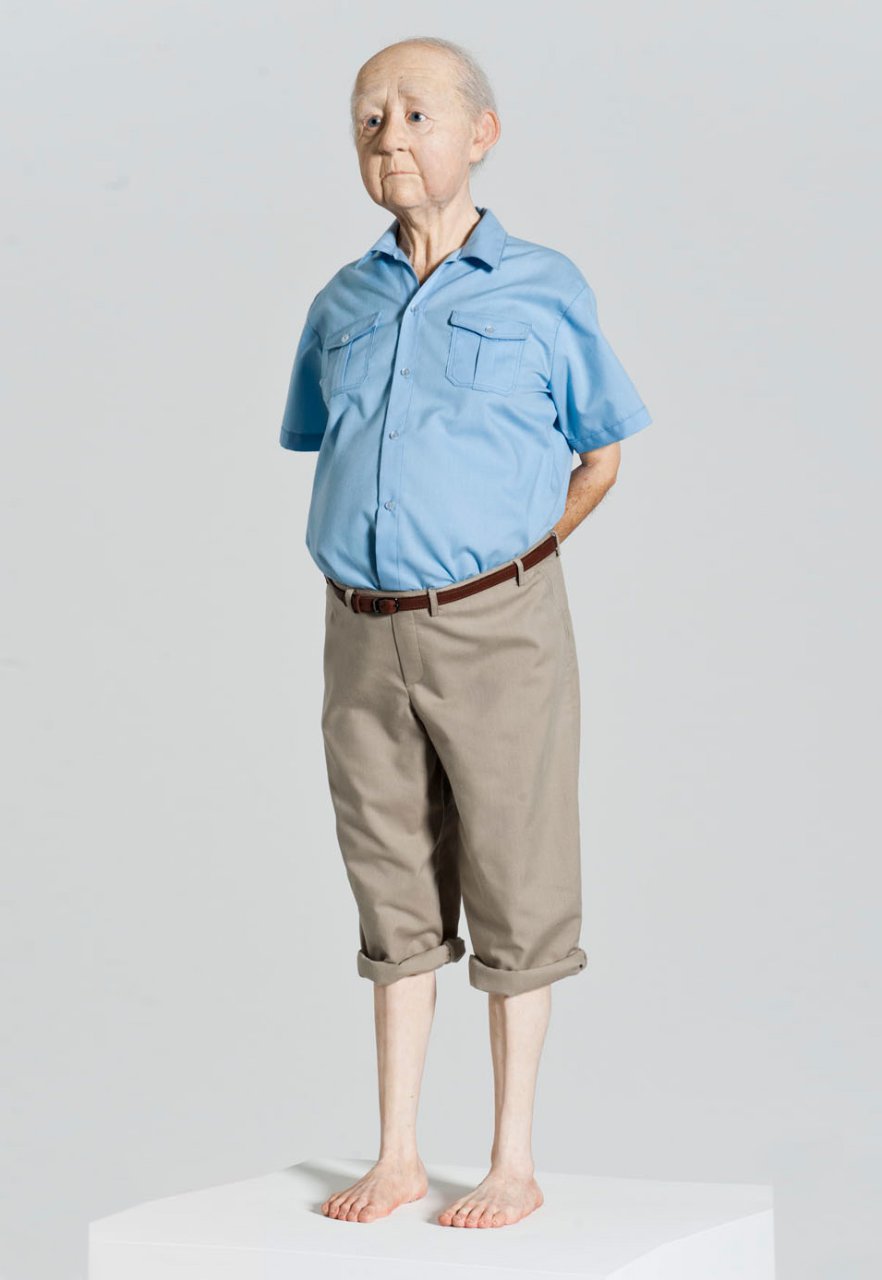
Old Charlie Liked to Dip His Toes in the Water - Paul Trefry
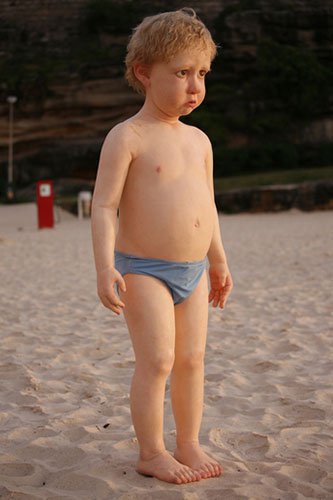
It’s only in our twilight years that we can actually slow down and enjoy the world around us. We are no longer distracted by personal devices, unrealistic deadlines, social pressures or striving for what might be bigger and better just around the corner.
We don’t need to compete or prove ourselves to others. At last we accept and are comfortable with who we are.
Our senior years are a time when we can finally live in the moment. Just stop, appreciate our surroundings and get lost in that moment.
 |
||
Old Charlie Liked to Dip His Toes in the Water - Paul Trefry
It’s only in our twilight years that we can actually slow down and enjoy the world around us. We are no longer distracted by personal devices, unrealistic deadlines, social pressures or striving for what might be bigger and better just around the corner.
We don’t need to compete or prove ourselves to others. At last we accept and are comfortable with who we are.
Our senior years are a time when we can finally live in the moment. Just stop, appreciate our surroundings and get lost in that moment.
 |
||
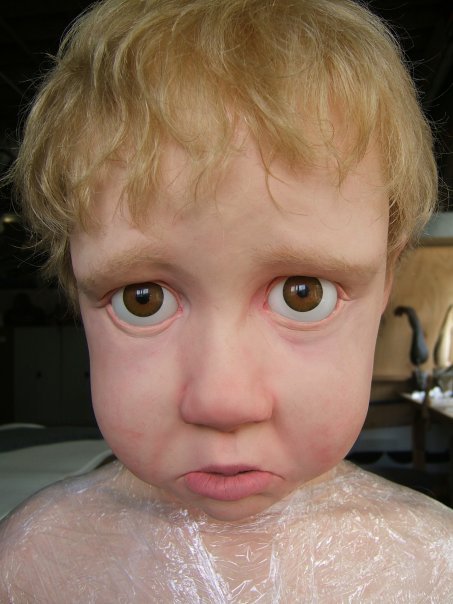
Little boy lost - Paul Trefry
 |
||
Little boy lost - Paul Trefry
 |
||
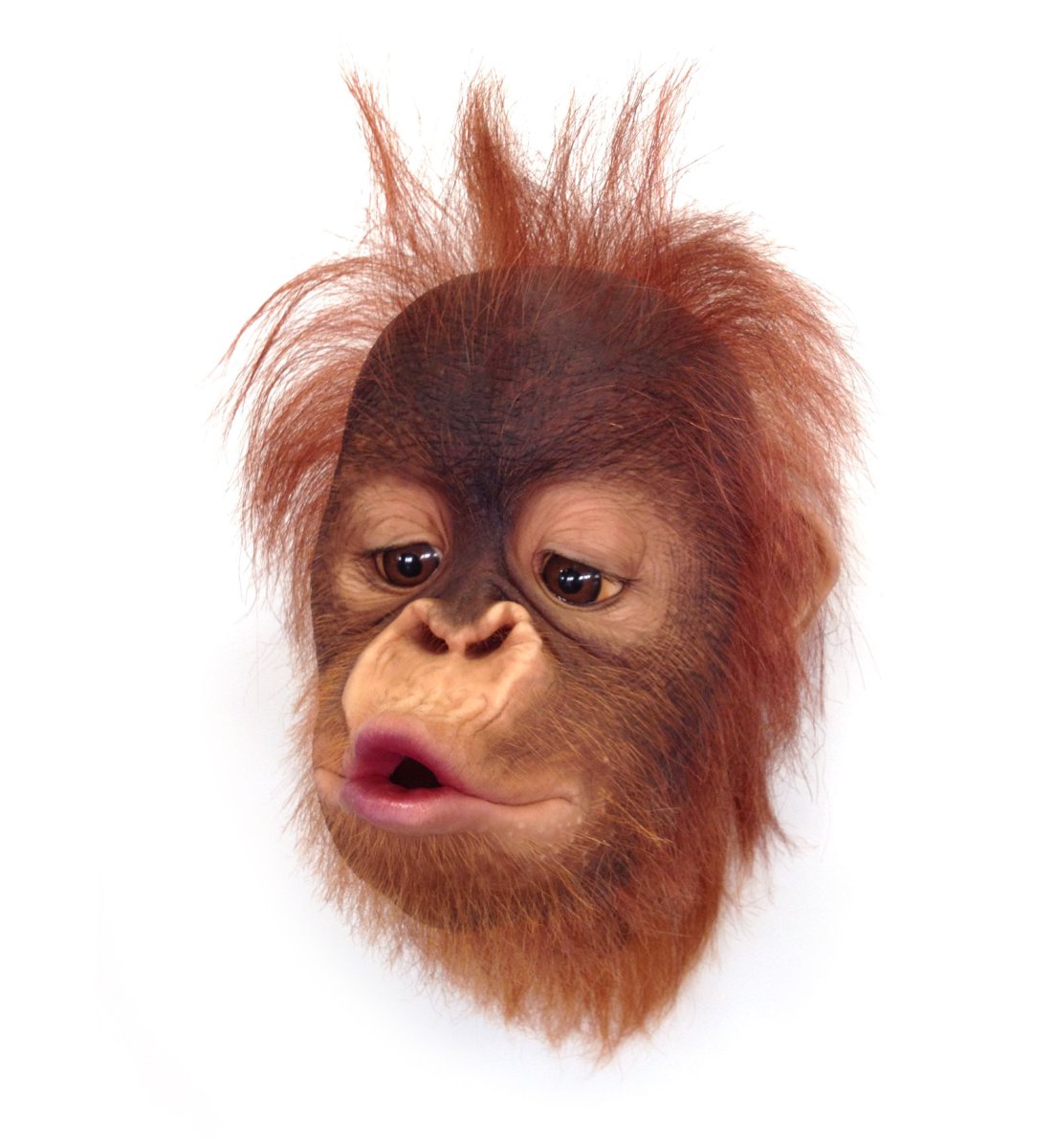
Last kiss goodbye - Paul Trefry
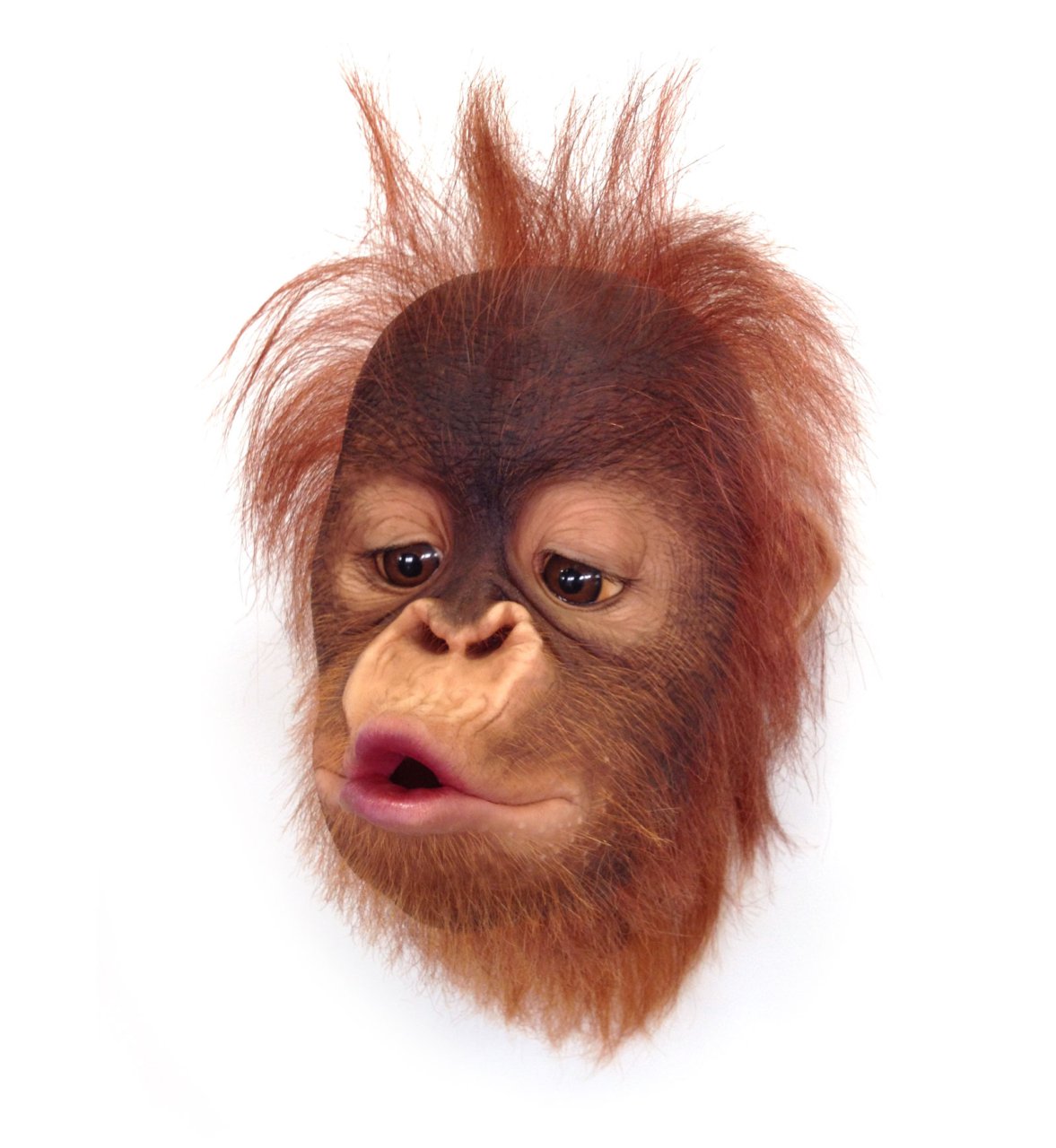
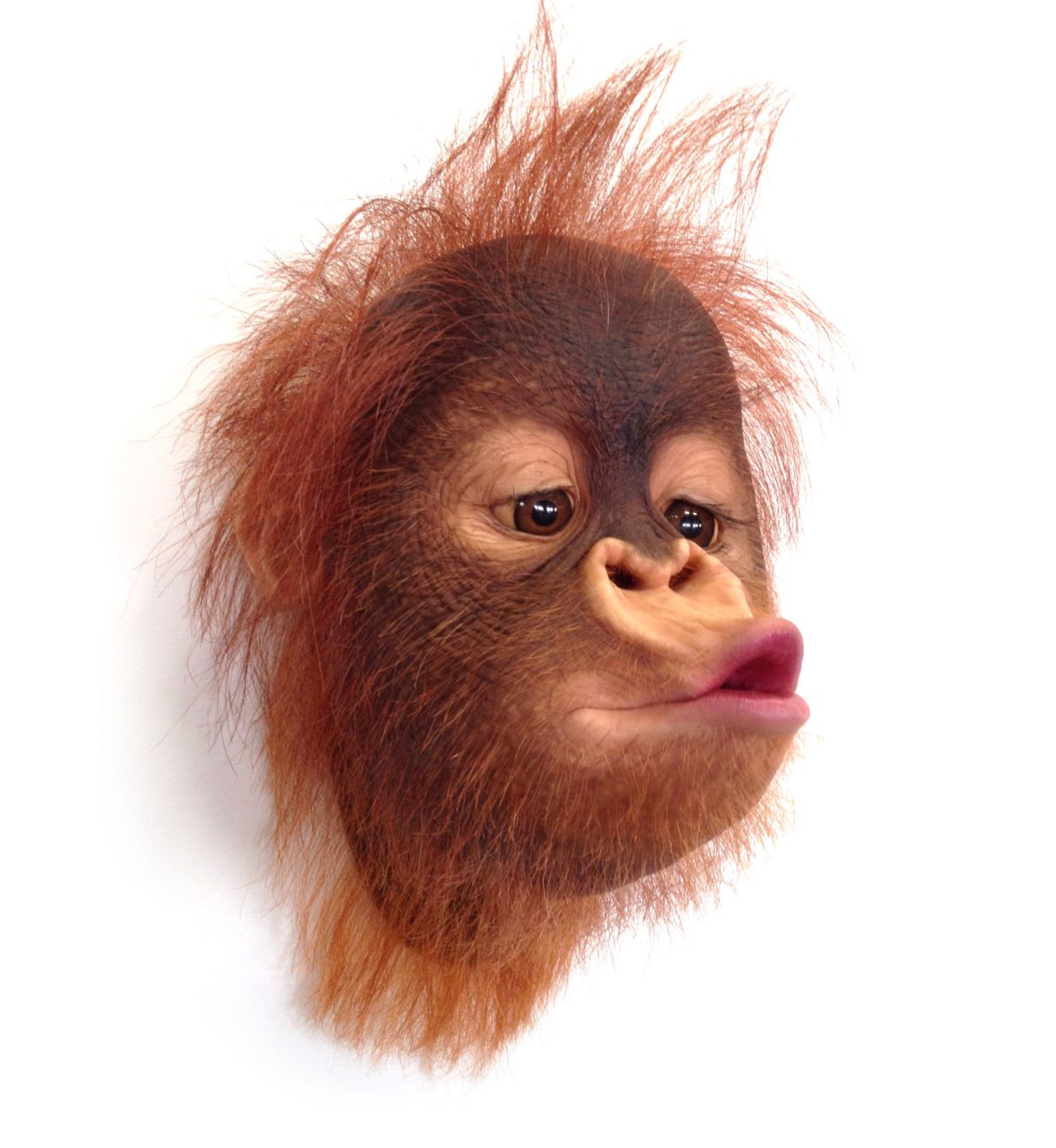
The Orangutan DNA are 97 percent identical to humans and have shown intelligence by using tools to source food and display human emotions, yet we still destroy their habitat for our own greed.
Last Kiss goodbye is a reminder that soon we will be responsible for yet another animal to the extinction list.
 |
||
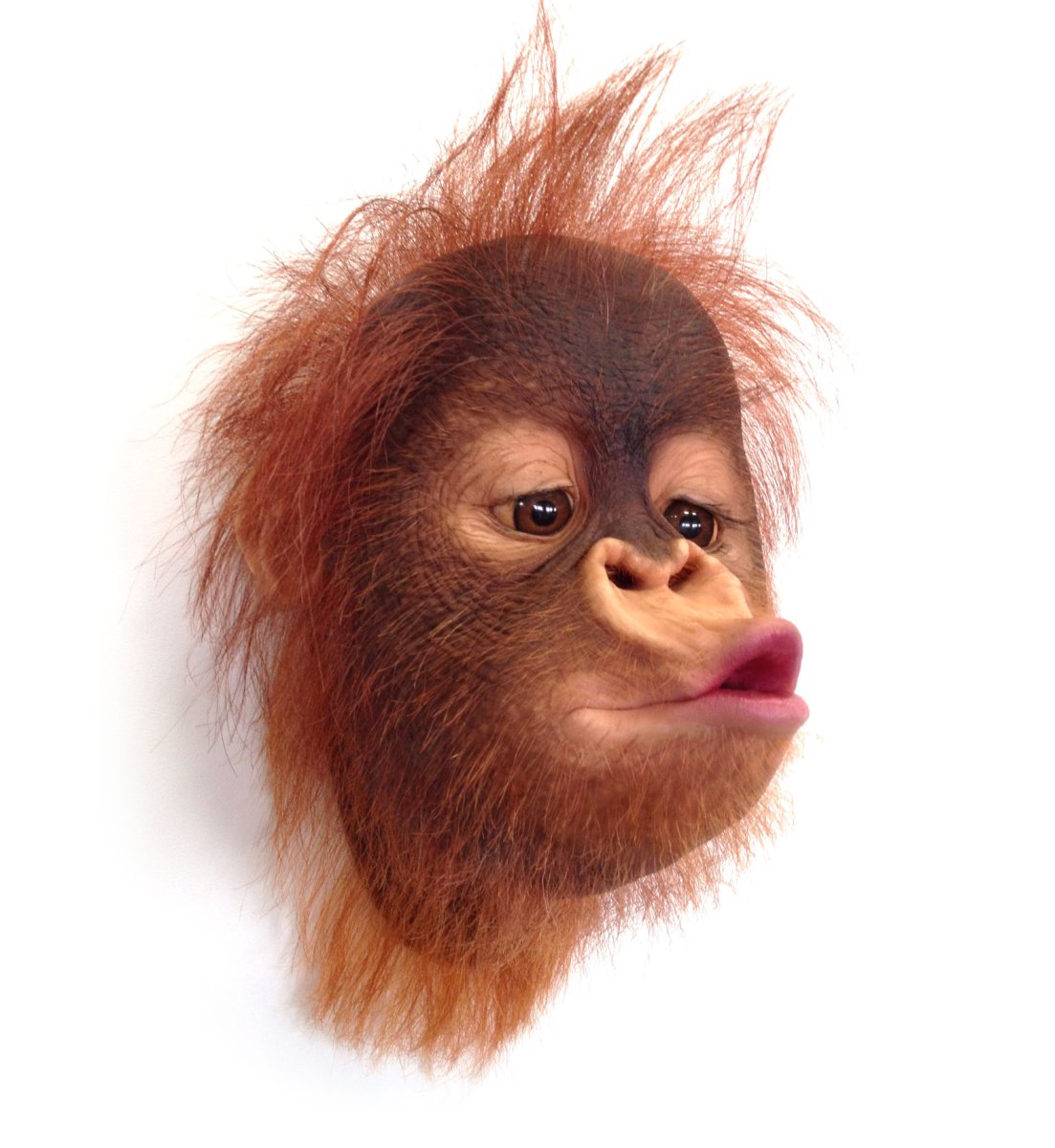
Last kiss goodbye - Paul Trefry
The Orangutan DNA are 97 percent identical to humans and have shown intelligence by using tools to source food and display human emotions, yet we still destroy their habitat for our own greed.
Last Kiss goodbye is a reminder that soon we will be responsible for yet another animal to the extinction list.
 |
||
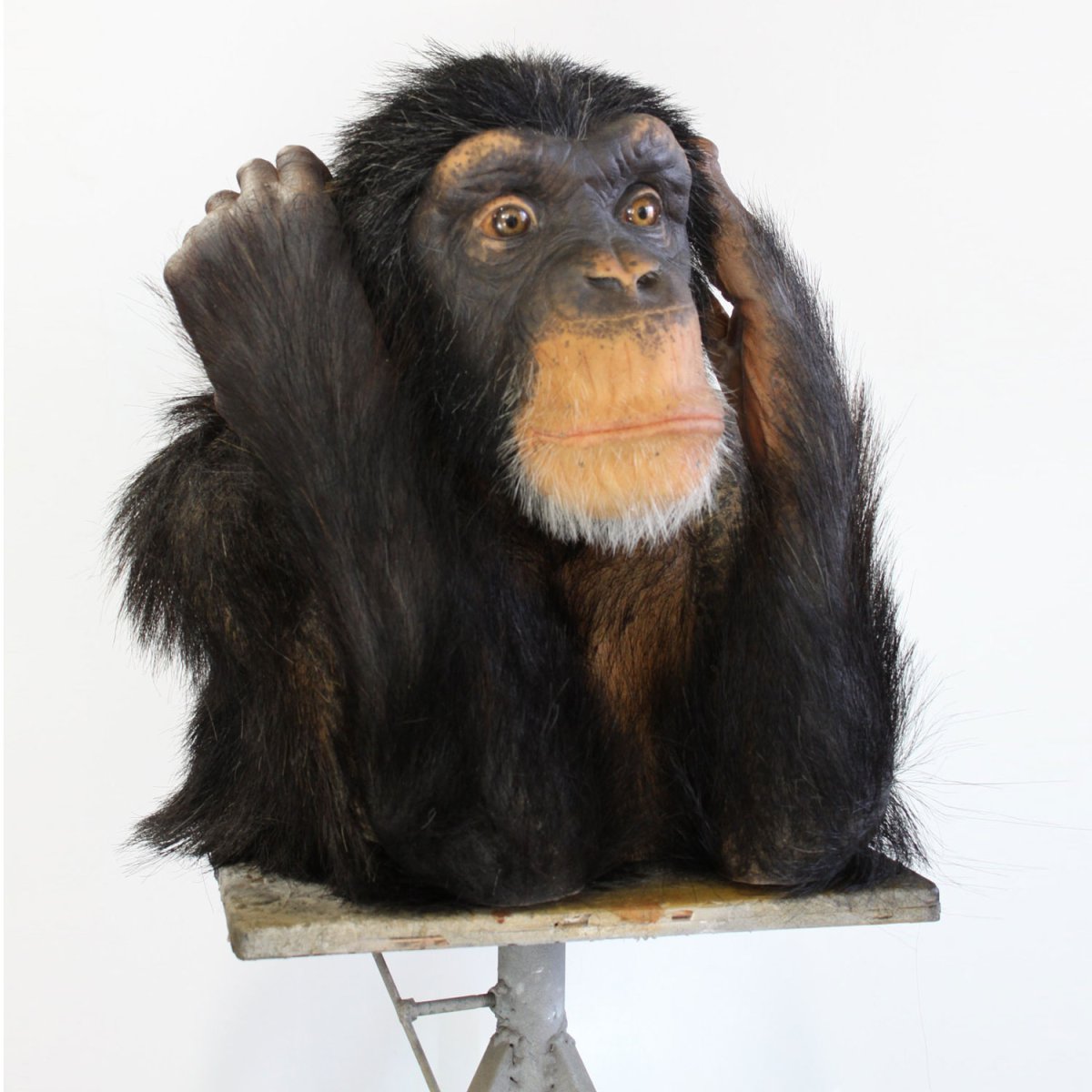
OMG - Paul Trefry
 |
||
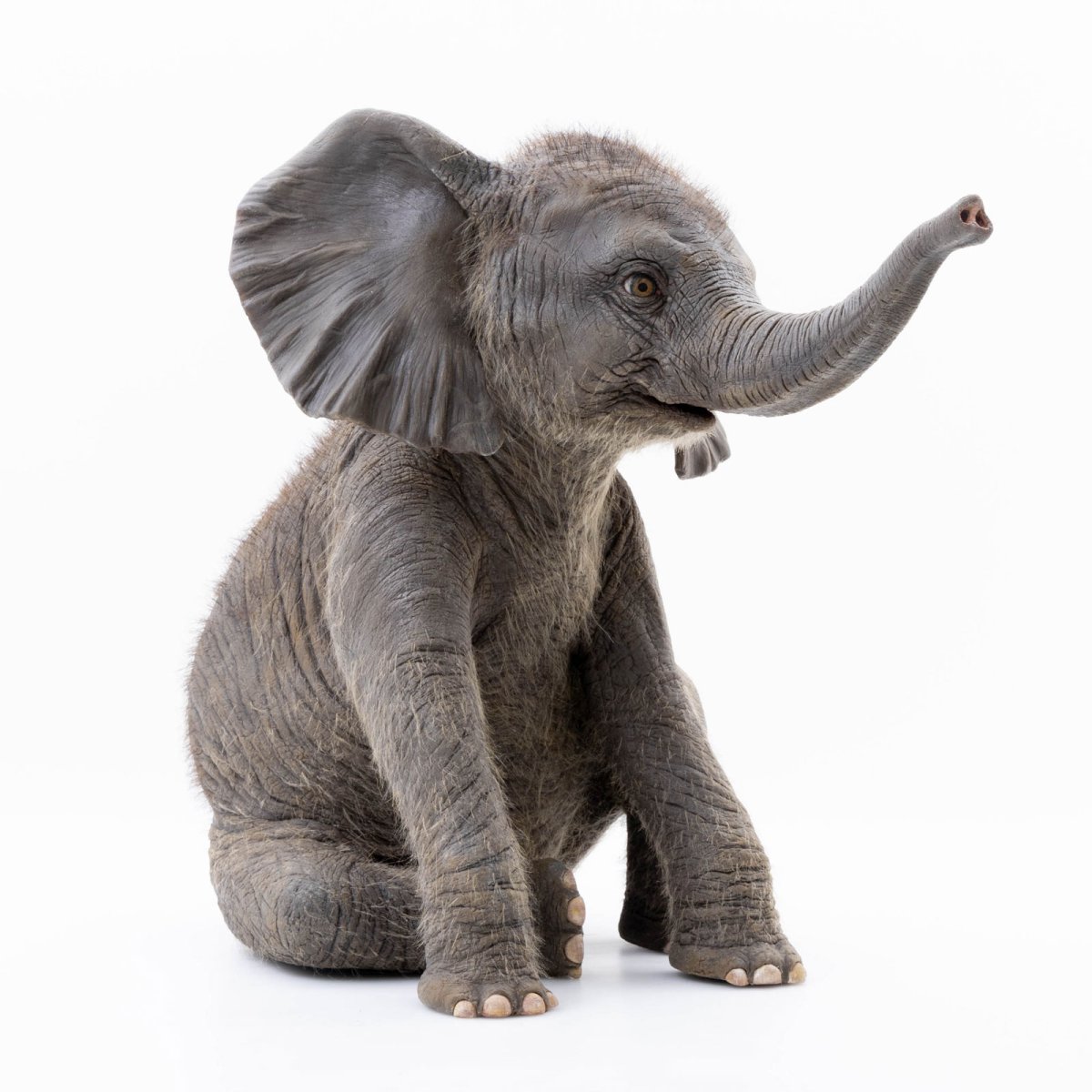
Sitting Pretty - Paul Trefry
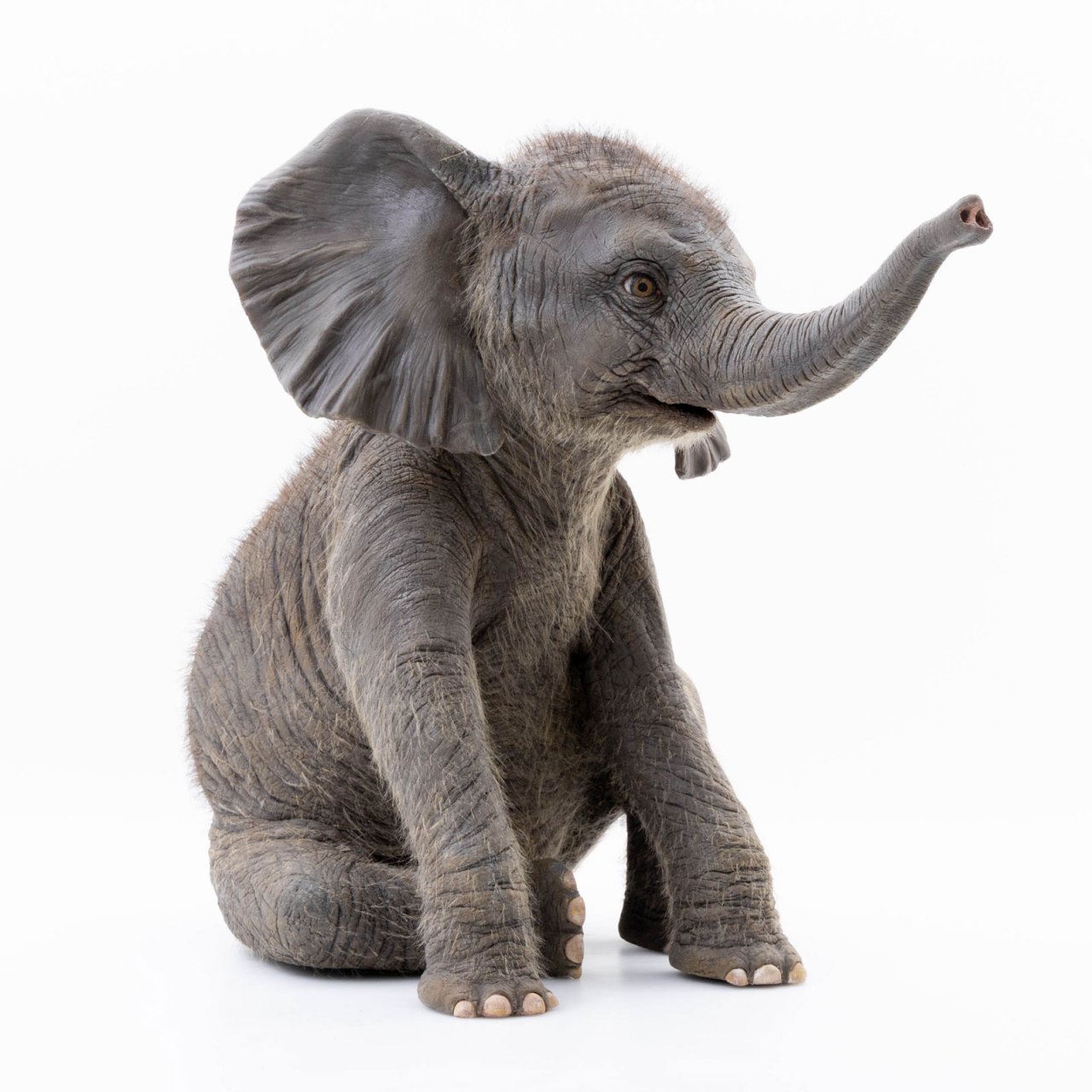
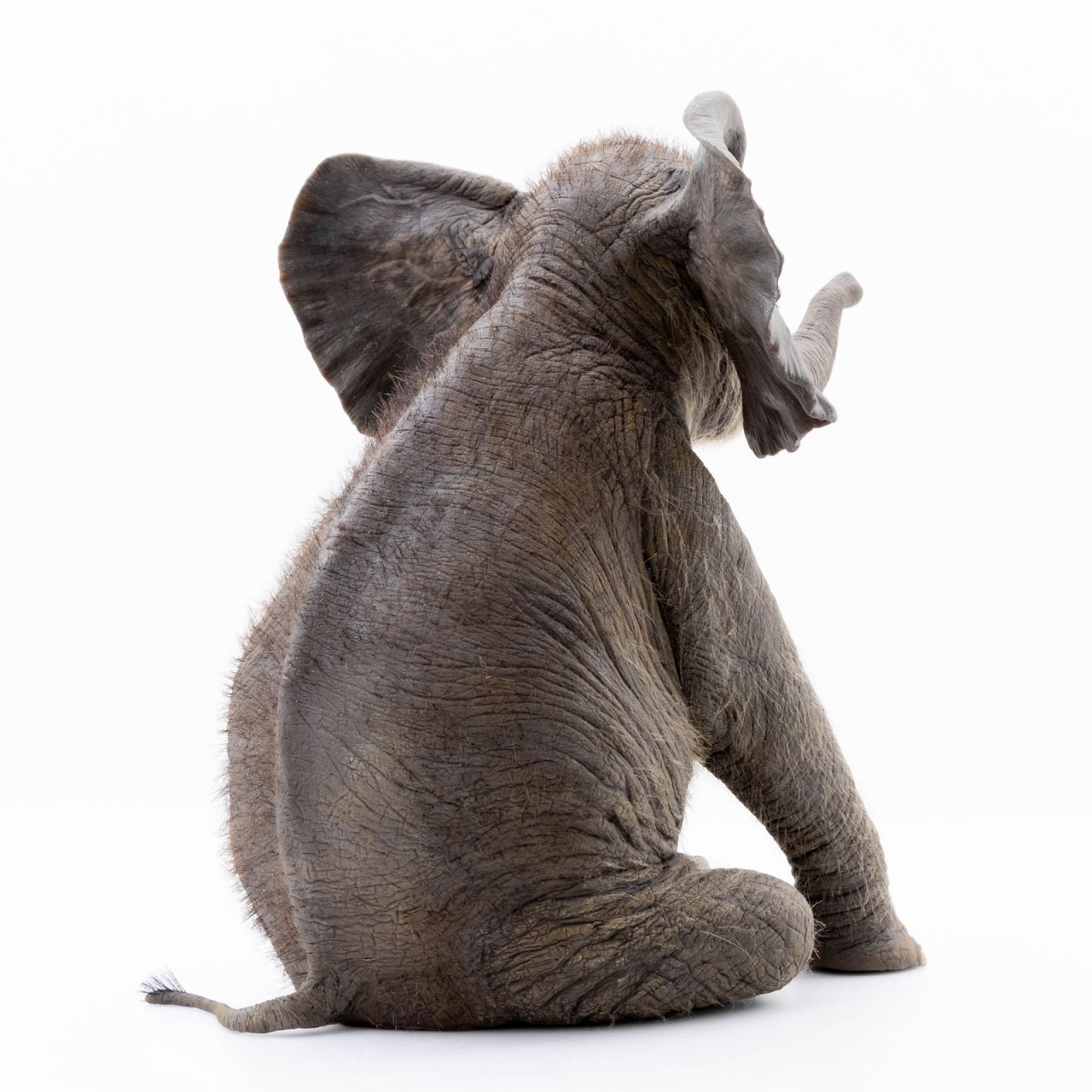
Elephants are highly social animals, living in close-knit groups known as herds. They have a complex social structure that revolves around relationships and hierarchy within the group. Communication plays a vital role in their social interactions, with elephants using various vocalizations, body movements, and gestures to convey messages to each other. Within the herd, there is a clear hierarchy, with dominant individuals leading and making important decisions. Mating and reproduction patterns in elephants involve elaborate courtship rituals and long gestation periods. The family structure of elephant herds is centered around the matriarch, who is usually the oldest and most experienced female. Social interactions among elephants include cooperation in activities such as foraging and protecting the herd from predators. Overall, understanding the social behavior of elephants is crucial for conservation efforts and ensuring the well-being of these magnificent creatures.
 |
||
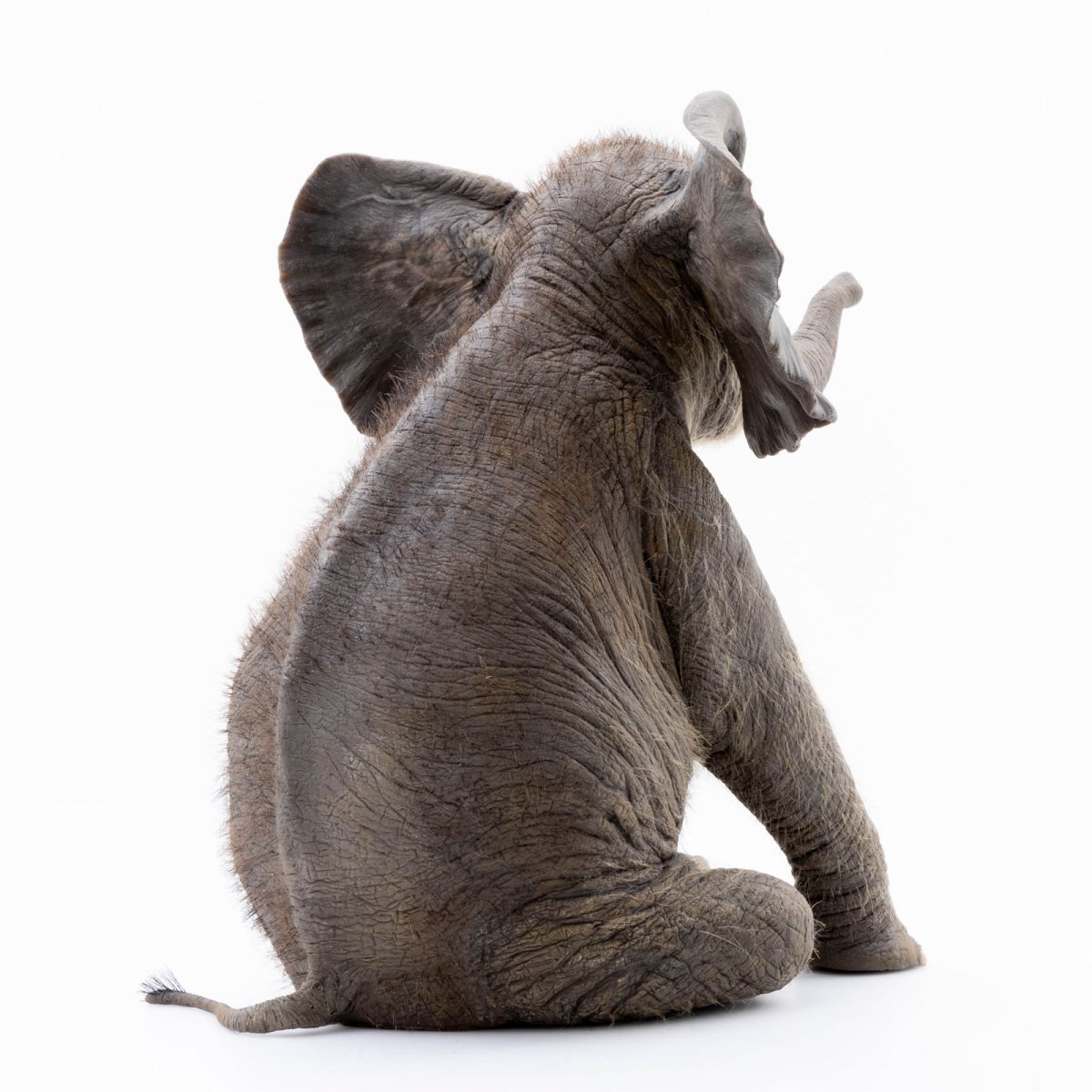
Sitting Pretty - Paul Trefry
Elephants are highly social animals, living in close-knit groups known as herds. They have a complex social structure that revolves around relationships and hierarchy within the group. Communication plays a vital role in their social interactions, with elephants using various vocalizations, body movements, and gestures to convey messages to each other. Within the herd, there is a clear hierarchy, with dominant individuals leading and making important decisions. Mating and reproduction patterns in elephants involve elaborate courtship rituals and long gestation periods. The family structure of elephant herds is centered around the matriarch, who is usually the oldest and most experienced female. Social interactions among elephants include cooperation in activities such as foraging and protecting the herd from predators. Overall, understanding the social behavior of elephants is crucial for conservation efforts and ensuring the well-being of these magnificent creatures.









 Edit picture